Second Digicel judgment concerns privilege not e-disclosure

A second Digicel judgment does not bear on the subject of e-disclosure, but relates to alleged waiver of privilege in documents containing legal advice. A mention of it here might forestall confusion on the part of those who turn up a Digicel judgment and are puzzled to find no reference to electronic disclosure.

I offered my excuses in a recent post (A round-up to catch up) for not providing all the hyperlinks to the conferences, companies and articles referred to in the article. It can double the usefulness of an article to include easy jumps to sources referred to; it can also substantially increase the time taken to finish off an article to find all the references and deal with the mechanics of effecting the links.

For English cases, I generally use the admirable British and Irish Legal Information Institute (BAILII)  because it is available to all and has a simple, fast search mechanism. Although I refer frequently to Digicel (St Lucia) v Cable & Wireless and have innumerable places of my own to look it up, I find it easier to keep the BAILII search screen open and just type “Digicel” into the search box. That is how I discovered recently that there has been a second published judgment in that case. I draw it to your attention partly for its own sake and partly to save the rest of you from picking the wrong one as I nearly did. The judgment was delivered on 17 June and concerns a waiver of privilege point which came up on the 25th day of the trial. Continue reading


Posted in Discovery, eDisclosure, eDisclosure Conferences, eDiscovery, Electronic disclosure, Privilege | Leave a comment

Conveying business ideas with short videos

Videos about the e-discovery /e-disclosure industry can be by captains of industry or the junior trainee, can cover everything from pure technology to business commentary, and can be formal or otherwise. A set of short videos by Mike Lynch of Autonomy shows that informed informality from the top can come across well.

I am, as I have mentioned, finding some interest in the idea of using videos, and specifically videos delivered by YouTube, as a means of getting the e-disclosure / e-discovery messages across. I was attracted partly by their immediacy and accessibility, but also by the fact that they suited the times both as to their cost (which can be minimal) and their use of popular technology to convey technology messages.

The potential scope is extremely wide, ranging from technical explanations (“here is an example of conceptual search”) to putting illustrative flesh on narrative bones so that bald references to, say, forensic collection of data might be illustrated by a short film showing somebody doing just that.

Such videos do not have to be technical. Electronic discovery / disclosure involves businesses of all sizes, from established giants to hopeful start-ups. There is value in hearing from those who have made it with messages for those who hope to follow them. Continue reading

Posted in E-Discovery Suppliers, eDisclosure, eDiscovery, Electronic disclosure | Leave a comment

A round-up to catch up

There is a fair amount going on at the moment and a round-up note seems a good way of catching up. I will come back to some of these topics shortly with more detail than there is time for just now.

ILTA generated a fair number of words – these are interesting times and it seemed important to capture some of the points as they flew by. The certification debate matters, as does the market mood at this stage in the recession and the furthering of US-UK commonality in e-disclosure even as the political special relationship receives its coup de grace. Twitter has taken up time – not working out how to use it nor the 140 character posts themselves but the leads and links which it has pointed me to.

My conferences page is out of date, mainly because of the time taken up with pending conferences. I am involved as speaker, panellist or co-chair in IQ PC’s Brussels conference on 30 September and 1 October, in the Masters Conference in Washington on 13 and 14 October, at the LexisNexis conference in Singapore on 21 and 22 October and in the Thomson Reuters Fifth Annual e-Disclosure Forum in London on 13 November. I will say more about these and give links to them shortly. These are all opportunities to carry the e-disclosure /e-discovery message far and wide, as well as to find out what other people are doing and talking about. I must here, as elsewhere, acknowledge the support of the sponsors of the e-Disclosure Information Project whose logos appear here and without whom it would not be possible for me to go to these conferences. Continue reading

Posted in Discovery, eDisclosure, eDisclosure Conferences, eDiscovery, Electronic disclosure | Leave a comment

EMC and Kazeon: can we have Twitter back please?

I am new to Twitter and have yet to get to grips with all the conventions. Its primary use amongst eDiscovery people (no-one there talks of e-disclosure, alas) seems to be to refer others to interesting articles elsewhere. That seems to me to be a worthwhile function by itself, with the other networking benefits (which I am yet to get into) as a bonus. It has obvious marketing potential for the wholly legitimate reason that joining in is part of the collaborative spread of information about the subject which has the potential to benefit everyone  – the referrer, the author of the source referred to, interested bystanders (which may include potential buyers), and the market generally. So far as I can see, only one participant is using its tweets as a bald advertisement, and I hope everyone else will boycott them.

If I could wish for one thing, it is that people would refrain from making multiple references to the same source in close succession. There is a distinction here between what you might call “thoughtful” articles (or less than thoughtful in the case of a recent FT one presently causing a stir) and mere press releases – the former might warrant the endorsement of several tweeters whereas the latter really only needs one reference every few hours. The point emerged in relation to the announcement of EMC’s acquisition of Kazeon. Sure, it is news of some significance, but it is hard to see who benefited from several days’ worth of tweets pointing to the press release. As I remarked elsewhere, the first 30 or so were enough to convey the message, and all the repeats simply drowned out other, and potentially more interesting, references. You need to be pretty dedicated (or have a lot of time on your hands) to pay attention to every one. Continue reading

Posted in E-Discovery Suppliers, eDisclosure, eDiscovery, Electronic disclosure | Leave a comment

I disclose the discovery that Britain is on its own

The UK cast itself off from the US and the rest of the common law world when we renamed “discovery” to “disclosure”. Now the whole Special Relationship has apparently died. US-UK cooperation on discovery/disclosure will survive that.

Inevitably, this column attracts comments from time to time, varying from the sophisticated to the obscene (Tom Lehrer once suggested that these two terms were interchangeable to a New York audience). One of the more thoughtful ones recently read simply as follows:

It’s bl00dy “disclosure” you dinosaur

My correspondent is, of course, correct in his succinct observation. Since 1999, Part 31 of the Civil Procedure Rules for England and Wales has referred to the identification and exchange of documents as “disclosure” where every other common law jurisdiction refers to “discovery” and, by extension, to electronic discovery or e-discovery or ediscovery (I draw attention to the difference between the presence or absence of that hyphen because, although Google treats the two terms as more or less the same, Twitter, annoyingly, sees them as different). Continue reading

Posted in Case Management, Court Rules, CPR, Discovery, eDisclosure, eDiscovery, Electronic disclosure, FRCP | Leave a comment

International fame for Anglo-Saxon

My dog Saxon has adjusted well to the fame which comes from a mention in Gabe’s Guide.   I referred to him in a post a few days ago and, before I knew it, the world’s press (well, Gabe anyway) blew this up into an assertion that I become more like Saxon every day.

Labrador SaxonAt one level, this is a compliment. The traditional Labrador characteristics of straightforwardness and being pleased to see people are ones I am happy to identify with, as are Saxon’s good looks. I can cope with Wikipedia’s description of the breed as “well-balanced, friendly and versatile …. adaptable to a wide range of functions…highly intelligent and capable of intense single-mindedness and focus if motivated or their interest is caught…with a good work ethic and generally good temperament”.

On the other hand, if you find me chewing bones under the piano or trying to eat all the cow-pats on the Meadow, you will no doubt suggest that retirement beckons.

One could pick up various e-discovery parallels here. Labradors are designed to retrieve what you really want, and nothing else. Bringing back the right duck out of the marsh is akin to fetching the right document set from the morass in which the clients put it. A “chain of custody” has a dual ring to it. The trail which Saxon leaves up the hall carpet is less “audit” than “into orbit” if my wife sees it.

There is another connection. The English think of Labradors as the quintessestially English dog, when in fact they come from North America. Similarly, North Americans think that they invented discovery.

Home

Posted in eDiscovery, Electronic disclosure | Leave a comment

How was ILTA for you?

There are two halves to the question “How was ILTA for you?”. One is the personal reaction. Did I learn something and see some interesting technology? Did I meet interesting people? Did I have fun? The answer to all these questions is Yes, as I expected. The more serious question concerns the state of the industry, by which I mean the lawyers who are involved in e-discovery for litigation and regulation and their clients as well as those who provide software and services to them. Let’s take the easy bit first.

Gaylord National

I am luckier than most at ILTA. I have no responsibilities apart from talking to pleasant people about a subject in which I am interested. I have no stands to put up and man; I do not have to do any hard selling or make any buying decisions; such formal meetings as I have are a pleasure rather than a burden; I do not have projects running back in the office and anxious clients to keep contact with; I have no staff to be responsible for nor is anyone responsible for me. My sole “duty” is to see people I know and like, to meet people I do not know, and to write about some of it afterwards.

On that basis, I am easily pleased. The venue was just fine, the organisation impeccable, the sessions and booths interesting, and I was in conversation with agreeable people from arrival to departure except when I chose to sit quietly writing. A lawyer from the US, the UK, or anywhere else where documents are collected for civil proceedings could have informed him or herself at any level – those new to the subject get a gentle immersion which they can take at their own pace, whether in sessions, by going round the stands or by just talking to others; those who want a higher level of learning, technology or discussion can easily find it. Continue reading

Posted in Attenex, CaseLogistix, Clearwell, Discovery, E-Discovery Suppliers, eDisclosure, eDisclosure Conferences, eDiscovery, Electronic disclosure, Equivio, FTI Technology, Guidance Software, ILTA, Legal Technology, Litigation, Litigation costs, Litigation Support, Nuix, Recommind, RingTail, Summation | Leave a comment

Thucydides joins Plato on classic e-discovery panel

In the last few days, both Ralph Losey and I have invoked Plato as an expert with something to say about e-discovery. Now Thucydides joins in.

One of the pleasures of reading the Times is that there is an inexhaustible supply of people able to supply missing detail from their own recollections. You get examples like “Your otherwise excellent obituary is quite wrong in asserting that the late Buffy Henderson won his VC facing enemy fire from the right at Salerno. It came from the left. I should know – I was standing on that side of him”, and similar personal recollections of pedagogues, thespians, politicians or cricketers of yore. It keeps the newspapers’ fact-checkers on their toes and, as Pooh Bah said in The Mikado, is corroborative detail, intended to give artistic verisimilitude to an otherwise bald and uninteresting narrative.

I can generally spot a cross-reference at 1,000 paces, but I missed one when reporting a few days ago that David Cowen had said at ILTA that ” history repeats itself”. He may well have done, says the learned Jonathan Maas, but Thucydides said it first. You have got to like working in a market where people send you e-mails like that, especially when recent articles by Ralph Losey and by me have drawn on Plato for inspiration.

I haven’t got time for this, you say. There is more than enough hard news and analysis around without you dragging up dead philosophers, historians and Buffy Henderson. Maybe, but the Twitter feeds today are divided equally between the EMC / Kazeon story  and the Organisation of Legal Professionals certification initiative which between them have flooded the network and lose their appeal after the first thirty or so references. Thucydides is similarly only interesting once, but I think it unlikely that anyone else will bring him into it. Continue reading

Posted in Litigation | Leave a comment

Judicial College gives hope of e-disclosure training

Today’s Times reports on the launch of a new Judicial College which will give judges the opportunity to top up their skills and keep up to date with developments in the law, practice and procedure. The Lord Chief Justice, Lord Judge, introducing the new scheme, makes the point that judges work alone and that “one judge very rarely sees how another judge sets about his or her work”.

The prospectus for the new college will be published next week. It will be interesting to see if case management, and in particular the handling of electronic disclosure, will feature in the prospectus as a stand alone topic.

Disclosure is one of the biggest components in a civil litigation case. Its costs have grown in proportion to the volume of documents which exist, and out of all proportion to the sums at issue. Judicial control of electronic disclosure or, rather, the lack of control, was highlighted in a report by KPMG in October 2007. Many of those who made representations to Lord Justice Jackson’s Civil Litigation Costs Review emphasised the importance of helping the judges with this, and he so recorded in Part 8 of his Preliminary Report (see pages 381 and 382). Continue reading

Posted in Case Management, Civil justice, Court Rules, Courts, CPR, Discovery, eDisclosure, eDiscovery, Electronic disclosure, FRCP, Judges, Litigation, Litigation costs, Lord Justice Jackson | Leave a comment

Divided by a common language

Matters of mutual incomprehension can pass unnoticed. In the context which concerns me, for example,  English and American participants in e-discovery can fail to realise that one is talking about chalk and the other of cheese.

For example, American lawyers and litigation software are all geared around whether  documents are “responsive” or not. That seems the obvious word to use to refer to documents which are “in” as opposed to “out”. But the importance of responsiveness follows from an aspect of US discovery which is very different to that which obtains in the UK – under the US rules, discovery is given of documents which “respond to” a request from opponents. English disclosure does not work like that – each party self-starts on its disclosure, at least for the standard disclosure which initiates the process. The concept of being “responsive” is therefore meaningless save in the broader sense of finding a “response” to one’s own search.

The gap exists not so much because one is using terminology which the other does not understand, but that neither appreciates that the terminological difference exists at all. You can miss each other in the dark like that, whether talking of discovery or international politics. Continue reading

Posted in Litigation Support | Leave a comment

At least everyone in America has now heard of Scotland

One of the reasons I go to American conferences is to fly the British flag as serious players in the electronic disclosure world, and to answer questions about it. The Civil Procedure Rules apply only in England and Wales. The only thing anyone in Washington wanted to talk about was Scotland.

It would be easy, staying here in the UK, to underestimate the level of American anger at the decision by Scottish Justice Minister Kenny MacAskill to release the Libyan terrorist Al-Megrahi who was convicted of playing a part in the downing of Pan Am Flight 103 in December 1988. One becomes cynical of government-level complaints designed to look populist at home and to safeguard contracts or diplomatic relations abroad. Nevertheless, it was interesting to realise what very strong feelings run amongst ordinary people in America about the decision to release Megrahi.

One of the issues is that Americans, understandably, find it hard to distinguish between the component parts of Europe, let alone the United Kingdom. They lump the UK in with Europe, for a start, believing that we are part of it; they are puzzled to discover that there is a mismatch between the political and the cultural, and that Britain does not feel part of Europe in  most senses. This is part of a long tradition: Lord Raglan, commander-in-chief of the British Army in the Crimea in the 1850s, persisted in referring to the enemy as “the French”, notwithstanding that we and France had not been at war since Waterloo in 1815 and that the French were actually our allies in the Crimea. Continue reading

Posted in Litigation Support | Leave a comment

Why not just read a few eDiscovery cases?

An hour or so after I posted my blog entry eDiscovery certification bars new entrants arguing  against the apparatus of exams and certificates for in-house staff, a new post appears headed The Critical Need for eDiscovery Certification followed closely by another post apparently based on the same press release. It is not a riposte to mine but a fortunate coincidence – I stress the word “fortunate” because, as I acknowledge in my article, this is definitely an area for debate. Chere Estrin, the author of the article, refers (as I did last week) to Socha-Gelbmann’s observations on the shortage of expertise in the market. All the more reason, says I, for opening the doors wide, leaving it to employers to choose the right people, and to direct them to external resources where they can improve their skills.

Chere Estrin takes the opposite view and points us to the Organisation of Legal Professionals which “has been formed for the purpose of providing an exacting and tough certification exam to establish core competencies”. Some of the names on the list of governors of the OLP are people I know or know of, are experts worth listening to, and are interested in the future of the profession. Continue reading

Posted in Court Rules, Courts, Discovery, eDiscovery, FRCP | Leave a comment

EDiscovery certification bars new entrants

I said in an earlier article (Recruiting one’s strength for post-recession litigation support) that I would come back to the difficult subject of e- discovery certification. The context in which it came up was that of the individual skills of litigation support professionals, and that is what this article is about. It is worth observing, however, that the assessment of e-disclosure / e-disclosure ability comes up also in other settings, including:

  • The competence of services providers to render the services which they advertise.
  • The fitness of a lawyer or firm of lawyers to practice in litigation in a world dominated by electronic documents, and of judges to manage cases.
  • Specific technical skills acquired by following a curriculum and taking an exam, such as those required to use Guidance Software’s EnCase products.
  • Training in the use of a particular application.

Whilst some or all of these link into my subject, I mention them mainly to emphasise that they are not my primary concern here. I am concerned with the question whether individuals employed within a firm or company ought to follow a course of study leading to a piece of paper which demonstrates their aptitude. I will say straight off that I am dead against this, but the arguments to the contrary are not to be lightly dismissed in a single sentence. Continue reading

Posted in Discovery, eDisclosure, eDiscovery, Electronic disclosure, Litigation, Litigation costs, Litigation Support | Leave a comment

E-discovery double-act on video

A few days after advocating the use of YouTube videos to promote new ediscovery understanding, I found myself in one with Browning Marean of DLA. Appearing soon at a cinema near you – well, on PivotalDiscovery.com anyway.

Saxon swims with stickIf you put a labrador, like my dog Saxon, down almost anywhere – the Moon, say – it does not take him long to find a stick or tennis ball. He does not look for them, particularly, but they just turn up. Much the same is true of me at an e- discovery conference – I wander around, confident that I will soon come across somebody I know or total strangers who seem to know me (which is one up on Saxon who does not generally get hailed by passing tennis balls).

I was walking around the opening party at ILTA 09 having, as I thought, spoken to everyone I knew, when a figure detached herself from a crowd and introduced herself. It was Kina Kim of PivotalDiscovery. com which describes itself as “the community for ediscovery and litigation professionals”. PivotalDiscovery has links to other sites and articles (including, as it turned out, one of mine), a career portal, and an index of events. It also has videos, including some on YouTube, and can be followed on Twitter. Continue reading

Posted in Discovery, eDisclosure, Electronic disclosure, EU, ILTA, Litigation, Litigation costs, Litigation Support | Leave a comment

Collaborating to avoid the end of lawyers

I am not going to give you a full report of Richard Susskind’s talk to ILTA last week. Its basic premise is well-known to anyone interested in this area; I have written about it before; if you are interested, you would have read the book; and anyway, recording a Susskind speech is like trying to catch Niagara in a bucket. If you are not interested in what he says, then you will be dead commercially within five years anyway, whether you are in-house counsel responsible to the board, or a law firm hoping to receive instructions. This does not mean that you have to agree either with Susskind’s premises or his conclusions, but you do need to know what the arguments are.

Richard is not, it seems, much taken by my comparison between him and Private Frazer (see Richard Susskind End of Lawyers resources. Of course, (and as I acknowledged) a précis which characterises his message simply as one simply of doom ignores the fact that the title of his book The End of Lawyers? ends in a question mark. Even that chap who used to wander along Oxford Street with a banner proclaiming the imminent end of the world offered redemption to those who repented, and Susskind does the same. Redemption however, whether in business terms or in the wider spiritual context, lacks a simple road-map. We do not even have a destination, just the certainty that where we are is not the place to be. Recognising that much is a good start.

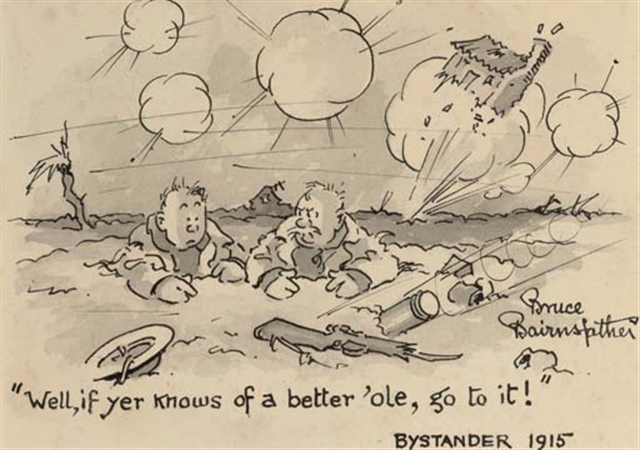
A better 'ole

Instead of summarising the lot, I will pick one or two of the points which Richard Susskind made which seemed to me to have particular relevance in the litigation support context. Continue reading

Posted in eDisclosure, eDisclosure Conferences, eDiscovery, Electronic disclosure, ILTA, Legal Technology, Litigation, Litigation costs, Litigation Support | Leave a comment

Recruiting one’s strength for post-recession litigation support

The Litigation Support Peer Group had a session at ILTA09 called The Future of Our Litigation Support Profession: What Lies Ahead? These are the people who actually do the work, so their reports and their views are worth having. They, and the high-level recruiter who sat with them, were optimistic, and that looks like more than mere hype.

What is interesting about discovery and electronic discovery, at least from where I sit, is that it embraces everything from state policy down to the minutiae of data handling, passing on the way some sophisticated technology, board-level strategy in law firms and their clients, and wider concepts like justice, winning and the like. It is also interesting, however, in career terms and in how firms and companies set up, structure and run the business unit which handles disclosure / discovery. Amidst all these high-flown business, technical and philosophical areas are people, in ones and twos or in teams, who are actually doing the work. Lest the reference to “business unit” may seem to imply big teams in grand departments, I see it as embracing also a single person in a small firm whose management is of projects and outsiders rather than of  internal teams and who does not have to have responsibility for staff to need the tactical and strategic skills which were discussed in the session.

The Litigation Support Peer Group of ILTA is run by and for people like this. One of the many things that is interesting about the industry is that few have grown old working in it because it is itself too young (they may feel that they have aged fast, but that is a different point; Browning Marean claims to be 36, for example). Those in senior positions in litigation support have, by and large, transferred across either from the pure law side or from IT. Every firm has developed its own way of doing things, and three of those sitting on the panel are examples of those who have forged careers and taken on responsibility in what is a whole new area of practice. Continue reading

Posted in Discovery, Document Retention, eDisclosure, eDiscovery, Electronic disclosure, ILTA, Legal Technology, Litigation Support | Leave a comment

Suburban lords a’leaping

One of my roles for sponsors is to pick up the nuances of language differences between American terminology and English English, which amount to a great deal more than remembering to avoid references to “attorney”. It is not that I claim anything special for English English (well I do, of course, but not in this context) but that if you are trying to sell solutions to English lawyers, you should do so in their language.

I was a little taken aback this morning to find a large and very smart black people carrier outside the Gaylord National Hotel with the name “Suburban” proudly emblazoned on its side. That would be the kiss of death in marketing terms in England. It is not that we don’t value the suburbs – people like to live and bring up their children in them and they hold an important place in modern British culture. Like so many other things which we value, however, we simultaneously despise them. Where Americans see (I assume) pleasant detached houses in large green plots behind low white fences, we think of rows of tacky 1930s semis or even tackier 1970s estates, where people with dubious accents and faux-posh expressions twitch their net curtains in between bouts of wife-swapping. Continue reading

Posted in Litigation Support | Leave a comment

News from the front at ILTA

It overstates it more than a little to call this news. There are rumours of news but, as I write this on Monday, the vendor stands are still being put up and, if there are announcements being made, I am missing them [correction: FTI Technology has just launched Ringtail QuickCull Appliance for In-House E-Discovery sometime between my starting this article and reaching the end. More when I have seen it]. Mind you, you could miss the announcement of a war here. Continue reading

Posted in Discovery, E-Discovery Suppliers, FTI Technology, Litigation Support | Leave a comment

Bigger in America

It is obvious why American discovery must necessarily be bigger than discovery anywhere else. Everything else is bigger here and it is perhaps a point of honour – there would be a sense of failure if any other country had bigger discovery exercises than America.

Rain at ILTATake the rain, for example. It was pouring down when I last left the US, after CEIC in Orlando in May. We could barely see the car in front as we drove to the airport. That same storm seemed to have reached Washington today, as Nigel Murray of Trilantic and I drove towards the Gaylord National Resort in Washington, the venue for ILTA09.

Like its twin in Dallas which was ILTA’s venue last year, this place is enormous. I spent the first hour or so exploring its vastness. It is not that there is nobody here. As its name implies, the Gaylord is a resort, and, for the weekend least, there are a lot of families here. There are two wedding parties going on – I can guess that they are separate parties because their respective guests are stunningly turned out in what appear to be themed uniforms, pale green silk for one and deep red and white for the other. Do only beautiful people go to weddings here or is there something about weddings which makes everyone look attractive? This is another of these “which came first” questions, rather like the ones which arise about the size of document populations – did the technology for document creation and storage develop to meet a need for more documents, or do we create more documents because the technology exists? Continue reading

Posted in Discovery, E-Discovery Suppliers, eDisclosure, eDisclosure Conferences, eDiscovery, Electronic disclosure, ILTA, Litigation costs | Leave a comment

Gone to ILTA

I will be at ILTA09 in Washington for most of the next week.

ILTA09

I have a few meetings and will go to some of the litigation sessions, but most of the time will pass in bumping into people and chatting. That does not sound like hard work, I know, but it is nevertheless what the job entails. I enjoy it and it tops up what I otherwise acquire by reading and e-mail contacts.

Reports will follow, not necessarily from ILTA itself (no time for that, too many people to talk to) but on my return at the end of next week.

Home

Posted in eDisclosure Conferences, eDiscovery, Electronic disclosure, ILTA, Litigation, Litigation Support | Leave a comment

London meeting of Women in eDiscovery

I am a supporter of Women in eDiscovery and glad to learn from Laura Kelly of Epiq Systems that the London branch is active. They have a meeting on 17 September at the offices of Fulbright & Jaworski, 85 Fleet Street, London, EC4Y 1AE. Continue reading

Posted in Data privacy, Data Protection, Discovery, eDisclosure, eDiscovery, Electronic disclosure, EU, Forensic data collections, Litigation Support | Leave a comment

Socha and Gelbmann survey the EDD market

No time to précis it or comment on it, but George Socha and Tom Gelbmann have published their annual overview of the results of their annual survey on the Legal Technology News site.

If asked to pick the most important single observation from it, I would pick the shortage of expertise in the market-place, with providers, law firms and corporates reported as fighting each other for the few people who actually understand what is involved in handling electronic documents. That is important because it can only grow as a problem as we come out of recession. You can take or leave the predictions of 20% or 25% growth which some of the Socha-Gelbmann respondents apparently predict (I am prepared to take them myself) but it is certain that a generation of skilled and knowledgable people is not going to spring from nowhere.

I will give a more thoughtful assessment when I get back from ILTA in Washington. At the moment, my focus is rather more on clearing my decks before heading for the airport.

Home

Posted in Discovery, E-Discovery Suppliers, eDisclosure, eDiscovery, Electronic disclosure, ILTA, Legal Technology | Leave a comment

Richard Susskind End of Lawyers resources

Having yesterday bracketed Richard Susskind with Private Frazer of Dad’s Army, that other well-known prophet of doom from Scotland (whilst immediately accepting that “We’re all doomed, doomed I tell ye” is an “unduly succinct and not wholly accurate précis” of Richard’s book The End of Lawyers?), I should make amends by pointing you to a list on the Legal Informatics Blog of what is a pretty impressive list of commentaries and reviews of the book and its thesis.

Richard Susskind is speaking at ILTA in Washington next week. I will be there and will report back in due course.

Home

Posted in ILTA, Litigation | Leave a comment

Show me more like this

Guidance Software’s new EnCase Portable is interesting enough for itself. The way in which they are promoting it is even more so. The industry as a whole could make use of YouTube’s ability to point users to related material.

I happened to be with Guidance Software on the day that they announced EnCase Portable the new pocket-sized version of their forensic collection application EnCase, at a meeting of their Strategic Advisory Board at CEIC in Orlando in May. We were given a preview of the extremely neat kit — one USB drive containing EnCase and another to hold the data. The ability to put a forensic collection of data into your pocket looks like a proposition which should sell itself.

A couple of weeks earlier, I had written an article called the Untapped potential of YouTube as a promotional medium . The immediate context was the launch that week of a song called What Really Matters to Me by The Phoenix Fall, whose drummer is my son Charlie (it did very well, thank you for asking, and the second one is due out soon). The more important theme of my article, however, was that YouTube offered an instantly accessible promotional vehicle which went far beyond music videos. I raised, but quickly dismissed, the idea that Sir Rupert Jackson might launch his Preliminary Report (which was due out the next day) via a YouTube broadcast, but omitted to mention that Senior Master Whitaker once did a brief YouTube video about e-disclosure. Continue reading

Posted in CaseLogistix, CEIC, Discovery, E-Discovery Suppliers, eDisclosure, eDiscovery, Electronic disclosure, FTI Technology, Guidance Software, IQPC, Legal Technology | Leave a comment

Detailed assessments of litigation costs

Everything was a mystery when I became an articled clerk in the late 1970s, not least that label “articled clerk”. Your articles were a period of apprenticeship, and the name also of the document which you and your principal signed by which he was bound to instruct you in the mysteries of legal practice. Of all the mysteries, the darkest was the job of the costs draftsmen. Literally darkest in fact, since these two elderly gentlemen shared a large gloomy room in the basement of the firm’s Georgian building in Gray’s Inn. My visits to them were rare, probably to deliver a file found to be missing from the huge piles which surrounded them. I never saw them anywhere else in the office. From time to time, a pile of files would return from its (always prolonged) stint in the basement, accompanied by pages of narrative and figures on stiff, strangely ruled, paper.

Firms of that size had not, until recently, had litigation partners. The client partner fronted the case, with the unglamorous parts falling to a managing clerk. The managing clerk’s office, also in the basement, had been turned into a stationery cupboard by my day, which gives some idea of his status.

In due course, the two old gentlemen disappeared and their role was contracted out. I recall taking part in only one formal dispute over the costs payable by the loser to the winner. My recollection is that my opponent was as ignorant as I was about the procedure, the principles and the components of the bill.

The costs of arguing about costs were a powerful disincentive to agree them, and it was usually possible to lump the costs in with the settlement figure or agree a rough and ready percentage of the fees actually paid by the winning party. Nothing much changes, I suspect, except that the amounts now are much larger, both absolutely and as a proportion of the sums in issue. Many cases are fought on, long after the parties have lost interest in the issues, because the sunk costs are so high. Continue reading

Posted in Discovery, eDisclosure, eDiscovery, Electronic disclosure, Litigation, Litigation costs, Litigation Support, Lord Justice Jackson | Leave a comment

Dates with a history

Readers with long memories (I am talking ten days or so here) may recall an article Setting up dates for lawyers in which I extended an olive branch to anonymous Blogger 585 with whom I had taken issue in previous posts. 585 had written two articles about the scope for confusion caused by multiple date values stored within some files. Although I have served my time handling rows and columns of data, there is enough to cover in the wider legal and supplier market, and I rarely get into technical minutiae.

What I am interested in (and why I passed on the links which you will find in my post) is the message to lawyers and judges that, whilst there is a mass of technical detail underlying the handling of electronic documents, it is not generally necessary for the lawyer to dirty his hands with it. The lawyer does, however, need to understand what kinds of problems can arise, so that they can be anticipated, so that advice can be sought on them and so that the implications are factored into the time and cost budgets. One good reason for keeping off technical points is that there is usually more than one viewpoint, and I do not particularly want to play host to arguments about the finer points of data handling. Continue reading

Posted in Discovery, eDisclosure, eDiscovery, Electronic disclosure, Lit Sup Technical, Litigation Support | Leave a comment

Web demos allow interest without commitment

Technology companies make little use of technology to deliver their messages. Web demos may lack the personal touch of a face-to-face show, but you can reach many more people. They offer unparalleled opportunities to show off your products without the mutual commitment which a physical demo offers. The committed people will find you anyway – it is the others you need to reach.

The two web resources I talk about (from Anacomp/CaseLogistix here and Guidance Software in a separate article) are two I fell over (and the fact that I did so is perhaps interesting in its own right, since being found by people who are not looking is an obvious plus). I am sure they are not the only ones – let me know if you own, or have found, a web demonstration which is interesting as an informational medium.

I wrote recently about software demonstrations which I organised for Lord Justice Jackson (Jackson Litigation Costs Review consultation ends). Epiq Systems, Autonomy,  and FTI Technology each sent along their best demonstrators and compressed their shows into 30 minutes each. The result was one of the most illuminating sessions I have ever seen.

You probably need to be a Lord Justice of Appeal with a report to write to command such a luxury. It is difficult for lawyers to organise multiple demonstrations and for suppliers to send their best men to every firm or company which expresses mild interest in their product. Not the least of the problems is that lawyers are fairly wary of expressing even mild interest. Merely putting their head above the parapet will, they fear, lead to a constant barrage of calls from an eager salesman keen to convert that mild interest into a sale, preferably a big one and during the current quarter. That dreadful question “so how soon will you be making a decision?” is the biggest deal-killer there is, and fear of it puts off those who simply know want what is out there or even just to understand the concepts. The supplier, for its part, has finite resources and an obvious wish to focus on the key targets. The salesmen himself (and it usually is a him) has an obvious personal interest in spending his time with those most likely to reach a quick decision. Continue reading

Posted in CaseLogistix, Discovery, E-Discovery Suppliers, eDisclosure, eDiscovery, Electronic disclosure, Epiq Systems, FTI Technology, Litigation Support, Lord Justice Jackson | Leave a comment

Judge Facciola on US and UK judicial discovery education

US Magistrate Judge John Facciola has recorded a podcast interview with Sarah Haynes of IQPC. This follows a very successful judicial panel which Guidance Software organised at IQPC’s e-disclosure conference in London in May (see The discovery of disclosure commonality with a trans-Atlantic judicial panel)

The interview can be found here. You have to register to access it, but it repays that small effort.

Judge Facciola said that US judges now manage cases from their inception, including participation in the discovery process. Magistrate Judges, whose role includes trying to settle cases, are applying the same approach to the discovery disputes – trying to settle them. You cannot, he said, just sit there and wait for something to happen, but must be very proactive in dealing with matters in an anticipatory way. Judges cannot exempt themselves from the duty of competence which they expect from the lawyers, and the Federal Judicial Centre is holding two day conferences with a particular focus on discovery. Continue reading

Posted in Case Management, Courts, Discovery, Document Retention, eDisclosure, eDiscovery, Electronic disclosure, Judges, Litigation, Litigation Readiness, Lord Justice Jackson | Leave a comment

How can we do this differently?

I am sent a fair number of press releases, although many of those who know I am interested in them seem to think that I acquire my information by some kind of intuition. Many of the PRs I do get add little to the sum of human knowledge. Many more, themselves worth following up, join a queue whose head they never reach. It is all a matter of timing. The upside to my refusal to do copy-paste journalism may be more reflective comment, but there are only seven working days in the week and a press release needs a wider context than merely its own news.

As I mentioned in a post last week (The right combination of skills at the best possible price) H5 dropped a press release into my InBox as I was writing an article about litigation lawyers dividing up cases and passing on the functions which they either do not do very well or cannot do cost effectively (or “cheaply” as the client would put it). I had in mind the marketing collateral, as well as the working benefits, of an approach which shifted the focus away from charging rates and towards placing tasks where they could be done best. The immediate context was outsourcing, for example of litigation coding and first-pass review, but I made the point that such a division of labour may be a marriage of equals rather than merely lawyers hiving off the unprofitable stuff and sending it down the food-chain. The H5 press release related to just such a marriage of equals, in this case between H5 and O’Melveny & Myers. Continue reading

Posted in Discovery, E-Discovery Suppliers, eDisclosure, eDiscovery, Electronic disclosure, H5, Litigation, Litigation costs, Litigation Support | Leave a comment

Equivio>Relevance Case Studies – men against machines

It is always helpful, when introducing something new, to be able to measure it against a familiar yardstick. When engines were first invented, their power was expressed as a multiple of the power of horses, and horses remain the comparator even now – highly sophisticated motorcars are still advertised by reference to the number of carthorses it would take to generate the same power output. We help each other to picture dimensions – height, length or area – by reference (in England at any rate) to Nelson’s Column, a London bus or a football pitch. I have heard document volumes expressed as “ESBs”, that is, the number of Empire State Buildings they would make if stacked (1 ESB = 7.57575758 Nelson’s Columns in case you wondered). We still refer to a “Gold standard”, although gold ceased to be the common medium of international exchange in 1971.

It is generally accepted by lawyers that the gold standard for accuracy of document review is reading by humans. For many lawyers, this is the standard to which they aspire and which they feel their duty requires of them. This is not the same as turning their backs on electronic review – they may be happy to conduct their review on the screen rather than on paper but are unwilling to delegate to a machine the task of deciding which documents must be reviewed and what decisions are made about them. It only when they get a case which cannot possibly be handled on this basis, that is, cannot be culled and filtered by humans, that they turn to technology. Continue reading

Posted in Discovery, E-Discovery Suppliers, eDisclosure, eDiscovery, Electronic disclosure, Epiq Systems, Equivio | Leave a comment

The value of elephants as an illustrative example

It occurs to me that elephants have turned up more than once on this site as a source of parallels or illustrations. Their first appearance here was in May, when my attention was caught by some large plastic elephants in a hotel pool in Orlando (see Describing the ediscovery elephant). I concluded there that what discovery and elephants had in common that you could describe both of them to a blind person but that their impression ”though broadly accurate in outline, would inevitably be hazy on detail”.

A few days ago, comparing the UK and US approaches to e-discovery / e-disclosure in an article called Sugaring the e-disclosure pill , I said “On our side, it is the elephant in the room which no one discusses. In the US, it is just an elephant, big, ungainly, and very expensive to feed”.

Craig Ball was taken with this example, and leaped smartly in to point out that the expense of feeding elephants is only the beginning of the problem. You then have to deal with what results from feeding them. Craig says that he is “among the ranks who clean up after the elephant”. Continue reading

Posted in eDisclosure, eDiscovery, Electronic disclosure, Litigation Support | Leave a comment

The CPR were a product of their time. That time has gone.

If I were peddling porn or a political party, I would gauge the success of this site by the number of hits each day. I am content enough with that indicator, but what is more interesting to me are comments which suggest that people with a real interest in litigation and its management are reading my articles and finding that they strike a chord with them. It is particularly gratifying when, as last week, the comments come equally from Australia, the US and London – a reflection, I am the first to admit, of the universality of the subject matter rather than my own gloss on it.

Richard Harrison, a litigation partner at Laytons in London, was one of those who took the trouble to drop me a line last week. I value it because Richard is one of the few who combines actual practice in litigation for commercial clients with serious thought as to litigation’s place in society and as to how best to serve both the interests of justice and the clients’ needs. This cross-over between practice and thinking is vital: one of the biggest e-disclosure exercises I have been involved in, years ago, was for a Laytons partner;  Richard and I exchange e-mails from time to time or meet at conferences, and  he is one of those contacts who helps to keep my thinking rooted in the practicalities of life from the solicitor’s perspective. Continue reading

Posted in Access to Justice, Civil justice, Court Rules, CPR, Litigation | Leave a comment

SCL Annual Conference: The impact of changing economic cycles on the practice of IT Law

I promised in an earlier post to follow up on a reference to the Society for Computers and Law Annual Conference. This takes place in Bath on 9 and 10 October, with the title The impact of changing economic cycles on the practice of IT Law.

The Speakers’ list includes some people worth listening to. Restricting myself only to the ones I know or have heard speak, the list includes the following: Continue reading

Posted in eDisclosure, Electronic disclosure, SCL | Leave a comment

Setting up dates for lawyers

It was usually fairly easy to give a date to a document in the days of paper files. In the absence of evidence to the contrary, one accepted the date typed or written on the face of document. If there was no date, the document’s place in the file was often a reasonable guide. There were usually few enough documents that one could look at the contents and draw a conclusion, at least as to roughly where in the date order list a document should appear. Since the lists themselves were hand-typed, the description could include “of approximately this date” or some such qualification to draw attention to the degree of uncertainty.

You cannot do that now – the volumes are too great for this kind of detective work and, except for scanned paper, descriptions  generally consist of a file name or subject line derived automatically from the file. Besides, electronic files all carry their own dates, don’t they? Continue reading

Posted in Discovery, eDisclosure, eDiscovery, Electronic disclosure | Leave a comment

The e-discovery black box

I am not sure how they keep the standard up, but CaseCentral has been publishing a constant stream of cartoons about e-discovery which must have done wonders for their profile. If I copied every one I liked, I would by now have run out of my allocation of storage space.

A recent one called The e-discovery black box encapsulates well the lawyer’s understanding of what goes on between asking “the system” a question and getting the answer. Charles Christian has beaten me to its republication, and it is easier to link to his copy than to make my own.

Home

Posted in Discovery, E-Discovery Suppliers, eDisclosure, eDiscovery, Electronic disclosure, Legal Technology, Litigation Support | Leave a comment

How big is the London e-disclosure market?

I may have brought you here under false pretences. I have no idea how big the London e-disclosure market is and I do not think that anyone else does either. I occasionally hear confident assertions suggesting that there is either much more or much less e-disclosure going on than people think but, since the starting point for these relative assessments is never specified, it is hard to deduce what “much more” or “much less” actually means. There is much less here than there is in America, but the same is true (for different reasons) of caribou and McDonald’s outlets. It is a statement of the obvious, rather than a valuable piece of market intelligence. Continue reading

Posted in CaseLogistix, E-Discovery Suppliers, eDisclosure, eDiscovery, Electronic disclosure, Forensic data collections, Litigation Support | Leave a comment

Sugaring the e-disclosure pill

My adverse comments on a post by an e-disclosure blogger known only as 585 bring reactions from Craig Ball and from 585 himself. What level of debate gets the messages across? Politics shows us how easily we can turn people off a subject.

You can track the course of the sun by the flow of the e-mails. First you get the Australians at the end of their day. England gradually wakes up and then, in the late morning, the first messages start coming in from America’s east coast. By the end of our working day, when English e-disclosure cyberspace has only me and Jonathan Maas in it, the west coast of America is in full flow. Then, before I go to bed, Australia starts again. So regular is this relationship between the sun and the e-mail traffic, that to get a message from Austin, Texas, at breakfast time makes you wonder if Phaëton had not once again taken the reins of his father’s chariot and driven the sun off course (oops, sorry, a few days’ immersion in the language of Sir Rupert Jackson’s report, as I have just had, and classical allusions start popping up everywhere).

Jan Eyck: The Fall of PhaetonJan Eyck: The Fall of Phaëton

It was not Phaëton burning up the earth, but the doyen of America’s ediscovery commentators, Craig Ball, burning the candle at both ends. He had read my post Well-justified anonymity of Jackson commentator. To recap, that article was about an anonymous blogger, known only as 585, whose comments on Lord Justice Jackson’s 650 page Preliminary Report on civil litigation costs included a 625 word exposition on the proper way to disclose PSTs (Sir Rupert had apparently fallen short of the standards to be expected of a senior judge in his mention of this subject) and a disquisition on the imponderables which arise when estimating e-disclosure costs which, again, suggested to 585 that his lordship’s technical grasp was not as good as – well, as 585’s own grasp. Other articles were rather too free, to my eye, with imputations of incompetence on the part of lawyers and consultants involved in e-disclosure cases. 585’s article is called Electronic Discovery: Lord Jackson Report. Continue reading

Posted in Discovery, eDisclosure, eDiscovery, Electronic disclosure, Litigation Support, Lord Justice Jackson | Leave a comment

Electronic Disclosure – Jackson by numbers

I have some heavyweight writing in hand at the moment involving, amongst other things, an analysis of the costs figures which Lord Justice Jackson set out in his Preliminary Report on Litigation Costs. Most of my articles come from my head, fortified by occasional references to other sources. These heavier papers are rather different, with lots of cross-referring between, in this case, the Preliminary Report, its Appendix 19 and the Civil Procedure Rules.

With that section done, something made me look back through my as-yet unfiled InBox to the week before I went on holiday. I had a vague recollection that I had not followed up a message from Laurence Eastham, editor of the Society for Computers and Law’s excellent magazine and website. I found it eventually – a recommendation that I look at an e-disclosure article on the Computers and Law site. Remorsefully, I looked it up – to find that it was all about the costs figures which Lord Justice Jackson set out in his preliminary report. I could have saved myself some research. Continue reading

Posted in CPR, eDisclosure, eDiscovery, Electronic disclosure, Litigation, Litigation costs, Litigation Support, Lord Justice Jackson | Leave a comment

The right combination of skills at the best possible price

“Outsourcing” is just a label for the distribution of functions into the hands best equipped to perform them at the lowest cost. Both the functions and the relative costs change over time and need constant re-evaluation. Cost reduction involves more than the lowest rates, and the right marriage of skills does not necessarily require foreign adventures.

I wonder if it was wise of me to write about outsourcing (Do two outsourcing stories in one week presage a trend?). Every mom and pop coding shop from the Himalayas to Kanyakuman has been ringing me up – well, two of them anyway and that is two too many – trying to press their services on me. I had thought that I had seen them off last year.

I object to these calls on so many levels, none of which stems directly from the fact that they emanate from India. One is their grapeshot nature – the fact that the word “litigation” appears on my website seems to warrant picking up the phone to me, without any attempt to determine whether my role is likely to involve outsourcing coding work (it does not). Another is the lack of any attempt by the caller to distinguish his company’s services from the hundreds of others offering similar services; each of them recites some basic litigation support functions as if they had just invented the concept, and if you ask the for something, anything, which makes the caller’s company better than (or even just different from) any other, this is taken as an invitation to start from the top again with the recital of basic functions. I resent the repeated calls – either they are not bothering to record the answer I gave last time or they hope to batter me into submission; perhaps they hope to catch me out in an unguarded moment so that I inadvertently send them a big job. Above all, I reckon that if you are ringing up somebody in England, you should choose someone with a basic grasp of English to make the call. If the salesmen cannot speak English clearly, what might I expect from the technicians if I sent them a job to do? Continue reading

Posted in Discovery, eDisclosure, eDiscovery, Electronic disclosure, Litigation, Litigation costs, Litigation Support, Outsourcing | Leave a comment

Jackson Litigation Costs Review consultation ends

A few seconds before midnight on Friday, an e-mail arrived from Abigail Pilkington, the Clerk to the Review of Civil Litigation Costs. It was a bit eerie, really. The East Wing of the Royal Courts of Justice is a cavernous, Gothic place at the best of times, like Hogwarts without the wizards. I got locked into an upper corridor one evening, many years ago (accidentally, I should say, looking for a judge to grant an injunction) and found it a disquieting experience. I pictured Abigail on her own in the gloom, conscientiously sending out acknowledgements to late submissions like mine. Closer inspection showed firstly that the e-mail was an autoreply, and secondly that it had actually been sent within a few moments of me sending my e-mail earlier that day. Perhaps the RCJ needs some wizards to look at it is e-mail system.

The message included a reminder that submissions must also be sent as hard copy. Fortunately (since the 31 July deadline was due to expire 30 seconds later), I had finished my submission with a day in hand and had noticed the requirement to send a hard copy in the nick of time. That took me back a bit – I don’t think I have sent out a hard copy of anything this century. I blew dust off the printer, and found one of those plastic spines which had fortunately survived my recent cull of office equipment which I don’t use any more. After lots of faffing about with envelopes and Sellotape, I set off to find a post office. Gordon Brown’s commitment to public services has included closing many of these essential local services, and our nearest one, some way off, is run with that surly inattentiveness which results from having a monopoly. You can’t drive to it – there is usually a queue, and the traffic wardens are the only competent and efficient representatives of our local authorities here in Oxford. So I waited for a gap in the rain, and walked to the post office, queued by the notices warning of all the services which post offices do not provide any more, had my package weighed, paid for the stamp, and trudged back to my desk. Continue reading

Posted in Access to Justice, Attenex, Case Management, Civil justice, Court Rules, Courts, CPR, Discovery, DocuMatrix, E-Discovery Suppliers, Early Case Assessment, eDisclosure, eDiscovery, Electronic disclosure, Equivio, FTI Technology, Judges, Litigation, Litigation costs, Litigation Support, Lord Justice Jackson, RingTail | Leave a comment

Once bitten is twice shy – but you may find that things have changed

My experience of trying voice recognition software again after a failed experiment some years ago, has messages for those who have not caught up with developments in litigation support software.

I have come back to voice recognition software after many years of assuming that it was an unwieldy and inaccurate method of transferring words from head to screen. I am immediately hooked and regret all those years spent crouched over a keyboard. Or do I? Is it possible that I have come back to it just at the point where it has reached a level of accuracy which is adequate for my needs, and just when those needs are greatest?

The e-disclosure context here is all those potential users of litigation support applications who dip their toes into the water once and retreat vowing never to try again. Some inadequacy, ranging from an outright system failure which lost their case through to a minor annoyance which became too tiresome to tolerate put them off, often with cries of “I told you so” ringing in their ears. Continue reading

Posted in Discovery, E-Discovery Suppliers, Early Case Assessment, eDisclosure, eDiscovery, Electronic disclosure, Legal Technology, Litigation, Litigation costs, Litigation Support | Leave a comment

Well-justified anonymity of Jackson commentator

I am not sure what to make of an article which I have found on a blog criticising aspects of Lord Justice Jackson’s Preliminary Report on litigation costs. I have a general rule that if I do not have something pleasant to say in print, I keep my mouth shut. There are exceptions, of course, whom space does not permit me to list here but, on the whole, I reckon it is possible to comment thoughtfully and helpfully on the litigation support industry without attacking anybody, even if I have, occasionally, to grit my teeth.

I have stumbled upon this blog before, tipped off by one of my Google alerts. It seems competent, workmanlike stuff written by someone who (how shall I put this?) understands more about the technology than he does about the civil litigation context in which it is used. I have no problem with that – he knows much more than I do about file systems and data recovery – but I am put off, just a little, by the fact that the site is anonymous, with no clue as to who the author is or with what authority he writes. He calls himself 585. Do this number hold any clues as to his identity? 585 is (as I’m sure you know) the GeneID of Bardet-Biedl syndrome 4, whose symptoms I will spare you. I very much hope that this is not why he chose 585 as his alias. Perhaps it is his telephone extension. Continue reading

Posted in Case Management, Courts, eDisclosure, eDiscovery, Electronic disclosure, Forensic data collections, Judges, Litigation, Litigation Support | Leave a comment

Woolf v Genn: the decline of civil justice

My post’s heading, Woolf v Genn: the decline of civil justice, is taken from an article in the Times of 23 June 2009 which I missed. I do not altogether blame myself for not seeing it — the people who redesigned the Times website last year, turning it from a place of structured order into a kind of literary lucky dip, have recently turned their attentions to the print edition, and only random chance now brings me to the legal pages. Doubtless some of the alterations were for the better, but the designers could not resist throwing in some extra change-for-the-sake-of-change to ensure that we noticed that things were different now.

Much the same is said of the Civil Procedure Rules of 1999. An overhaul was overdue and some of the resulting amendments were undoubtedly for the better. The designers, however, felt obliged to make some showy changes, apparently for their own sake. If there was any logic in changing “discovery” to “disclosure” or in doing away with terms like “plaintiff”, “writ” or “Anton Piller” they were lost on me and on many others. I have already referred to an excellent article by HHJ Charles Harris QC published in The Times on 16 April (Sad and unsatisfactory — but not destroyed) who said this: Continue reading

Posted in Access to Justice, Case Management, Civil justice, Court Rules, Courts, CPR, eDisclosure, eDiscovery, Electronic disclosure, Judges | Leave a comment

Lord Neuberger to be Master of the Rolls

It is good news that Lord Neuberger of Abbotsbury is to be the new Master of the Rolls from 1 October (see the Times story here). The Master of the Rolls is the Head of Civil Justice and therefore the one who will be in charge of implementing the litigation costs recommendations to be made by Lord Justice Jackson at the end of this year.

His past roles include a stint as Judge in Charge of Modernisation which is a useful piece of background to bring to a civil justice system which desperately needs bringing up to date, both in its own systems and in the attitudes which the judiciary bring to court and should expect of parties.

I sat next to him at a Judicial Studies Board meeting last year when HHJ Simon Brown QC and I went with Mike Brown of Epiq Systems to talk about electronic disclosure and to show what modern litigation support systems were capable of doing. It would fair to say that not everyone in the audience got the point. Lord Neuberger certainly did.

Home

Posted in Civil justice, Courts, Judges, Litigation, Litigation costs, Lord Justice Jackson | Leave a comment

Getting away from it all

I have never been much good at this holiday lark. I can manage the logistics of travel, and I do not suffer from any illusion that the world’s continuing rotation depends on my being at my desk. I can flit off without a qualm if the destination is a foreign conference, but disappearing voluntarily is a different matter. I blame the Protestant work ethic in which I was brought up, then on being a law firm partner just at the point in the 1980s when we moved from having drinks before lunch to missing lunch altogether, and, finally, on several years of running a business involving software support which really did depend on my being available. What I do now in fact has few geographical constraints thanks to the BlackBerry and the ubiquity of broadband. It is, I begin to realize, no bad thing to give the brain a rest from time to time.

It is never the right time, of course, but the back-to-back conjunction of an unexpected opportunity to borrow a house and two commitments (simultaneously pleasurable and inescapable) took me out for two weeks notwithstanding my backlog. I should have been in Hong Kong, speaking at the LexisNexis e-discovery conference there; they got HHJ Simon Brown QC in my place, which will not have upset them at all. I had to break off a mind-stretching correspondence with a US commentator about the implications of a particular US Opinion which filled the closing moments before I left.  A white paper was part-done when I went away; I took it with me in the vain hope of finishing it off, but it will be the better for having been unopened for a fortnight. Continue reading

Posted in Case Management, Civil justice, Court Rules, CPR, Discovery, eDisclosure, eDiscovery, Electronic disclosure, Judges, Litigation Support | Leave a comment

Brief service intermission

You have probably heard enough from me for a bit, and I am pushing off to the country for a few days. My wife is just back from yachting in Croatia, and I see more than enough of aeroplanes and departure lounges during the rest of the year, so England suits us well.

We have been lent a cottage on an estate with a famed garden. Back properly on 23 July.

Posted in Litigation Support | Leave a comment

The information war – news from the front updated

My post Cooperative hands across the sea referred to an article by Jason Baron on Ralph Losey’s e-Discovery Team blog.  Jason’s article attracted some comments, two of which are worth hiving off for comment in their own right. One concerns the “information war” and is covered here. The other is about lawyer education which I will come back to.

Dr Jochen Lardner urges the importance of having the skills to conduct searches in any area of life in an information economy. He refers to “authority/credibility, censorship, technical failure, cybercrime/disinformation/information warfare”. Regular readers will know of my strongly-held view that all of these things, with the possible exception of cybercrime, are areas where UK citizens must do battle daily with their own government, both defensively (it will record everything about you and then lose the data) and offensively (MP’s expenses, ministerial cover-ups).

It now seems likely that the Labour Government will die of weakness and internal corruption before we get to the hanging-from-lamp-posts stage of civil disturbance which seemed a real possibility earlier this year. Nevertheless, we must remain alert to the potential for government misuse (whether by carelessness, incompetence or design) of the mass of private information which is collected about us, and be able to fight fire with fire – the “disinformation/information warfare” to which Dr Lardner refers is a civil war as well as one against foreign powers. Continue reading

Posted in Brussels, Civil justice, Data privacy, Data Protection, Discovery, eDisclosure, eDiscovery, Electronic disclosure, EU, Forensic data collections, Litigation Support | Leave a comment

Outsource edisclosure and share the load

The outsourcing of legal functions is suddenly topical as a result of Rio Tinto’s decision to set up an outsourced legal resource in India and Pinsent Masons’ plan to have first pass litigation review done in South Africa – see Do two outsourcing stories in one week presage a trend?

Those who think that this is taking outsourcing too far, as it were, should bear in mind that the principles, the potential savings and the ability to add e-disclosure skills and resources to their litigation armoury are available much closer to home. Furthermore, they need make no upfront investment beyond a little training, and can get started tomorrow.

The first generations of litigation support applications generally required that a law firm purchased the software for in-house use and that they employed staff to administer it. The world has moved on since then, and those tools and resources and are more usually brought on board by having the documents data hosted by a third party, usually the software provider. This has many advantages, not least the fact that someone else incurs the capital outlay and takes responsibility keeping the data available 24/7. The law firm simply gets a bill for the rental of the server space, the provision of the software and any consultancy or data services which are required. The bill can be passed on to the client as a disbursement. Continue reading

Posted in Court Rules, CPR, E-Discovery Suppliers, eDisclosure, Electronic disclosure, Epiq Systems, Litigation, Litigation Support, Part 31 CPR | Leave a comment

Cooperative hands across the sea

My post about the increasing exchange of ideas between the US and UK on matters of electronic discovery (Preserving the old ways, protecting the new ways) followed a spate of references in US e-discovery commentaries to what is happening in the UK. I observed that “The UK’s apparently quaint approach to disclosure conceals some workmanlike rules which deserve better use and serious consideration by others as well as ourselves”. An English audience may be interested to see some of what is said about us in the US.

The sources referred to below are amongst those to which I pay regular visits anyway, but their common element last week was that they all linked to articles of mine (and therefore turned up on my visitor statistics list). The point of the observation is not so much pride in the quality of my audience as evidence that what happens in the UK is now of interest in the US, which you would not have found a year or so ago. Continue reading

Posted in Case Management, Court Rules, Courts, CPR, Data privacy, Data Protection, Discovery, eDisclosure, eDiscovery, Electronic disclosure, FRCP, Litigation Support, Part 31 CPR | Leave a comment

Preserving the old ways, protecting the new ways

This column, as you may have noticed, is deeply attached to the old principles of discovery of documents as a means of bringing evidence before the court. It is also a determined advocate of new ways of managing it. The US has tended to look on our rules and practice as rather quaint. As the gloss comes off the American way, however, there is a new appreciation of the British approach.

My title comes from a 1968 song by the Kinks. The Village Green Preservation Society included the lines

Preserving the old ways from being abused
Protecting the new ways for me and for you
What more can we do?

The Kinks were past their prime by 1968, with Waterloo Sunset and Sunny Afternoon behind them. It was the year in which Led Zeppelin and Deep Purple were new, and the nostalgia and sentiment of The Village Green Preservation Society were deliberately out of the mainstream, championing old virtues in a style redolent of an older (and perhaps non-existent) past. The previous year’s Summer of Love and flowers in your hair may in truth have been pretty unsophisticated concepts, but they seemed very modern compared with Ray Davies’s plea for “little shops, china cups and virginity”. Continue reading

Posted in Case Management, Court Rules, Courts, CPR, Discovery, eDisclosure, eDiscovery, Electronic disclosure, FRCP, Legal Technology, Litigation, Litigation costs, Litigation Support, Part 31 CPR | Leave a comment

US-UK cross-fertilisation for discovery

Vince Neicho, litigation support expert at Allen & Overy in London, has an interesting article in Legal Week about the increasing amount of discussion and shared ideas between those interested in e-discovery / eDisclosure in the US and the UK.

The heading, The same, only different, and the graphic which merges the flags of the two countries, presage the points which Vince makes. There are a mass of differences between the way the courts of the two countries approach the obligations which the parties have to disclose documents. In many ways, the perception amongst UK lawyers and judges that the whole business is just very expensive stems from these outward differences.

What the article does, however, is to emphasise that there are also core similarities, and that these are likely to increase as each side learns more about the rules and practices in the others’ jurisdiction. Continue reading

Posted in Court Rules, Courts, CPR, Discovery, eDisclosure, eDiscovery, Electronic disclosure, FRCP, Litigation, Litigation costs, Litigation Support | Leave a comment

Autonomy integrates workflow into iManage Worksite

Those whose involvement with information management comes at the discovery end of the process have come to take for granted the immense sophistication of some of the applications available at this end of the EDRM (Electronic Discovery Reference Model). One of the reasons why this is necessary is that the clients have done little to sort, filter and classify their documents as they went along.

The lawyers can compound this potential for confusion at the inception of a matter. Things happen in a rush, with forms to complete, accounts to open, standard documents to send out and track and various forms of checks to undertake – does this client or its matter raise client conflicts? Does taking on the work conflict with some ethical position which the firm (or another big client) has taken? All this has to happen at the same time as the client is sending in the first batch of documents about the matter with the breathless request to know if they will win or lose. Some of the letters and other documents and transactions require approvals, with a corresponding need to route requests and relay the reaction. Continue reading

Posted in E-Discovery Suppliers | Leave a comment

Do two outsourcing stories in one week presage a trend?

The decision by Rio Tinto to send some legal work to India comes at the same time as Pinsent Masons announces its plans to send first-pass litigation review work to South Africa. Once you strip out the protectionist reactions of those who do this work now and those who make money from their work, you see the next obvious step towards globalization, and opportunities for those – lawyers and their firms – who ride the wave.

I picture Professor Richard Susskind as having a big wall chart on which he traces the progress of his various predictions over the years. Perhaps they are colour-coded according to the amount of derision they faced as he rolled them out – bright red, for example, for the idea that lawyers might communicate by e-mail or put legal information up on publicly-available web sites. I see him putting a big red tick beside them as the world catches up, or perhaps – since the adoption tends to be incremental – a graph showing the rate of adoption. This would almost always start with a gradually-rising line and then shoot upwards as the herd follows the early-adopters.

Two stories last week will have added to one of his graph lines – the idea that lawyers will distribute some of their work outside the firm to places where it can be done more cheaply. On 19 June, the Times reported (Rio Tinto’s legal switch puts pressure on London) that Rio Tinto has hired a team of lawyers in India to try to reduce its annual £60 million legal bill by 20 per cent, recruiting 12 lawyers in Delhi to work for it on tasks such as reviewing documents and drafting contracts. On 22 June, The Lawyer wrote about Pinsent Masons’ decision to outsource some of its litigation work to South Africa, becoming, the Lawyer said, the first UK firm to offshore the work of qualified lawyers (Pinsents – first firm to offshore work of qualified UK lawyers) Continue reading

Posted in Discovery, eDisclosure, eDiscovery, Electronic disclosure, Litigation, Litigation costs, Litigation Support, Outsourcing | Leave a comment

Australia at the centre of the discovery world

The default map of the world shows Britain in the middle and near the top, with Alaska at top left and New Zealand at bottom right. Perhaps that is because Europe invented the Greenwich Meridian; maybe it is a legacy of Empire or a conspiracy of cartographers (the phrase is Tom Stoppard’s);  possibly the maps in Australia are centred on Canberra, with Iceland and Cape Horn as their left and right extremes. By any measure, anywhere else is a long way from Australia. Its influence in the world of electronic discovery is disproportionately large. Continue reading

Posted in Australian courts, Case Management, Court Rules, Courts, CPR, Discovery, E-Discovery Suppliers, Early Case Assessment, eDisclosure, eDisclosure Conferences, eDiscovery, eDiscovery Tools, EDRM, Electronic disclosure, FRCP, FTI Technology, Guidance Software, Litigation, Litigation costs, Litigation Support, Lord Justice Jackson, Nuix, Part 31 CPR, RingTail | Leave a comment

Equivio appeal to corporate IT

Back in March, I wrote about an interview which I had conducted with Warwick Sharp, Vice President of Marketing and Business Development at Equivio (see Podcast summarisises Equivio benefits). A transcript of the interview was first published in Enterprise Technology Management (ETM), Q1 2009. ETM is produced by Informed Market Intelligence (IMI), London.

IMI’s primary audience is described thus:

Information technology has evolved to be the cornerstone of all business activity. Business strategy and technology solutions have become so intertwined that IT is now the driving force behind business success or downfall.

As a result of this convergence, a new type of IT executive has emerged: one who spends the majority of his or her time on business strategy, working hand-in-hand with business colleagues to not only support but actually drive business success.

Today’s global companies need to be strategic thinkers, able to move beyond reactive and even responsive behaviour. They need to be predictive, setting the technology agenda based on their understanding of where business and technology are moving. They need to ensure that all technology investments are driven by business strategy, and that IT is being used to ensure agility and innovation throughout the organization.

My own primary audience is further along the chain, the lawyers and judges who are responsible for handling electronic discovery for litigation, regulatory and related purposes, and the suppliers who serve them. There is, however, a close relationship between the two audiences – it is the corporate IT executives who own and control the data which ends up as the raw material for disclosure. There are two ways in which we can influence the latter to be more strategic and predictive – by anticipating the company’s disclosure requirements in their information management strategies, and by working more closely with the company’s lawyers both to be ready for any disclosure eventuality and when an actual requirement arises. Continue reading

Posted in Discovery, Document Retention, E-Discovery Suppliers, eDisclosure, eDiscovery, Electronic disclosure, Equivio, Litigation Support | Leave a comment

Sedona Conference dialogue on cross-border discovery in Barcelona

As I have noted elsewhere, I had my own cross-border problems in getting to the Sedona Conference International Programme on Cross-Border eDiscovery, eDisclosure and Data Privacy Conflicts in Barcelona on 10-11 June. I was chairing an edisclosure conference in London the previous day and due in Sydney at the week-end and, in consequence, arrived late in Barcelona and left as soon as the main business ended.

I am spared my usual faithful accounts of the sessions by Sedona’s sensible rule that “what happens at Sedona stays at Sedona”. My mission generally is to get as wide an audience as possible for what is said at conferences, but I am more than happy to submit to the restriction in this context, partly because there is more than enough else to write up and partly because the density of the dialogue (and Sedona is expressly committed to dialogue rather than debate) is such that you would need a book to do justice to its proceedings.

It seems sensible instead to juxtapose some stereotypes against the reality in an attempt to show those new to the subject what the broad picture is. This matters because cross-border issues inevitably involve cross-cultural matters as well as conflicts of laws. The best and most topical summary of the issues is Working Document 1/2009 on pre-trial discovery for cross border civil litigation prepared by a Working Party set up under Article 29 of EU Directive 95/46/EC on the protection of individuals with regard to the processing of personal data and on the free movement of such data. Its introduction recites the problem thus: Continue reading

Posted in Brussels, Data privacy, Data Protection, Discovery, Document Retention, E-Discovery Suppliers, eDisclosure, eDisclosure Conferences, eDiscovery, Electronic disclosure, EU, EU Safe Harbor, Litigation Support, Sedona Conference | Leave a comment

Ark Group e-Disclosure Conference 2009

You can generate a lot of notes in six conference days in three countries in nine days and have little time to transcribe them. I am quite good at actually recording what people say, less so at the small but telling details like headings and page-numbering. I can generally rely on my memory to fill the gaps in my notes (and the bits I cannot read) but that is a tall order when information has rolled at me continuously for days like infantry at the Somme. Ark Group’s e-disclosure conference of the beginning of last week seems a distant memory on a cold, wet dawn in Sydney ten days later when I started writing it all up, still more in the dark aeroplane cabin surrounded by snoring travellers on the way home when I finished it off. There was lots of good stuff said at the conference, but I doubt you would read a verbatim account even if I could set it down. What follows is a summary.

The chairman on Day 1 was Lee Gluyas of DLA Piper UK LLP who, as in previous years, was well up to the challenge of keeping speakers to time. Lee’s opening comments identified a positive shift over the time he had been filling this role, a greater awareness of the issues and the need to grapple with them. Continue reading

Posted in Access to Justice, Case Management, Civil justice, Court Rules, Courts, CPR, Discovery, E-Discovery Suppliers, eDisclosure, eDisclosure Conferences, eDiscovery, Electronic disclosure, Epiq Systems, Forensic data collections, Litigation, Litigation Support, Lord Justice Jackson, Part 31 CPR | Leave a comment

Jackson conference challenge to litigation support providers

Lord Justice Jackson laid down a challenge to litigation support providers at the Ark Group e-Disclosure 2009 conference in London last week. They must, he said, find a way to bring down the cost of e-disclosure; if they cannot, then the basis of disclosure will have to be changed. Other jurisdictions provide a disputes forum which does not require the parties to undertake the vast exercises which are needed for compliance with the existing disclosure regime. The implication was that the old and treasured principle that all the evidence must be rigorously examined is threatened by the brute fact that the cost of conducting that examination is too high.

There is much more to say about this than can be fitted into an account of a two day conference, so I will settle for a bullet point summary of the other elements which contribute more to the costs than most suppliers do: Continue reading

Posted in Case Management, Court Rules, Courts, CPR, Discovery, E-Discovery Suppliers, eDisclosure, eDisclosure Conferences, eDiscovery, Electronic disclosure, Litigation, Litigation costs, Litigation Support | Leave a comment

In travelling as in most services delivery, it is the little things which matter

If this piece has any e-discovery parallels at all, they are to do with project management and the contingencies of time and cost which turn up in any project. It is also about the apparently trivial things which flavour a user’s experience. I am attending three conferences in sequence, and will cover them in various posts. This one is mainly about the glue holding the conferences together – the journeys in between. Like any other form of service delivery, the small things make a difference.

The primary components in travelling work quite well really. Take railways: the concept of a set of parallel metal tracks, unimpeded by third parties, should be unbeatable as a service, with no major changes in principle since Brunel’s day. It is the people running it who f*** it up. Or flying: the idea that a large metal box can take to the air and put you down safely and on time half-way round the world remains remarkable all these years after Wilbur (or was it Orville?) flew a few feet across the dunes at Kittyhawk. The fact that you can look up, book and pay for all these things, research hotels at your destination, check the weather there and make contact with everyone who needs to know your plans, all from your desk, is pretty fantastic also, and that you can do most of that whilst in transit from a little box in your pocket even more so.

It is the little things which let it down though – lack of thought about details, or bloody-mindedness, or price. I am, for example, sitting on the floor at Bangkok airport whilst I type the beginning of this piece. Bangkok is a major airline transfer hub, a place where people from all over the world have to wait for an hour or four between flights. There is everything one could want here including, incongruously, Boots the Chemist and Whittards of Chelsea, but barely enough seating except at the gates. If we are sitting down, we are not adding to the footfall which drives the rents in this vast shopping centre in the middle of nowhere – and the simple way to keep us moving round the shops, they think, is to provide only a few seats. It is an attitude called “sod the customer”. It is a trivial point compared with things like the wings staying on but I will not choose to pass this way again if I can help it – and there is a choice. Continue reading

Posted in E-Discovery Suppliers, eDisclosure Conferences, eDiscovery, Electronic disclosure | Leave a comment

Judge Grimm webinar on the Maryland Protocol

When US Chief Magistrate Judge Paul W Grimm was in London for the IQPC Information Retention and e-Disclosure Management Conference recently, he mentioned the Maryland Protocol which he and others have devised for the better handling of electronically stored information in court.

Clive Freedman of 3 Verulam Buildings, the barrister who has been responsible for the actual drafting of the proposed new e-Disclosure Practice Direction as part of Senior Master Whitaker’s drafting group, made use of part of the Maryland Protocol for part of the final version of our Practice Direction, which is to be submitted this week.

There is an opportunity to hear Judge Grimm talk about the Maryland Protocol on Tuesday 9 June at 12:00 EST, when Wave University hosts a webinar at which it will be discussed.

Registration can be made from the Wave University Webinar Schedule.

I will miss it – I am chairing the second day of the Ark Group e-Disclosure Conference that afternoon. On the strength of other webinars in which Judge Grimm has spoken, I know it will be worth listening to.

Home

Posted in Case Management, Court Rules, Courts, Discovery, eDisclosure, eDisclosure Conferences, eDiscovery, Electronic disclosure, FRCP, Judges | Leave a comment

Birmingham Post reports on costs management trial

The litigation costs management trial on which I reported a few days ago (Jackson launches costs management trial in Birmingham) has been covered by the Birmingham Post.

Their article of 3 June is headed City will be test case for costs rules and includes a photograph of Lord Justice Jackson, three of the judges from the Birmingham Civil Justice Centre who will be running the trial, and Martino Giaquinto of Mills & Reeve who hosted the event at which the trial was launched.

It is no accident that the e-Disclosure Information Project was also launched in Birmingham. The modern, forward-thinking civil courts are representative of a thriving commercial and professional centre which seems to have a more cohesive feel to its business community than many other places. Continue reading

Posted in Case Management, Civil justice, Courts, Discovery, eDisclosure, eDiscovery, Electronic disclosure, Judges, Litigation, Litigation costs, Lord Justice Jackson, Outsourcing | Leave a comment

Remember to seek disclosure of telephone recordings

A “document” is defined in Rule 31.4 CPR as “anything on which information of any kind is recorded”. Lawyers brought up in the days of paper disclosure, even those who have adjusted to electronic versions of those paper documents such as the source Word file, may overlook other things “on which information of any kind is recorded”.

At the top of the list comes recordings of telephone conversations. These days, our most mundane calls are preceded by a message warning us that our call may be recorded “for training purposes”. If that was indeed its only purpose, then the warning is little more than aural clutter to make us hate the company even more than we do already – most of us come across these messages when dealing with our ISP, utilities provider or similar organisation whose institutional incompetence extends to the erection of barriers against the customer. The added delay whilst some Estuary-accented trollop warns you about recordings certainly succeeds in putting me off making any call which is not vital, as is doubtless intended. Continue reading

Posted in E-Discovery Suppliers, eDisclosure, eDiscovery, Electronic disclosure, Litigation, Litigation costs, Litigation Support, Lord Justice Jackson | Leave a comment

The anatomy of practical disclosure and the body of evidence

Having not previously opened my doors to guest contributors, I now do so for the second time in a week. Legal Inc, who are amongst the sponsors of the e-Disclosure Information Project, held a workshop with the medical title shown above at IQPC’s  Information Retention and E-Disclosure Management Conference on 19 May. I was in Orlando at CEIC 2009 and asked Andrew Haslam to write it up for me. This is his report: Continue reading

Posted in E-Discovery Suppliers, eDisclosure, eDisclosure Conferences, EDRM, Electronic disclosure, IQPC | Leave a comment

Graphical display of thesaurus terms

The graphical display of discovery / disclosure information has been one of the most interesting developments in software designed for search of all kinds. It is specifically so for litigation document review purposes and, perhaps even more so, for early case assessments when you are trying to find out just what the scope is of your document universe.

One of the distinguishing features of such a task is that the searcher often has no real idea of what the search will turn up. In most areas of research, you have a broad idea of the parameters of the hunt – I have been looking up flights and hotels recently, for example, and had the advantage of knowing that I was after a particular kind of information (a hotel, say) in a particular place (or places, given the particularly daft schedule which faces me over the next few days). Ranging shots in Google brought me to specialised databases which had fields to search in which corresponded with obvious inputs – dates, room-type, number of nights and so on – which are standard across most such resources.

Litigation is often not like that. You will, of course, have got from your clients some clues – names, date ranges, commonly-used words and so on – but whilst they may narrow the field, they are not conclusive as to what you might turn up, not least because you (if you are a lawyer) are an officer of the court as well as the client’s gladiator, and it is your practising certificate and insurance policy which is on the line. Continue reading

Posted in Discovery, E-Discovery Suppliers, Early Case Assessment, eDisclosure, eDiscovery, Electronic disclosure, Legal Technology, Litigation, Litigation costs, Litigation Support | Leave a comment

Labour’s fall may be matched by litigation’s recovery

I have just sent off my slides for my keynote speech at the Ark Group’s e-disclosure conference on Monday 9 June. Its title is The Empty Bear Garden, and it is about the decline of litigation since the CPR of 1999 and what we can do to stem that. My conclusion is that we are in a position to turn the tide and will do so if we pay more attention to the balance between rules and discretion, focus more on what really matters and what clients want, and be willing to challenge some of the existing orthodoxies.

Roughly the same period, since New Labour’s election in 1997, has seen the rise of what the Institute for Public Policy Research recently called “intolerant centralism”. The state has become ever more intrusive into our lives at several levels: vast databases record every aspect of our lives; cameras watch our every move; faceless bureaucrats have acquired powers way beyond their abilities; widely-drawn (and badly-drawn) laws give policemen and others in uniform the purported right to exercise a discretion unintended by Parliament; highways officers at the bottom of life’s intellectual pile clutter our roads with notices and urge us to “think”; ministers who appear on the surface to have been merely useless (Jacquie Smith) or deeply stupid (Caroline Flint) emerge as sinister, assuming powers over our lives thanks to their party’s majority which we would never grant them as individuals; MPs behave as if the norms of society do not apply to them, relying on the letter, but forgetting the spirit, of the law; rules multiply, each one having the effect of  nullifying our scope and ability to think for ourselves. Continue reading

Posted in Access to Justice, Case Management, Civil justice, Court Rules, Courts, CPR, DocuMatrix, E-Discovery Suppliers, eDisclosure, Epiq Systems, Litigation, Litigation costs | Leave a comment

Parallel and cross-border developments in eDiscovery

I have just had to turn down the opportunity to speak at a conference organised by LexisNexis in Hong Kong on 20 and 21 July. The invitation was to deliver the keynote speech at the start of the first day with the heading  Globalisation and Digitisation: the Rising Need for Digital Forensics and E-Discovery in Today’s World, which I would have been extremely happy to do.

My Mother’s 80th birthday party is on the previous day and my eldest son’s graduation ceremony is in Leeds on the day following. I could, with a fair wind, have made it to Leeds with two hours to spare by racing at dawn from Heathrow to Gatwick. I have done worse things – my breakfast-in-Sydney-dinner-in-Washington trip last October didn’t allow even time for an espresso between terminals at LA and, as I recounted last week, I made it from Orlando to IQPC in London just as the conference opened. I am game for that sort of thing, but not for missing my Mother’s birthday. Continue reading

Posted in Case Management, Court Rules, CPR, Data privacy, Data Protection, Discovery, eDisclosure, eDisclosure Conferences, eDiscovery, Electronic disclosure, FRCP, Litigation Support, Lord Justice Jackson, Regulatory investigation | Leave a comment

Recommind recommends recognising risks of e-disclosure unreadiness

I do not take a great deal of notice of press releases. If they are interesting, everyone else will gamely recycle their contents, and who wants to be like everyone else? If they are not…. you don’t need me to finish the sentence. And when I say “recycle their contents”, I mean just that – a quick copy and paste and they are done – instant journalism. It has its place but it is not what I like to do.

I do, however, like to be sent PRs, so that I can decide if they are worth the trouble of translating from their native Marketing Crap into English. All those tri-partite, polysyllabic, hyperbolic exaggerations (like that one) which someone has laboured over so assiduously have to be stripped out to try and divine what actually matters (try it: look at most PRs in this business and you will find that every verb has three long adverbs and every noun has three adjectives  – “rapidly, accurately and defensibly” or  “innovative, cost-effective and user-friendly”; once or twice is fine, but by the time you get to the end of a piece in which every word has multiple qualifiers you are gasping for breath). Continue reading

Posted in Discovery, Document Retention, E-Discovery Suppliers, eDisclosure, eDiscovery, Electronic disclosure, Litigation, Litigation costs, Litigation Readiness, Lord Justice Jackson, Recommind, Regulatory investigation | Leave a comment

Nigel Murray makes it to Paris

Hands up all all those who were not convinced that Nigel Murray of Trilantic would manage the 350 miles from the Normandy Beaches to Paris. On a bicycle. In six days. Here is the photograph to prove you wrong.

Nigel Murray arrives in Paris

Nigel Murray arrives in Paris

Back in January, I wrote rather cynically that “I did once see him run, but that was across a pavement to a cab in the rain, so barely counts as an exception to the general rule”, the general rule involving good food, beer and cigarettes. I did not doubt he would do it, though.

The cause was Help for Heroes which supports wounded servicemen. Nigel raised £5,727.87 for this good cause. The event overall has apparently raised over one million pounds.

Nigel kept a record of each day’s events, covering both the cycling and the interesting – and, I suspect, rather emotive – stops which were made at places of significance. His donations page remains open for those who want to help him get past the £6,000 mark.

Well done, Nigel.

Home

Posted in Trilantic | Leave a comment

Ian Manning now at Raposa Consulting

As regular readers will know, Ian Manning was the initial sponsor of the e-Disclosure Information Project, providing continued support despite his never-ending overseas travel commitments for FoxData Ltd.   Ian’s extensive experience in forensic collections for commercial litigation and regulatory enquiries has provided valuable market intelligence to the Project as well as many e-disclosure anecdotes which have served as the basis for after-dinner conversations.

The point of all this is to explain to those familiar with my web site and blog the changes you will no doubt notice on it.  Ian’s management association with FoxData Ltd ceased at the end of March 2009.  However, as I hoped, Ian is keen to continue his personal support for the e-Disclosure Information Project.  This support will come via his company Raposa Consulting Ltd.

To find out more about Raposa Consulting go to www.raposadata.com

Home

Posted in Discovery, E-Discovery Suppliers, eDisclosure, eDiscovery, Forensic data collections, Litigation Support, Regulatory investigation | Leave a comment

Jackson launches costs management trial in Birmingham

Lord Justice Jackson went to Birmingham on Tuesday to encourage its litigation solicitors to take part in a costs management trial in the specialist courts. The details are interesting, but less so than the policy considerations which underlay Sir Rupert’s approach to the business sector – the Small and Medium Enterprises or SMEs – which is one of his (many) particular concerns. I went to hear him – my interest in the rules and the technology of e-disclosure is infinite, but it is servant to a wider interest in making litigation accessible. “Accessible” means that it is affordable to the clients and still profitable to the lawyers.

I gave up marking the key passages as Sir Rupert outlined the scope of this part of his investigation – it was all important. For those with short attention-spans, I will leap to the end and report that the upshot was that the majority of the assembled company were willing to support a voluntary trial during which judges in the Mercantile Court and the Technology & Construction Court would supplement their case management role by managing costs in tandem with (or, strictly, as part of) their close attention to the other aspects of bringing a case to trial. Not everyone supported the idea, but no-one opposed it. Sir Rupert’s gentle lucidity barely concealed the implication that if this approach did not work then something more drastic will be needed. If it does not work in Birmingham, it would not work anywhere. Continue reading

Posted in Access to Justice, Case Management, Civil justice, Court Rules, Courts, CPR, Litigation, Litigation costs, Lord Justice Jackson, Mercantile Courts | Leave a comment

Hard to keep up with Lord Justice Jackson

I went to Birmingham on Tuesday evening to hear Lord Justice Jackson launch a new costs management initiative in the Specialist Courts there, and got a taste of the energy which has brought us his Preliminary Report on Civil Litigation Costs so quickly.

As the main part of the meeting drew to a close, he rounded up a small team to finalise a form of spreadsheet costs template, saying airily that if it was not finished that night it could be concluded in the morning. Whether he actually intended to keep them there all night or  stay overnight in Birmingham and resume in the morning was not clear, but his comment obviously concentrated minds and it was done within the hour.

I parted company with him at 7.30pm at New Street Station, and his Guidelines, reporting on the meeting and setting out how the trial would work, were completed at 09.52 the following morning (you see, document metadata does have its uses).

My own report on the meeting (which covered points of wider significance than the costs management trial itself) is being patched together on train journeys and will not be out for a bit – I cannot compete with this production rate. You may be interested in the meantime to read the Guidelines and to see the Costs Estimate Template.

Home

Posted in Case Management, Civil justice, Courts, Lord Justice Jackson | Leave a comment

Mock e-Disclosure hearing photographs

For those who have already seen the post about our mock e-disclosure hearing at IQPC last week, I have now added some photographs to it.

They and others can also be found here. They were all taken by Sonia Perez of Guidance Software.

Home

Posted in Case Management, E-Discovery Suppliers, eDisclosure, eDisclosure Conferences, eDiscovery, Electronic disclosure, Guidance Software, IQPC, Judges | Leave a comment

Making a play to sugar the e-disclosure pill

In a previous post (The discovery of disclosure commonality with a trans-Atlantic judicial panel)  I told how IQPC had, at my suggestion,  invited US Magistrate Judge John Facciola and Chief US Magistrate Judge Paul Grimm to come to their Information Retention and E-Discovery Management Conference last week and then asked me how I would like to make use of their talents.

One answer was the trans-Atlantic judicial panel which I described in that post, with Senior Master Whitaker, HHJ Simon Brown QC, Judge Grimm, Judge Facciola and me, moderated by Patrick Burke of Guidance Software. I have long wanted to do a mock e-disclosure hearing and this seemed a perfect opportunity. I saw one a couple of years ago in London in which Judge Facciola played – naturally – a judge. That had aimed at both US and UK procedures simultaneously and had, I thought, fallen between two stools in doing so. I wanted to do one under the English rules. We have had three cases recently – Digicel v Cable & Wireless, Abela v Hammond Suddards and Hedrich v Standard Bank London which had shown the downsides of not following the co-operation obligations under the Practice Direction to Part 31 CPR. Judge Grimm and Judge Facciola have been eloquent in their criticism of those who do not co-operate to reduce costs and who do not display the level of competence required of those who practice litigation. Why not cast them as the judge hearing an application by advocates who fell short of those standards, using facts similar to those of the English cases? Continue reading

Posted in Case Management, Court Rules, Courts, CPR, Discovery, E-Discovery Suppliers, eDisclosure, eDisclosure Conferences, eDiscovery, Electronic disclosure, Guidance Software, IQPC, Litigation costs, Part 31 CPR | Leave a comment

The discovery of disclosure commonality with a trans-Atlantic judicial panel

If I were to define a perfect working day it would go something like this: wake up in a comfortable hotel and take a five minute stroll to Piccadilly; sit on a platform with the two leading US and the two leading UK e-discovery judges and discuss developments in the two jurisdictions; go and see Lord Justice Jackson to discuss the e-disclosure parts of his report; take part in the premiere of your first play, a courtroom drama in which the judges are played by judges and the advocates by people whose life has been spent at the bar; then dine at Rules before going home with the sense, which others seem to share, that the disclosure world has moved on a bit that day.

It sounds all right as a way of passing the time, does it not? So that is what I did on Thursday, on Day 2 of IQPC’s Information Retention and E-Discovery Management Conference. I am but the Boswell to the distinguished set of Dr Johnsons who took part in all this and my main contribution was made months ago. I am on the Advisory Board for the conference, and Sarah Haynes of IQPC rang me up and asked which US judge should be asked to take part in the judicial panel which Guidance Software were intending to run. “Ask Grimm or Facciola” I said, much as one might say “Get Kidman or Jolie” for a film, or “Ask Rooney or Ferdinand” round to play football. Sarah rang back a few days later and said “They are coming – what would you like them to do?” Continue reading

Posted in Case Management, Court Rules, Courts, CPR, Discovery, E-Discovery Suppliers, eDisclosure, eDisclosure Conferences, eDiscovery, Electronic disclosure, FRCP, Guidance Software, IQPC, Litigation, Litigation costs, Lord Justice Jackson | Leave a comment

Everything and everyone at the IQPC Information Retention and E-Discovery Management Conference

I reached IQPC’s Information Retention and E-Discovery Management  Conference 2009 just as the first speaker stood up on Wednesday morning, feeling rather like Phileas Fogg as he burst into the Reform Club with seconds to spare. Although I had not been round the world in 80 days, it felt like it after the 4336 miles overnight from Orlando (see posts here and here as to why I was in Orlando). At least it was warm and sunny in London, unlike damp, dank Florida.

The IQPC e-discovery conference is one of the best in the London calendar, as much for the people one meets there as for the content. At my first, two years ago, I was introduced to three people on one day who have directly contributed to what I do now. Victor Limongelli, now CEO of Guidance Software, gave the first talk I had heard which drew attention to the similarities and differences between US and UK procedure and practice. Master Whitaker spoke rather pessimistically about the difficulties of persuading judges and practitioners that the proper court management of electronic documents was vital to control litigation costs. Mark Surguy of Pinsent Masons talked about the need for lawyers to understand technology and to get to know some providers of software and services who could help them. Continue reading

Posted in Discovery, Document Retention, E-Discovery Suppliers, eDisclosure, eDisclosure Conferences, eDiscovery, Electronic disclosure, Epiq Systems, Ernst & Young, FTI Technology, Guidance Software, IQPC, Litigation, Litigation costs, Litigation Support, Lord Justice Jackson | Leave a comment

An old-fashioned huddle colloquium

My title comes from what appears to be an automatic translation of one of my recent articles which I came across on a site called 123people. What it has been translated into and by whom remains a mystery. My son Charlie Dale found it because it references him. It is called The untapped premature of YouTube as a promotional method and should be read alongside the source article The untapped potential of YouTube as a promotional medium.

The first paragraph turns this:

Lord Justice Jackson will do his launch tomorrow with an old-fashioned press conference.

…into this:

Lord Justice Jackson determination do his get going tomorrow with an old-fashioned huddle colloquium.

I will capture it all and post it somewhere where it won’t be confused with my own actual prose. I never thought of describing what I do as a means of bringing psyche to the commonplace words of the rules and the fresh judgments in Digicel, Abela and Hedrich. Why did the Phoenix Fall not think of launching their song What exceedingly matters to me at evensong? The description of Gordon Brown as the least telegenic partisan concert-master is pure genius.

I leave you with this:

The e-disclosure interplay is delicate, to communicate the least, but marketing ideas eddy for all that….There is wastefulness of elbow-room here to be inventive in decision ways to spread issue, partisan and other messages and to seize unexpected audiences.

Any of you thinking of using automated translation tools may care to get some samples before you start.

Enjoy.

Home

Posted in Litigation Support | Leave a comment

More than just ediscovery panels at CEIC 2009

I have already written (Describing the e-discovery elephant) about the two e-discovery panels which I took part in at CEIC 2009. The panels were only one of the reasons why I came here. There was another formal reason and countless informal ones.

The other formal reason was a meeting of Guidance Software’s Strategic Advisory Board which brought together a small group of people from different parts of the e-discovery field  – two General Counsel responsible for electronic discovery in large corporations, two well-known private-practice lawyers specialising in e-discovery, and two industry experts from other jurisdictions – who sat down with senior executives from different areas of the company’s activities. The traffic passes both ways at these things – the company gets input from those outside it and the invited members learn more about what the company is doing and what it plans to do.  Discussion ranges beyond the company and into the wider industry, with the combination of the occasion and the assembled company taking us down ways not envisaged in the agenda. Continue reading

Posted in CEIC, Discovery, E-Discovery Suppliers, eDisclosure, eDisclosure Conferences, eDiscovery, Forensic data collections, Guidance Software, Litigation Support | Leave a comment

Describing the ediscovery elephant

It is pouring with rain here in Orlando. Every so often, a flash of lightning illuminates the large plastic elephants which stand in the pool beside me. Even the most assiduous English official, never stuck for something to put up a notice about, could not come up with a sign reading “Rocks frighten the elephants. Please do not throw rocks”.

Rocks and Elephants

The Loews Royal Pacific Resort at Universal is, as its name implies, a holiday destination as well as a conference centre and you have to choose your bar with care. The one we sat in as we finalised our presentations lies between the pool and the bedrooms, and a stream of near-naked beauties dripped their way past us. If that sounds distracting, it is much better than being approached by Shrek and Princess Fiona, who occupy one of the other bars. We don’t get this sort of thing at London conferences.

I am here for CEIC 2009. The Computer and Enterprise Investigations Conference is run annually by Guidance Software to bring a mixture of technical, legal and business events together for people from corporations, law enforcement and other areas with an interest in data preservation, identification and capture. There are about 800 people here, nearly as many as last year. There are not many conferences which can claim that in 2009. Here you can do anything from polishing up your EnCase certification at one extreme to listening to e-discovery seminars at the other. The East Coast location makes it easier for those from Europe, but does not, alas, guarantee the weather. Continue reading

Posted in Court Rules, CPR, Data privacy, Data Protection, Discovery, E-Discovery Suppliers, eDisclosure, Guidance Software, Litigation Support | Leave a comment

Compliance with the demands of an e-disclosure diary

I don’t think I envisaged a peaceful life when I decided to commit all my time to promoting electronic disclosure, but I am not sure either that I foresaw this much activity compressed into a short space. It is just as well that I enjoy it. My original policy never to say no to anything which will get an audience for the subject has had to be modified a bit – double-bookings are difficult, for one thing. Every event involves preparing slides and notes, not just turning up on the day, and the everyday stuff – researching and writing – goes by the board when there is always something happening or about to happen. I would not want it any other way but it would be good to have it better spaced. A summary will have to suffice for now, and the summer promises time to catch up. Continue reading

Posted in Case Management, Court Rules, Courts, CPR, Discovery, eDisclosure, eDisclosure Conferences, eDiscovery, Electronic disclosure, Forensic data collections, IQPC, Litigation, Litigation Support, Lord Justice Jackson, Trilantic | Leave a comment

Clyde & Co selects Epiq Systems and Trilantic as preferred e-disclosure providers

Although the business of the e-Disclosure Information Project involves telling law firms and corporations about electronic disclosure technology suppliers, I avoid discussions about pending competitive tenders in the e-disclosure market. Given the range of people with whom I am in contact, the chances of hearing twice about the same contract from rival bidders are too high and, metaphorically at least, I put my fingers in my ears if I fear I might learn more than I want to know.

No-one, however, could avoid knowing that Clyde & Co has been working to identify preferred suppliers of electronic disclosure services. It seems ages ago that I first heard about it, in a remote country pub (life is not all glossy conferences and airports, you know) and it became clear that Kevin Butterill, Clyde’s litigation support manager, was extremely keen to get it right. The tender became the Moby Dick of the e-disclosure seas, each provider his own Captain Ahab on a mission to hunt it down. Continue reading

Posted in Case Management, Discovery, E-Discovery Suppliers, eDisclosure, eDiscovery, Electronic disclosure, Epiq Systems, Litigation, Litigation costs, Trilantic | Leave a comment

Something for everyone in the Jackson litigation costs report

Lord Justice Jackson’s interim report on civil litigation costs weighed in at 650 pages, not the 1,000 pages which rumour anticipated. It is as well that I am commentator not a newshound journalist, because I missed the big day and was on-air myself at a rather more nuts-and-bolts level (giving a live e-Disclosure broadcast) as Sir Rupert Jackson was being interviewed by the BBC on the more momentous subject-matter of his report.

That there was something for everyone in the report is evidenced by the range of things which others picked up on in reporting the launch. LegalWeek headed its report Jackson to review complex commercial disputes and picked up on Sir Rupert’s expressed determination to cover complex multi-party disputes as well as cases in lower courts. It quoted him as saying “I have come to the conclusion that the Commercial Court is not a sacred territory, which falls outside the terms of reference set for me by the Master of the Rolls……The recommendations in my final report must encompass all civil courts, including the Commercial Court.”

Continue reading

Posted in Access to Justice, Case Management, Civil justice, Court Rules, Courts, CPR, eDisclosure, eDisclosure Conferences, eDiscovery, Electronic disclosure, Litigation, Litigation costs, Litigation Support, Lord Justice Jackson | Leave a comment

The untapped potential of YouTube as a promotional medium

You can launch political policies, bands and brands on YouTube, but perhaps not 1,000 page interim reports on litigation costs. Lord Justice Jackson will do his launch tomorrow with an old-fashioned press conference. Other things, however, bring the marketing and educational value of video to mind.

Lord Justice Jackson’s initial report on the reform of civil litigation costs is due to be launched at a press conference tomorrow, 8 May. There is an article in Times Online today by Neil Rose headed What will the Jackson report say? which summarises some of the things we might expect to see from what is rumoured to be 1,000 pages long – and that is just the interim report.

The article’s most important point comes at the end – this not a government-commissioned report. It was the Master of the Rolls, Sir Anthony Clarke, who asked Sir Rupert Jackson to undertake what was always going to be a vast and important task. The role of judges is central to any planned reforms and, one hopes, something which is immune from political pressures.

I will not be there, unfortunately. I long ago agreed to do an e-disclosure live video presentation for CLT Onlne which goes out at 1.00 tomorrow.  The bare reference in my slides to the Jackson Litigation Costs Review will be outdated by the time I get to it. Continue reading

Posted in Civil justice, Court Rules, Courts, CPR, Discovery, eDisclosure, eDisclosure Conferences, eDiscovery, Electronic disclosure, IQPC, Litigation, Litigation costs, Litigation Support, Lord Justice Jackson | Leave a comment

Richard Susskind webcast on the End of Lawyers?

Professor Richard Susskind caused a stir at the ABA TechShow in Chicago in April with his thoughts on the way the future looks for the legal profession. The context was the launch of his latest book, The End of Lawyers?, that comforting question mark flagging the possibility that the profession may survive in some form if it adapts.

I wrote about Susskind’s book when parts of it were trailed in the Times (see Richard Susskind and the End of Lawyers) and I will not repeat what I said there about the potential for change in the litigation support market. Nor will I attempt an overview of Susskind’s wider propositions, which are readily available elsewhere.

I have been listening to a webcast of a discussion between Richard Susskind and Mark Harding, Group General Counsel of Barclays, and focusing on a couple of points which seem to me to both imminent as opposed to speculative (although Susskind’s speculations tend to become the norm rather quickly), and relevant to the management of litigation and other areas which involve the handling of electronic documents. Litigation is the one area which (as I noted in my earlier article) has defied Susskind’s original predictions because (he told me when I asked him three years ago) the clients had not put pressure on the lawyers to adopt technology. Continue reading

Posted in Civil justice, eDisclosure, eDiscovery, Electronic disclosure, Legal Technology, Litigation, Litigation costs, Litigation Support | Leave a comment

The MoJ and litigation reform

I am not sure what to make of yesterday’s article in the Lawyer. Chaos as MoJ scuppers litigation reform is the headline. Below that, the sub-heading shouts Judges and politicians at loggerheads as Jackson review kicked into touch. My difficulty is that nothing in the article bears out the second half of that assertion.

Judges and politicians at loggerheads? Well, yes, of course. They have very different characteristics and priorities. The senior judges are decent, honest people with a genuine and pressing wish to improve access to justice and to make litigation the affordable right of every business and individual. Not much in common with New Labour then, beyond the lip-service paid by giving an otherwise unknown politician the label “Access to Justice Minister” . Continue reading

Posted in Access to Justice, Civil justice, Lord Justice Jackson, Ministry of Justice | Leave a comment

Guidance Software survey for IQPC

The Information Retention and e-Disclosure Conference run by IQPC is usually one of the best in the calendar, with a better-than-usual mix of corporate users and information professionals. It take place this year on 20 and 21 May at Le Meridien in Piccadilly. As usual, Day 1 is concerned with information management and Day 2 with litigation and regulatory matters.

I have several levels of interest in this conference. I am on its Advisory Board and have been involved in much of the planning. I am doing two judicial sessions on Day 2, of which I will say more shortly. Several of the sponsors of the e-Disclosure Information Project are taking part, including Guidance Software, FTI Technology, Epiq Systems, Autonomy and Legal Inc. Continue reading

Posted in E-Discovery Suppliers, eDisclosure, eDisclosure Conferences, eDiscovery, Electronic disclosure, Epiq Systems, FTI Technology, Guidance Software, IQPC, Litigation Support, Regulatory investigation | Leave a comment

E-Disclosure in the £50,000 case

The article to which I am about to refer you is in fact called E-Discovery in the $50,000 Case by Conrad Jacoby and not as my heading shows it. We in the UK renamed the ancient process known as discovery of documents ten years ago and called it disclosure, as part of the frankly stupid idea that if you give something a trendy new name you somehow make it better. Sterling is now so debased as against the Dollar that the difference between 50,000 of the one and 50,000 of the other does not matter much in the context of which Jacoby writes.

How can you handle electronic documents cost-effectively in cases whose value is disproportionate to the work involved in strict compliance with the rules of discovery / disclosure? Many in the UK blame the advocates of litigation support technology, as if we are somehow responsible for creating all this stuff. It exists. It has to be dealt with if you are to comply with the rules. Pretending that your clients and their opponents do not have electronic documents has two outcomes – breach of professional duty, and unexpected costs down the line. Better, surely, to square up to the facts and develop a strategy to handle the documents efficiently. Continue reading

Posted in Case Management, Court Rules, Courts, CPR, Discovery, eDisclosure, Electronic disclosure, FRCP, Litigation, Litigation costs, Litigation Support | Leave a comment

High praise for e-Disclosure Podcast

I must obviously be even-handed and objective when passing on recommendations for e-Disclosure events and initiatives, and in reporting that CPDCast’s e-Disclosure Podcast has been described by one barrister listener as “brilliant”, I should not be inhibited by the fact that I was the speaker.

I am, of course, inhibited about it, but I pass it on anyway because the whole point of doing such things is to get new audiences for the subject. I will attribute any favourable comments to James Sheedy’s thoughtful questions, as I did in my article about the recording – see Free e-Disclosure Podcast from CPDCast.

That article includes details of how to access the free Podcast. As I said there, I would be pleased to come and present a longer version to law firms and others who would like a deeper survey of electronic disclosure.

Home

Posted in eDisclosure, Electronic disclosure | Leave a comment

Fast Track Directions in Australian Federal Court

The  Australian Federal Court has promulgated new Fast Track Directions which aim to get a case finished within 5 to 8 months, and to reduce costs by limiting discovery and avoiding lengthy interlocutory disputes.

I have noted before that the Australian courts have a more flexible approach to the eligibility of a case for special tracking arrangements – a case is fit for the fast track (subject to some exceptions) because that is what the parties agree or what the court orders, whereas the UK allocation depends on fixed limits.

Pleadings are replaced with Fast Track Statements, Responses and Cross-Claims. There is an express general duty to co-operate and to act in good faith,expressed thus:

5.1 The Court expects the parties and their representatives to cooperate with, and assist, the Court in ensuring the proceeding is conducted in accordance with the Fast Track Directions so that the real issues in dispute are identified as early as possible and are dealt with in the most efficient way possible.

There is also an extension of that duty to co-operate in respect of interlocutory disputes which is put like this:

5.2    Before making any application relating to an interlocutory dispute (including disputes in relation to discovery), the parties must meet and confer and attempt to resolve the dispute in good faith.  If the parties are unable to resolve the dispute, any application about the issue must contain a certificate by the moving party’s lawyer that the ‘meet and confer’ requirement was completed, though unsuccessful.  Failure to so certify will result in the application being immediately refused.

Discovery itself is limited in a manner which reflects the rules, if not necessarily the practice, under the UK CPR. The requirement is

7.1    Except where expanded or limited by the presiding judge, discovery if ordered in proceedings to which the Fast Track Directions apply will be confined to documents in the following categories:

(a)  documents on which a party intends to rely; and

(b)  documents that have significant probative value adverse to a party’s case.

… and there is a duty to make a ‘good-faith proportionate search’ and to explain what steps have been taken.

The court’s duty of active management is both expressly provided for and clearly implicit in the scheduling arrangements. The new Practice Note  fits briskly on to ten pages. It will be interesting to hear how it goes and what the practitioners and judges feel about it after a year of operations.

My thanks to Geoffrey Lambert of KordaMentha for drawing my attention to the Fast Track Directions.

Home

Posted in Australian courts, Courts, Discovery, eDisclosure, eDiscovery, Electronic disclosure | Leave a comment

Autonomy audio processing for law firms

Autonomy has wasted little time in extending its search technology into the iManage products which came to it with the acquisition of Interwoven. It has announced an audio processing capability for what is now called Autonomy iManage WorkSite.

The business rationale lies in the growing amount of audio which law firms now have. Voice-mails, recorded depositions, in-house educational materials, and a wide range of other sources are now routinely recorded and kept. The need to search them is no less than the need to hunt down documents in more conventional forms – and it is a measure of how far we have come that we now consider Word files, spreadsheets and other electronic files as “conventional”. Continue reading

Posted in Discovery, E-Discovery Suppliers, eDisclosure, eDiscovery, Electronic disclosure, Legal Technology, Litigation Support | Leave a comment

Keyword searching for e-disclosure documents is not like using Google

There is no one-size-fits-all answer when deciding what keywords (and what else apart from keywords) to use to arrive at the “right” set of documents for disclosure. You have to educate yourself to know what the court expects. There is more to it than finding Paris Hilton with Google.

It comes as a surprise to many that the UK Civil Procedure Rules include a reference to anything so sophisticated as keyword searches. Paragraph 2A.5 of the Practice Direction to Part 31 CPR says this:

It may be reasonable to search some or all of the parties’ electronic storage systems. In some circumstances, it may be reasonable to search for electronic documents by means of keyword searches (agreed as far as possible between the parties) even where a full review of each and every document would be unreasonable. There may be other forms of electronic search that may be appropriate in particular circumstances.

We were discussing this paragraph last night at a meeting of Master Whitaker’s drafting group, in the context of the proposed new e-Disclosure Practice Direction. The point at issue (or one of the points from a meeting lasting four and a half hours) was the need to sanction – indeed, to require in an appropriate case – the use of technology, whilst not implying that technology is all you need.   One issue is that the use of keywords is only one of the many technology solutions which may be applied to the task of finding the “right” set of documents – “right” being a neutral term which I use deliberately here (as we cannot do in the rules) to connote compliance with the definition of a disclosable document in a way which is proportionate.  Our wording must cover developments in search technology which are as yet unknown. Another issue is that technology alone, however sophisticated, is rarely, if ever, enough. You need a brain and the instructions for using it in this context. Continue reading

Posted in CPR, Discovery, eDisclosure, eDiscovery, Electronic disclosure, Litigation Support, Part 31 CPR | Leave a comment

LexisNexis debate marks ten years of the CPR

LexisNexis, publishers of the Civil Court Practice 2009 “The Green Book” marked the tenth anniversary of the Civil Procedure Rules with a debate chaired by Lord Neuberger which considered the impact of the CPR and assessed its strengths and weaknesses.

The panel members were:

* Sir Anthony Clarke, Master of the Rolls
* Simon Davis – Clifford Chance
* District Judge Michael Walker
* Professor Michael Zander QC – London School of Economics

The debate was recorded on video and can be found on the LexisNexis web site. It comes in convenient chunks – two sets of short excerpts, some highlights, and the full version (for which user details are required). I have so far watched only the highlights but will certainly go back to the full version. Continue reading

Posted in Access to Justice, Case Management, Civil justice, Court Rules, Courts, CPR, eDisclosure, Electronic disclosure, Litigation, Litigation costs, Litigation Support | Leave a comment

Irish discovery rules embrace electronic documents

By happy chance, the discovery rules in Ireland have the same number as those in the Civil Procedure Rules of England & Wales. Order 31 of the Rules of the Superior Courts give the court the power to order discovery of documents between parties. You will spot even from that much that there is a difference from the CPR, under which standard disclosure (as we, stupidly, and alone in the world, call it) is the default in the absence of an agreement or order dispensing with it. In Ireland, a case must be made for it – not difficult in principle in most cases, I imagine, but an interesting and subtle difference of approach. Continue reading

Posted in Court Rules, Courts, Discovery, eDisclosure, eDiscovery, Electronic disclosure, Guidance Software, Litigation, Litigation costs, Part 31 CPR | Leave a comment

Dropping in to Oxford, dropping out to Paris

The printed description of a software application’s capabilities is no substitute for interaction with the people who are selling it, just as the bare record of historical narrative without people does little to bring a subject alive. People buy from people, not companies, and that means getting out and about. It is not a contradiction to say that a disparate group of people or businesses can best become a cohesive selling proposition by using a web site.

We may look back on the first few years of this century as a short period when international inter-personal communication was at its best. We can cross the world more efficiently and more cheaply than at any time in history, but electronic virtual communication is also extremely sophisticated. From now on, I suspect, we will see physical travel move further out of reach and electronic connections become so advanced that it will be hard to justify actually going to meet the people you do business with. We will lose something as a result – a personal element in business which is valuable.

The thought was prompted by a conjunction of flying visits. Jo Sherman was with us at the weekend. Jo is the founder and CEO of eDiscovery Tools, an Australian software company which specialises in electronic data discovery for litigation and similar purposes. It is quite a feat for a relatively small Australian company to sell software to major UK and US clients. The secret lies in personal relationships which may make use of electronic communication to some extent but which must be kept warm with face-to-face meetings. Her apparent ubiquity – this is the third time I have seen her this year, here or in New York – must be hard work, but it seems to generate business. Looking at other suppliers, I wonder sometimes if the slashing of travel budgets in this industry is being done for the right reasons – a lot of it seems to me to be more a matter of creating a perception of frugality than part of a coherent plan. Marketing people seem to think that their carefully-drafted prose will do the trick on its own. People buy from people, not flyers and brochures. Continue reading

Posted in CY4OR, Discovery, eDiscovery, Electronic disclosure, Forensic data collections, Litigation, Litigation Support, Web Sites and Blogs | Leave a comment

Political masterclasses in electronic disclosure

Her Majesty’s Government (the poor woman must shudder at the phrase just now) continues to provide an ongoing masterclass in how not to handle electronic disclosure projects.

The week-end’s account by Damian Green MP of the police raid on his home and office would be the more amusing if it was not our civil liberties going down the tubes, as PC Plank rifles through an elected representative’s bed and his love letters to his wife in search of Shami Chakrabarti. It is helpful, I think, to get the basics right – sending your team to surround the right house is always a good start.

The Damian McBride story has also developed nicely for those of us whose interests include both e-mail custodians and politics. There are several other strands from news stories which serve as helpful illustrations for the more prosaic business of giving electronic disclosure in litigation, and I will draw them together shortly.

Home

Posted in eDisclosure, Electronic disclosure | Leave a comment

Anacomp gets unqualified SAS 70 Type II security certification

Anacomp, which owns the litigation review platform CaseLogistix, has received a full unqualified SAS Type II certification for its hosting and operations centre at Herndon, Virginia. SAS 70 is an auditing standard established by the American Institute of Certified Public Accountants which allows service organizations to demonstrate they have adequate controls and processes.

You can read the press release to get the details. I do not, on the whole, concern myself with the infrastructure aspects. This is not because they are unimportant – far from it – but because my focus is on the user end, the business and legal context in which an application is used, and on the people who develop and sell it and who support the users. Continue reading

Posted in CaseLogistix, Discovery, E-Discovery Suppliers, Early Case Assessment, eDisclosure, Electronic disclosure, Litigation, Litigation Support | Leave a comment

All the news that’s fit to print from Unfiltered Orange

The source for my story about the US – Swiss Safe Harbor was Unfiltered Orange, the electronic discovery resource run by Rob Robinson for Orange Legal Technologies.

Rob’s then e-discovery blog was the first resource I came across when I began to inform myself about US legal and technical e-discovery developments. We have never met, though we must have been simultaneously in the same place at events like LegalTech, but have corresponded over the years.

The resources available from the Unfiltered Orange page include a weekly update e-mail, Twitter and FaceBook. The update covers the Top 25 eDiscovery stories, and if he happens this week to have put one of mine at the top of his list (Distinguishing workplace spying from data collection), that serves merely as a prompt to do something  I have been meaning to do for some time, and point you towards his site.

Identifying, culling and filtering the world’s e-discovery stories is similar in many ways to the exercises which they describe – there are a lot of them and not all are worth looking for or looking at. I have the luxury of choosing only those which interest me personally. Rob Robinson’s self-imposed brief is rather wider and I am, as always, grateful for the pointers he gives to the stories which matter.

Home

Posted in Discovery, E-Discovery Suppliers, eDisclosure, eDiscovery, Electronic disclosure, FRCP, Legal Technology, Litigation Support | Leave a comment

US – Swiss Safe Harbor

It had escaped my notice that the US Department of Commerce and the Federal Data Protection and Information Commission of Switzerland had established a US – Swiss Safe Harbor Framework. The provisions and procedures are identical to those which apply to data transfers between the EU and the US.

Switzerland understood the commercial, as well as the personal, value of privacy whilst those countries which now make up the European Union were still in that state of near-permanent war which governed their relations for centuries. That war has now been converted into the back-stabbings, media briefings and backstairs jockeying for power which go on in Brussels and Strasbourg, from which Switzerland has stayed aloof.

People outside the EU tend to view it as a single bloc corresponding with its political and geographical boundaries. Whilst that is largely true in global trading terms, the neat picture is muddled by specific national distinctions – each EU country has its own privacy and data protection laws, for example – and is entirely misleading in cultural terms. The picture is confused still further by the fact that Switzerland, sitting bang in the middle of the EU landmass, is not a member of the EU. Continue reading

Posted in Data privacy, Data Protection, EU, EU Safe Harbor | Leave a comment

Informed comment in the Times adds to the Woolf rules debate

No sooner had I published my post Have the Woolf reforms worked? yesterday when Jonathan Maas flicked me a link to an article in Times Online on the same subject. It is called Sad and unsatisfactory – but not destroyed and is written in his personal capacity by His Honour Judge Charles Harris QC, the Designated Civil Judge for Oxford. Like me, Judge Harris was reacting to an article in the Times of 9 April by Lawrence West QC.

Judge Harris is chairman of the civil committee of the Council of Circuit Judges. I came across him when he was the able convenor at a kind of judicial boot camp last Summer. HHJ Simon Brown QC and I were invited to speak there about electronic disclosure to an audience which included the Master of the Rolls.

The focus in Judge Harris’s article is on the greatly increased complexity seen in the last decade, much of it not merely unnecessary but counter-productive. We have not only seen a great deal of new law, but statute draftsmen seem to have lost the ability to write succinct unambiguous law. The CPR and their Practice Directions have grown in volume (that is, pages), in detail, in prolixity and in their implications for practitioners. The remedy, Judge Harris says, is “greater simplicity, with less prescription and preparatory paperwork”. Continue reading

Posted in Access to Justice, Case Management, Civil justice, Court Rules, Courts, CPR, eDisclosure, Electronic disclosure, Judges, Litigation, Litigation costs, Litigation Support, Lord Justice Jackson | Leave a comment

Not going to Canada for the second time this month

As you may recall, I was not able to go to a meeting in Toronto at the beginning of April, when Senior Master Whitaker and I had hoped to see Justice Campbell and others to talk about common ground between Canada and the UK on the case management of civil litigation. I am also not going to Montreal next week for the LegalIT 3.0 conference  on 20 and 21 April for the prosaic reason that I have only just found out about it.

Jo Sherman of eDiscovery Tools and the Australian Future Courts Programme is coming here at the week-end so that we can talk about the new Australian Federal Practice Note 17 on the use of technology in the management of discovery and the conduct of litigation which she masterminded and which is relevant to our planned Technology Questionnaire and e-Disclosure Practice Direction. She mentioned that she was en route to a panel presentation in Montreal – the first I had heard of it. Continue reading

Posted in Australian courts, Case Management, Civil justice, Court Rules, Courts, Discovery, eDisclosure, eDisclosure Conferences, eDiscovery, Electronic disclosure, EU Safe Harbor, Legal Technology, Litigation Support | Leave a comment