Off to Prague for the LawTech Europe Congress 2014

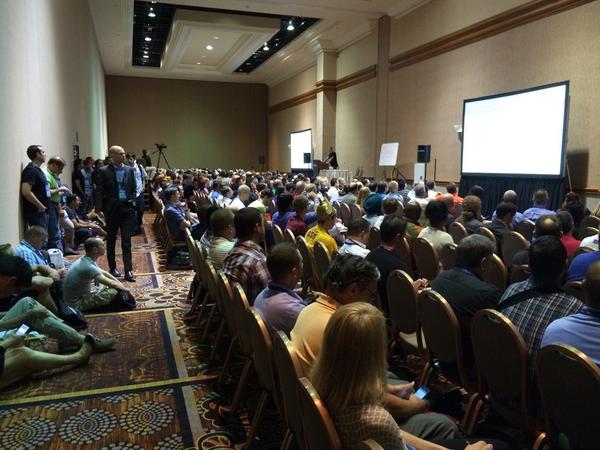
I am off at the end of the week for the third Lawtech Europe Congress. It is billed as covering electronic evidence, computer forensics, cyber security and legal technology and runs from Sunday evening until the middle of Tuesday.

The highlighted speakers include Jason Baron of Drinker Biddle and the Information Governance Initiative, Rohit Talwar of Fast Future Research, Jeffrey Ritter of Georgetown University and Casey Flaherty of Kia Motors and the Suffolk/Flaherty Legal Technology Audit.

I am there to do two panels. One is involves comparisons between jurisdictions, principally with regard to the use of technology in managing cases, both in court and in the back-office functions. My panel consists of HHJ Simon Brown QC and HHJ John Tanzer from the UK, Judge Dory Reiling from Amsterdam and Judge Podani from Czech Republic.

The other is about the containment of costs with a panel comprising HHJ Simon Brown QC again, Major Baisden of Iris Data Services, Patrick Hurley of Thomson Reuters Elite and Naj Bueno of Millnet.

The other big event of the conference is the European premiere of Joe Looby’s film The Decade of Discovery whose trailer you can find on the LTEC 2014 website. I am taking part in a panel discussion after the showing of the film which will be led by Jason Baron.

The speaker list includes too many well-known names to mention from a range of companies and firms, academic institutions and courts. Andrew Haslam of Allvision has helped pull it all together and has done a superb job of it.

My son William and I will be the in Prague for the weekend, hoping to catch interviews with some of the many eDiscovery players who will be in town. As always, I’m very much looking forward to it.

Posted in Litigation Support | Leave a comment

Nuix IG Twitter chat: information transparency

I was not able to take part in the Twitter chat led by Julie Colgan and Brian Tuemmler of Nuix on 15 October.

Fortunately, the discussion was captured in a Storify which you can find here.

Posted in Litigation Support | Leave a comment

Guidance Software discussion in Atlanta on 21 October: Cloud, Mobile and Social Media applications

Guidance Software is organising a session in Atlanta 21st of October with the title Cloud, Mobile and Social Media in Litigation.

These three concepts – cloud, mobile and social media – overlap in that most social media is generated on mobile devices and stored in the cloud. The other thing they have in common is that they all add considerably to the burden of legal and IT departments when they need to collect data for the discovery purposes.

The speakers at the Atlanta event are David Steel, Senior Counsel, The Home Depot, and Ronni Solomon, a partner at King and Spalding. They will discuss eDiscovery challenges including:

  • Collecting from the increasing volumes of ESI stored in cloud repositories
  • Security and legal complexities of mobile devices in the workplace
  • Privacy, risk, and legal challenges of social media

There is more information and a registration form here.

Posted in Litigation Support | Leave a comment

Enhanced Bloomberg Review Solution from Consilio

Consilio has launched a solution which streamlines the review of Instant Bloomberg archives. It augments data for better searching and discovery workflow purposes and introduces a real-time, dynamic filter to accelerate reviews, reduce costs and give increased accuracy.

Instant Bloomberg is generally known as Bloomberg Chat and is used by many financial institutions. Financial regulators require that these conversations, which may be very large, be archived, which makes them available for discovery not only by those regulators but for other eDiscovery purposes. They carry a lot of duplicated and irrelevant content and add significantly to volumes and workloads.

Consilio is providing chat-specific fields, making it easier to remove irrelevant and duplicated data and to focus on the strands of conversation which matter.

Consilio has deployed its enhanced Bloomberg Chat solution in its data centres in the US, UK, Germany, Japan, Bangalore and Hong Kong.

There is a press release about this here and a dedicated page on Consilio’s website with a data sheet giving more detailed information.


Posted in Litigation Support | Leave a comment

Cicayda making its mark and its marketing

eDiscovery software developer Cicayda appeared apparently from nowhere and quickly established itself as a contender in a very competitive market. This defied the predictions of many commentators (including me) who did not think that we would see any new developer players.

In fact, as you can see from this new article by Cicayda’s Marc Jenkins called Where Legal Professionals Work, Cicayda’s people had a long history of involvement both in the practice of litigation as lawyers and in eDiscovery software development.

The result is a set of applications – reprise review, staccato ECA, drone intelligent search and fermata legal hold which look good and do the job. They had the advantage of a clean sheet in development terms which allowed them to use the latest search technology and to bake in independence from any particular operating system or browser. They don’t particularly need to compare themselves with others and have reached the point, to my eyes anyway, were they can stand on their own merits.

The technology is backed by some very astute marketing, by an evident commitment to justice and by interesting and useful articles such as the one by CEO Roe Frazer called Social media content can tip the litigation scales which I wrote about recently.

I am, as you may have gathered, increasingly keen on video as a way of conveying information both about the law and practice and about companies. Video is not a substitute for the written word, but it is a useful adjunct to it and is the way the world is going. It is important for businesses to use their people as a differentiator and a means of personalising the service component in an industry where clients new to eDiscovery can find it hard to tell products apart and in which clients and providers often have to work very closely together.

Cicayda has recently published a series of videos – not mine this time – in which their executives talk about some aspect of Cicayda’s products or services, and I point you to five of them so they can speak for themselves:

Roe Frazer

Jason Cox

Marc Jenkins

Billy Hyatt

Chelsea Johnson

These and others, including product videos, can be found on Cicayda’s YouTube channel.

Posted in Litigation Support | Leave a comment

AccessData webinar on 23 October: Don’t Let Smartphones Outsmart Your Mobile Device Discovery Needs

AccessData’s software range covers everything from identification and collection and all the other eDiscovery processes through to review, as well as computer forensics (which is where AccessData began) and cybersecurity.

AccessData has developed a particular expertise in the extraction of data from “Smart” devices, partly through the development of a dedicated software tool Mobile Phone Extractor Plus (MPE+), and partly through the skills of it’s VP Mobile Forensics Solutions, Lee Reiber.

Lee Reiber is one of the speakers in a webinar organised by Apersee taking place on 23 October at 1.00pm Central. As the webinar description says:

So what does the ‘Smart’ in smart phone mean? What it means to enterprises and Law enforcement agencies is an ever growing treasure trove of discoverable information: your call history, contact lists, IMs, social media, voicemail, videos, chats, browsing histories, apps, GPS location data, e-mail, and images (with identifying metadata). This means that mobile devices and the data they hold are going to continue to grow in importance, and being unaware of mobile e-discovery is not a good strategic position.

Yet even with this valuable information so close many criminal and civilian investigations are threatened because there are just too many types of devices, too many mobile apps, and too many data types for some to handle.

The other speakers are George Socha and Tom Gelbmann of Apersee. There is more information and a registration link here.

Posted in Litigation Support | Leave a comment

AA v Southwark – local authority’s non-disclosure rounds off an appalling story

Most of the judgment in AA v London Borough of Southwark is about the appalling conduct of a local authority towards one of its tenants. That alone would not warrant a place in this blog, but there were procedural issues which matter for those in charge of disclosure in civil proceedings. Disclosure is a continuing obligation, and you don’t suppress material just because it is unhelpful (or in this case “damning” and “detrimental”). Phone records may also be caught by the broad definition of a disclosable document.

I am, as you may have gathered, no great enthusiast for local authorities and the people who run them. It is not merely that they are, by and large (there are of course exceptions) run by overpaid, stupid people performing their tasks badly and pissing public money up against the wall, but that the mantle of petty authority which falls on these generally inadequate pen-pushers turns them into tyrants. Little people with clipboards instead of brains somehow think that they are immune from general rules of decency and politeness, quite apart from the law or anything else.

It may be an extreme case, but the judgment in AA v The London Borough of Southwark demonstrates what I mean. As well as the judgment (or perhaps instead once you get past the opening paragraphs) have a look at Gordon Exall’s usual succinct summary with the title Lies, evidence, disclosure and procedure. When you have recovered from being appalled at the way Southwark’s housing officers behaved towards its refugee tenant, have a look at the procedural points which are relevant to disclosure in any civil claim. It is, as Gordon Exall says, “as excoriating a judgment as you are likely to read in relation to disclosure and witness evidence”. Continue reading

Posted in CPR, Discovery, eDisclosure, eDiscovery, Electronic disclosure | Leave a comment

HP Autonomy webinar on 22 October: Trends, pain-points and solutions in UK disclosure

HP Autonomy is giving a webinar on 22 October at 15.00 BST with the title Trends, pain-points and solutions in UK disclosure.

I am one of the participants; Matthew Davis, Litigation Support Lawyer at Hogan Lovells is another; the moderator is David Kemp, Executive Director of Legal Policy at HP Autonomy.

The 2013 amendments to the Civil Procedure Rules imposed on parties an obligation to find out about their sources of electronic information, to make decisions at an early stage about the scope of disclosure, the methods of achieving it and the costs of it, and to discuss all this with opponents and the court.

The same obligations, whilst not codified in the same way, arise when a regulator seeks disclosure of documents. In both cases, there is an urgent need to get one’s arms around the potential problems very quickly.

This is seen as a burden by many and, there is no doubt that this task is both non-trivial and potentially expensive. It is not all burden, however – armed with the information which emerges from those investigations, lawyers and their clients are put into a position to make decisions about merits (and thence the likely prospects) as well as as about costs and timelines which affect both strategy and tactics.

We will look at what steps can be taken to achieve this quickly and cost effectively. We will also look at steps which fall under the broad heading information governance which will help companies meet eDisclosure challenges and uncover value in that data.

More information about this webinar, together with registration information, can be found here.

Posted in Litigation Support | Leave a comment

APT Search: eDiscovery Project Manager in London

eDisclosure recruitment specialist APT Search is looking for an experienced project manager for a top-tier eDiscovery consultancy.

The successful applicant will have extensive knowledge of various eDiscovery tools such as Relativity and Clearwell, and have experience of the practices involved with carrying out eDiscovery-related projects.

There are more details here.

Posted in Litigation Support | Leave a comment

Cicayda: Social media content as evidence

The definition of “document” in the Civil Procedure Rules of England and Wales is “anything on which information of any description is recorded”. Whatever the precise wording, most common law jurisdictions require something similar.

Lawyers have come to accept that an email or a word file is no less a “document” than its paper equivalent – don’t laugh, this is something which we had to explain not so very long ago. That definition, of course, embraces Facebook posts, tweets, instant messaging, voice records and an ever-growing list of data types “on which information of any description is recorded”.

An interesting article by Roe Frazer, CEO of eDiscovery software provider Cicayda, is called Social media content can tip the litigation scales. It reminds us that there is more to discovery than merely managing conventional data – the purpose of discovery / disclosure is not just compliance with rules and adherence to processes but finding evidence.

Roe Frazer identifies a range of outputs created all day and every day by those from whom discovery / disclosure is expected, and observes correctly that cases can turn on evidence about the person’s location and about times and dates. I wrote about this recently in an article called The cloud for companies and celebs alike in which I suggested that the the photographs of celebrities in the nude might carry information about the time and place of the photograph that was much more damaging than the mere display of naked flesh.

Roe Frazer asks the question So why are lawyers avoiding mining social media facts in discovery, facts crucial to winning, or losing?

One of the reasons (“excuses”, Roe calls them) is that lawyers are fearful of the Pandora’s Box which would then be opened. As the range of discoverable data extends, so the already over-burdensome task of collecting data will become yet more onerous and expensive.

That is undoubtedly correct, and neither Roe Frazer nor I would suggest that all social media about all potential custodians must be collected. The same principles of proportionality apply to these forms of data as to any other, and the lawyer who collects everything is doing as bad a job as the one who never applies his or her mind to the subject at all.

The answer lies in the growing range of software tools offered by Cicayda and others for collecting, filtering and managing this type of data. If you do nothing else, make sure that social media data appears on the firm’s checklist (you do, of course, have such a checklist, don’t you?) of things to be considered when approaching a new case.

Posted in Litigation Support | Leave a comment

ZyLAB webinar: practical considerations on how to buy discovery software

ZyLAB is presenting a webinar on Monday 13 October at 1:00pm EST called Practical considerations on how to buy eDiscovery software.

It seems that many companies never add up what they spend on electronic discovery during the year, perhaps lumping the pure eDiscovery costs in with other legal fees. That is changing, however, as more companies undertake an analysis of where the money goes.

Done properly, such exercises can become quite granular as financial controllers break down the components of the eDiscovery cost – collection, culling, analysis, review etc – as a preliminary to assessing whether some of those stages might be taken in house.

A number of factors influence the next stage, which is deciding which solutions to buy. This is the subject of ZyLAB’s webinar.

The webinar is given by ZyLAB’s Enterprise Technology Counsel, Mary Mack, and by Nick Patience, formerly of 451 Group and more recently of Recommind.

There is more information about this webinar here, including a link to the registration page.

Posted in Litigation Support | Leave a comment

Nuix webinar – Advanced investigative workflows with Nuix Web Review and Analytics

I have referred before to a Nuix webinar called Getting started with Nuix Web Review and Analytics.

Nuix has now followed that with one called Advanced Investigative Workflows which looks at what the latest release of Nuix Web Review and Analytics offers.

The webinar will cover :

  • How users can combine powerful features of Nuix Investigator, including text shingling, near-duplicate analysis and named entity extraction, with Web Review & Analytics
  • How visualizing data can help drive the direction of an investigation much more efficiently than the traditional “text grid” view of documents and emails
  • How to identify hidden commonalities within data sets and even across multiple separate investigations
  • How to use Nuix Web Review & Analytics as part of a larger workflow to provide true early case assessment.

The speakers are Paul Slater and Carl Barron for the EMEA version of the webinar and John Bargiel for one aimed at the US and APAC. The EMEA broadcast is on Thursday 23 October at 3.00pm BST and the one for USA and AsiaPac is on Wednesday 29 October at 11.00 PST.

More information and registration details can be found here.

Posted in Litigation Support | Leave a comment

iCONECT XERA product overview video

One of my recurring themes is that lawyers ought at least to understand what eDiscovery tools exist and what they do. You do not need the express obligations imposed by professional and court rules to feel obliged to know something about means of getting the job done responsibly and proportionately.

These days, you do not need to make an appointment to see a demonstration of eDiscovery software. It can be arranged for you as a web demo, either specifically for you or available for you to look at in your own time.

iCONECT, makers of the XERA document review platform, has always been good at live demos. They also make them available as recordings.

One such is the XERA Introductory Demo which is a video capture of one of Mike Fedorowski’s regular webinars. It takes you through the screens and functions in a plain, straightforward way, without the dramatic tones and aural razzmatazz which spoils so many such demos.

XERA is one of the more attractive-looking platforms available. Whether you are an experienced user of other platforms or one who merely want to understand the broad capabilities of software of this kind, this demo is very good way to cover the ground.

Posted in Litigation Support | Leave a comment

Guidance Software webinar on 20 October: A Day in the Life of a Procter & Gamble E-Discovery Manager

Guidance Software is presenting a webinar on 20 October at 2:00 pm EDT with the title A Day in the Life of a Procter & Gamble E-Discovery Manager.

The speaker is Scott Van Nice, E-Discovery Manager Procter & Gamble, who will talk about his role and how a two-person team is able to handle ediscovery for a large company.

The webinar will cover:

•     Best practices Scott has collected from years of experience

•     Typical responsibilities of an e-discovery manager

•     Why outsourcing can be a double-edged sword

•     How the e-discovery manager fits into the in-house team

•     Different scorecards for measuring accountability and identifying opportunities

•     Tools, experience and suggested training

This should be interesting for companies setting up eDiscovery teams and for those who are all would like to become corporate eDiscovery managers.

This webcast will be available with closed captions for those who are deaf or hearing.

There are more details about this here including registration information.

Posted in Litigation Support | Leave a comment

FTI Technology Webcasts

FTI Technology runs a comprehensive series of webcasts. Some of them are technical in nature and aimed at those who are users of FTI Ringtail and other FTI products or might become so; others cover the law and practice of eDiscovery in all its forms.

Amongst them is FTI’s recent series on Global eDiscovery in which I have a particular interest since I participated in two of them.

One of the many things FTI is good at is rooting its assertions in surveys of users, and some of its webcasts (and associated papers) make good use of the results of these surveys

FTI’s recent webcasts are listed together here.

Posted in Litigation Support | Leave a comment

Epiq Systems: Document Storage Tips: Inside the Email Vault

An article by Jon Kessler, Director, Epiq Systems Forensic Consulting Group, has the title Document Storage Tips: Inside the Email Vault.

It will be helpful to many, including those who have already have a systematised way of storing documents, but its main focus is to explain to lawyers, whether in-house lawyers or external ones, how such systems work, what their benefits and possible limitations are, and, crucially, what factors arise when planning to give discovery from them.

The article’s expressed aim is to help lawyers make better informed decisions when approaching the preservation and collections phase of any eDiscovery project involving such systems.

Posted in Litigation Support | Leave a comment

Iris Data Systems: how to change the way your firm thinks about eDiscovery

Iris Data Services offers, among other things, a managed services partnership arrangement with law firms and legal departments which relieves the lawyers of responsibility for running and maintaining eDiscovery software, allowing them to concentrate on running their eDiscovery projects.

An article by Daniel Gold on the Iris blog is called How to change the way your firm thinks about eDiscovery.  Inevitably (because that is what Iris does well) it promotes the benefits of the managed services route. Along the way, it sets out points for lawyers to consider when they face the broad choice between buying and running their own systems and delegating the technical and related functions to a company like Iris.

You will find similarly eloquent arguments elsewhere tending to the opposite conclusion. There is no fixed rule which applies to all firms in all circumstances. The important thing is to be aware of the implications of one approach rather than another so that an informed decision is made, appropriate to the firm, the client, and the case.

Posted in Litigation Support | Leave a comment

Keeping one’s eye on the ball

The scene: the eye clinic at the John Radcliffe Hospital, Oxford. The time: 9.00am. The plan: a quick inspection following a referral from my optician, then back to my desk. The outcome: “Nothing to worry about, but we’ll just put you into the theatre list for today. The list is full, so you may have to wait all day”.

So: what would you make of that? It’s not a problem, and our operating list is already full, but we think we ought to deal with it today. Suddenly, a 30 minute appointment – say an hour out of the office in all – turned into a full day sitting in a waiting room followed by…..to be honest, it makes me slightly queasy to think about it, so I will spare you the details, save to say that it involved the equivalent of spot welding by freezing round the back of the eyeball.

I am squeamish. I don’t have a tooth filled without being sedated first. What I do have, however, is a mother who treats her all-too-many hospital inspections as if they were an extension of the Blitz (“We can take it”), and a mother-in-law who has regular injections into the eye. If they can cope, then so can I.

I’ll make a recommendation though: if you suddenly find “floaters” across your eye, as many do after a certain age, go and get them looked at. For most, they settle down – they are not illusions but physical bits floating around in the eye. Mine, as it happened, involved a small tear, and the hospital’s concern was that small tear might become a bigger one – thus the urgency, followed by a day of feeling distinctly off-colour, to say nothing of blurry-eyed.

With that fixed, sort of, I could get back to the queue of interesting things which had been piling up. Continue reading

Posted in APT Search, Discovery, eDisclosure, eDiscovery, Electronic disclosure, NightOwl Discovery, Nuix, Recommind, UBIC | Leave a comment

UBIC obtains new Japanese patent for predictive coding technology

The Japanese Patent Office has granted UBIC a new patent related to their implementation of predictive coding.

The word “predictive” as UBIC uses it goes beyond predicting a lawyer’s retrospective coding decisions. Whilst UBIC’s Lit i View does that, its technology extends to the yet more useful task of pre-emptively predicting user behaviour by the analysis of corporate data.

There is a press release about this development here.

Posted in Litigation Support | Leave a comment

Singapore International Commercial Court plans move ahead

According to a report in Singapore Law Watch, ambitious plans to set up the Singapore International Court moved closer this week when the proposals were put before the Singapore Parliament.

Singapore already has the Singapore International Arbitration Centre which apparently heard 259 disputes last year with a total value in excess of $6 billion.

The Singapore Law Watch report emphasises Singapore’s wider plan to be the leading dispute resolution centre in South-East Asia.

The proposals put before Parliament include new rules for the regulation of law firms and foreign lawyers. It also provides for international judges to be hired to help SICC cases.

Posted in Uncategorized | Leave a comment

Recommind webinar on 9 October: Switching horses midstream: the case(law?) for prioritised review

US case law, including Bridgestone v IBM and the Progressive case continue to produce Opinions which edge us slowly towards general acceptance by the courts of sophisticated technology.

Inevitably, questions arise about the implementation of that technology, including its inter-relation with more conventional forms of search.

This takes us, and usefully, away from the idea that there is one magic solution for all such problems and towards the idea that lawyers need to understand how different types of technology can be used together, and at the appropriate stage, to achieve a result which is both defensible and proportionate.

Recommind has a webinar on 9 October (that is, today) at 10am PST | 1:00pm EST called Switching horses midstream: the case (law?) for prioritised review which considers these subjects.

The speakers are Neil Etheridge, Drew Lewis and Hal Marcus of Recommind.   There is more information about this webinar here.


Posted in Litigation Support | Leave a comment

Nuix webinar on 16 October: End-to-End eDiscovery with Nuix

Nuix is presenting a webinar on 16 October at 1:00pm Central in conjunction with EDRM called End-to-End eDiscovery with Nuix.

The webinar’s target is to show how you can use Nuix 6, with Nuix Director and Nuix Web Review & Analytics to:

  • Avoid the drudgery and complexity of moving or exporting data
  • Use advanced new features such as quality control and collaborative web review
  • Conduct rapid processing, analysis, review and production from any web browser
  • Define and automate your workflow to minimize errors, simplify operation and make the hard work easier

The speakers are Simon Bayangos and Matthew Geaghan of Nuix. The moderators are George Socha and Tom Gelbmann of EDRM.

You can find more information and registration details here.

Posted in Litigation Support | Leave a comment

NightOwl appoints Simon Collins as Director of Discovery, EU

I wrote recently about the data hosting and review centre opened by NightOwl Discovery in Dublin. Nightowl has now appointed Simon Collins, formerly of EY in Dublin, as Director of Discovery, EU.

Along with his colleagues in the US, Simon Collins will be responsible for building and leading NightOwl’s managed discovery and review business in the EU. That business has two primary purposes – to support NightOwl’s multi-national clients who have operations and data requirements in the EU and to build a business to support the wider EU market.

I first met Simon Collins at an eDiscovery conference in Dublin a couple of years ago. We have kept in touch since, mainly through his role in developing the Good Practice Guide to eDiscovery in Ireland which I wrote about when it was published in early 2013, along with other initiatives to bring the subject on the agenda since then.

The eDiscovery Guide was also the main subject of a video interview which I did with Mr Justice Clarke in London in May.

We have another Dublin event coming up in on 14 November – the details are here. Simon Collins was the progenitor of the idea and NightOwl are among its sponsors. I will be there, and will write about it shortly.

Meanwhile, Simon’s appointment is good news for NightOwl, whose Dublin / EU initiative is an interesting one.

Posted in Litigation Support | Leave a comment

APT Search: Junior Project Manager for eDiscovery consultancy

eDiscovery recruitment specialist APT Search is looking for a Junior Project Manager for an eDiscovery consulting company. The job is based in London.

There are more details here.

The APT Search website always has a list of eDiscovery / eDisclosure jobs. As at today, these range from the entry-level positions like the one mentioned here up to a Head of European Operations.

Posted in Litigation Support | Leave a comment

Two weeks at Office-by-the-Sea in Cornwall for projects and preparation

This post began as an apologia for the fewness of my posts over the last three weeks. I don’t actually feel very guilty about it and achieved, among other things, a project – a short video about Browning Marean which you will find below. Nevertheless, in case anyone wonders why my various sites have been short of commentary, reports and announcements, this is what I have been doing. It is all good preparation for what promises to be an interesting Autumn.

You may have noticed that my generally steady flow of eDiscovery- / eDisclosure-related posts on this site and on chrisdaleoxford.co.uk tailed off over the last three weeks. That is not because there was nothing to report – far from it – but because I was in Cornwall, followed by a week with three events which kept me from my desk.

Office-by-the-sea

DeskViewWe go to Trebetherick, where my wife, Mary Ann, has been going since she was an infant, taking a house big enough to be Office-by-the-Sea for me while being filled with whichever of our children wants to come and other visitors. Mary Ann and the guests went off on jaunts all over Cornwall. I stayed put for the whole fortnight. The video below begins with a zoom sequence which shows a place as close to paradise as you can get.

Stuck up in our hall is a cartoon which Mary Ann cut out 20 or so years ago showing a businessman on a seaside holiday with the punchline “Only another six days to go”. That is not in fact my view of holidays generally. I spend enough weekends sitting at airports or on planes, staying in lonely hotels and eating at Starbucks, not to feel too guilty about a few days away, but what I find difficult is being out of the stream for a long period when everyone else is at work. For the most part, I can work from anywhere; the only downside was having to turn down three speaking invitations which I would rather have accepted. Continue reading

Posted in CPR, Discovery, eDisclosure, eDiscovery, Electronic disclosure | Leave a comment

A tribute to Browning Marean on the day of his memorial service

I was unable to get to Browning Marean’s memorial service in Escondido on 20 September. Instead, I made a short video on that day from the place we stayed at in Cornwall – a few words from me and a toast from a few of us who were around at the time. My son Tom added some music.

My son William usually does both the camera work and the subsequent editing. He wasn’t available for this, and I did it; so right to the end, Browning was the cause of my learning something new.

Here is my article written about Browning on the day I heard of his death.

The theme which recurred in the many tributes was that Browning gave unstintingly of his time in encouraging others to get involved in eDiscovery and, in particular, to pay their own part in passing on the torch to others. It falls to us in turn to bring on new and younger people, to infect them with the enthusiasm which Browning gave to us, and to give them opportunities to write and speak about the subject.

Posted in Litigation Support, Video | Leave a comment

Recommind integrates Axcelerate with EMC’s SourceOne

Recommind has announced that its eDiscovery and text analytics platform Axcelerate now integrates with EMC’s SourceOne.

SourceOne archives documents, emails and SharePoint content, and Axcelerate can now collect custodian information and content for internal audits, investigations and litigation.

Recommind’s press release about this is here.

Posted in Litigation Support | Leave a comment

ILTA 2014: Big Data analytics for lawyers

This is one of a set of posts about the content and the discussion at ILTA 2014 in Nashville. Originally intended as a single post, the result was too long for that and I decided to split them up. See also ILTA 2014 – the context and the logistics.

Big data and analytics are two distinct subjects, both of which were well covered at ILTA. I group them together for these purposes because they were the joint subject of a panel discussion in which I took part. Organised by UBIC, the discussion was called Advanced analytics for the legal profession – big data challenges, analytic solutions and thoughts for the future. My co-panellists were Gerard Britton of Topiary Discovery and Yoshikatsu Shirai, Chief Client Technology Officer at UBIC, and the moderator was UBIC’s Paul Starrett.

My fellow panellists will forgive me if I focus on what I said, partly because I have the benefit of my preparatory notes, and partly because my part was deliberately intended as a summary.

The conventional Big Data discussion is all about big volumes managed by big law firms for big cases for big clients; for most lawyers that tends to make it sound like someone else’s problem. An ILTA audience is more broadly-based than most and it seemed important to me to, as it were, democratise the subject.

Big Data is not just a synonym for “lots of data”. Conventionally, it is said to comprise volume, velocity and variety; people tend to forget the fourth “v”, value. Armed with the right analytical tools, one can convert such data from being not just a record of what has happened but a source of prediction of what might happen, using what UBIC calls “behavioural informatics”. Continue reading

Posted in Big Data, ILTA, Litigation Support, UBIC | Leave a comment

Getting ready for the Equivio TAR 201 webinar on 23 September

I have already written about the webinar which Equivio is giving on 23 September called TAR 201 Advanced Topics in Predictive Coding which takes place on 23 September at 1.00pm EST (registration here)

As Equivio makes clear, this webinar is not for the faint-hearted, but is intended for those ready to move on to a deeper look at predictive coding and its practical application.

If you are not quite ready for that, there is the opportunity to get there by listening to the earlier webinars in Equivo’s series Predictive Coding without the Hype. You will find them on Equivio’s Resources page which you can filter down to webinars from the options on the left hand side.

While you are on the Equivio Resources page, you may care also to read the latest article posted there. It is from Metropolitan Corporate Counsel and is called How to Review Five Million Documents in Three Weeks. Even if you do have currently have 5 million documents to review, the idea that this volume is achievable in a short time seems worth knowing about.

Posted in Litigation Support | Leave a comment

Virtual LegalTech today – kCura on intelligent collection

On Virtual LegalTech today at 4:45 PM, kCura has a session called Intelligent collection – the keystone to efficient eDiscovery: how to streamline eDiscovery investigations by empowering legal and business teams during the collection stage.

Subjects to be covered in this session include:

  • The business effect of big data in eDiscovery
  • Key technological challenges of collection, and best practices for targeting the right data
  • Targeted collection as a discovery and information governance strategy.

The speakers include Bennett Borden of Drinker Biddle, Cheryl McKinnon of Forrester research and Jeremy Montz of kCura.

Further details of the day’s programme can be found here, together with login and registration links, can be found here.

Posted in Litigation Support | Leave a comment

Virtual LegalTech today: AccessData on resolving security threats

At 1:00pm ET on today’s Virtual LegalTech, AccessData brings us one called Dropping the “Hammer” on security threats with rapid detection and resolution. Many security threats and breaches are not discovered until they have happened; by that stage, it is necessary to conduct triage, assess the damage and begin damage control with shareholders, customers and, perhaps, regulators. This makes security breaches a problem for the board and for senior executives.

To discuss these issues, and to offer practical solutions, AccessData has assembled a panel consisting of Roberta Anderson of K&L Gates, Keith Schrodt, Director, Product Marketing and Strategy at AccessData and Lucas Zaichkowsky, Enterprise Defence Architect at AccessData.

Further details of the day’s programme, together with login and registration links, can be found here.

Posted in Litigation Support | Leave a comment

Recommind webinar on 30 September: guidelines regarding the use of predictive coding

The terms predictive coding and technology-assisted review are not exactly synonyms, but they are both used to describe the use of sophisticated technology to support the lawyers in the eDiscovery process by helping them to discriminate between relevant and irrelevant material and ranking documents by a presumed order of relevance.

The technology is gaining ground, but misconceptions remain about what it is, when it should be used, and how to incorporated it into a discovery workflow.

A webinar given by Recommind on 30 September addresses these points. The speakers are David Horrigan of 451 Research, Darin Sands of Lane Powell and Philip Favro of Recommind.

There is more information and a registration form here.

Posted in Litigation Support | Leave a comment

Huron Consulting named among the best firms to work for

Whatever the economic climate, firms and companies want to attract the best staff. For some years now, the formula for achieving this has moved beyond merely offering good salaries and interesting work and now includes elements such as work / life balance, career development and workplace culture.

For the fourth consecutive year, Huron Consulting, whose divisions include EDIP sponsor Huron Legal has been named as one of the best firms to work for by Consulting Magazine. Huron’s press release quotes President and Chief Executive Officer James Roth making a connection between well-trained and satisfied staff, on the one hand, and good results for both Huron and its clients on the other.

Posted in Litigation Support | Leave a comment

Alex Dunstan-Lee of Navigant Consulting talks about the use of technology-assisted review in the UK

Alex Dunstan-Lee, Managing Director at Navigant Consulting, talks about the use of technology-assisted review in conducting electronic disclosure in the UK.

Alex Dunstan-Lee talks about the number of “really bad reasons for not using it”. Why would you not want technology to attempt to replicate decision-making or to check the work of the review team? We need, he says, to think of it as “just another form of search”. Keywords and technology-assisted review are not mutually-exclusive concepts and can be used as part of an overall strategy.

He goes through some of the reasons given by lawyers for not using TAR. He identifies alleged lack of transparency and the absence of judicial precedent (“the weakest argument of them all” he says), as reasons which lawyers give, and he knocks these arguments down briskly. What is needed, he says, is “robustness of argument showing how effective the search is”.

There is a little more merit, Alex says, in the suggestion that it costs money to get data into the system, adding that “as an industry we need to offer cost-effective way to give lawyers the chance to test it”. The impression I have is that vendors are already coming up with more attractive pricing models.

This is an eloquent and effective bid to persuade lawyers to at least try technology-assisted review. Those lawyers who simply recite the standard arguments will find those arguments challenged by what Alex Dunstan-Lee says. My own anecdotally-based impression is that rather too many of them are happy to repeat assertions which they have heard someone else say. As Alex Dunstan-Lee says more than once – why would one not even try using it?

Posted in Litigation Support, Video | Leave a comment

ILTA 2014: The cloud for companies and celebs alike

The talk at ILTA this year was not so much about giving discovery from the cloud but about a more fundamental question – should we be putting data in the cloud at all? The standout session on this discussed a cyber attack on Saudi Aramco in which data was lost from 30,000 computers and servers in one day around the world.

Would the data have been safer in the cloud? Conventional wisdom (by which I mean the instinctive feel for many businesses and individuals) is against doing that, with the NSA and Chinese hackers seen as the primary source of risk. Against that, it is observed that the top cloud providers invest sums in security beyond the reach of most companies, building defences which few businesses can aspire to. There are no answers here, but the thinking is evolving beyond the unsubstantiated assertions of gut instinct.

Since ILTA, we have seen news of the wholesale theft of celebrity data. The focus has been on what the newspapers like to call “nude selfies”, that being the stuff of headlines. If I were the celebrity, I would be more bothered about some of the other data which will have been swept up at the same time – the contact and calendar information, financial details and, not least, the GPS information embedded in many of those photographs which show where they were taken. Continue reading

Posted in Cloud, Discovery, eDisclosure, eDiscovery, Electronic disclosure | Leave a comment

Xerox Litigation Services webinar on 16 September: the ethical and legal consequences of using TAR

The use of Technology-Assisted Review is gaining acceptance as more lawyers accept that the savings of time and cost cannot be ignored. It poses technical challenges and it also raises legal and ethical issues.

In the UK, the ethical concepts fall under the general duty of competence owed to clients, opponents and the courts. Electronic discovery plays a much larger part in US litigation and, accordingly, there have been several specific rules and regulations covering the ethical duties of lawyers.

To address these topics, Xerox Litigation Services has assembled a panel comprising Anthony Diana of Reed Smith, Jack Halprin of Google and Gabriela Baron of Xerox to give a webinar on 16 September at 1.00pm EDT. Its title is Ethics Webinar: Technology-Assisted Review (TAR) – ABA and State Rules.

They will cover in particular:

  • the American Bar Association’s resolution under the duty of competence (Model Rule 1.1) that requires lawyers to “keep abreast of changes in the law and its practice, including the benefits and risks associated with relevant technology”;
  • Amendments to rules on communications with clients (Model Rule 1.4), confidentiality (Model Rule 1.6), and supervision (Model Rule 5.3) and their impact on the use of TAR;
  • Overview of various state ethics rules; and,
  • Relevant changes to the Federal Rules of Civil Procedure that may affect the use of TAR.

There is more information and a registration form here.

Posted in Litigation Support | Leave a comment

UBIC Signature Seminar on 19 September in New York – Big Data and Information Governance

UBIC is presenting another of its Signature Seminars in New York on 19 September at which the speakers will explore how evolving Big Data can enable Information Governance opportunities. I took part in one of these seminars last year in Washington and very much enjoyed it.

The keynote speaker is Laura Zubulake, whose speech is called Information Governance: The Big Data Challenge.

Then Jay Brudz, Chair, Information Governance & eDiscovery Group, Drinker Biddle & Reath LLP will lead a discussion on Big Data and Information Governance: Enabling Big Data Projects by Applying IG Use Cases.

UBIC’s Paul Starrett will facilitate a discussion on Utilization of Legally Defensible Technology to Position your Organization to Meet IG Requirements.

This looks good, and I will be sorry to miss it – I am on holiday that week.

There is more information about this event here.

Posted in Litigation Support | Leave a comment

Nuix webinar on 30 September: Is Analytics the Answer?

Nuix has recently launched Nuix Web Review and Analytics. In support of that, Nuix is giving a webinar on 30 September at 10am PT / 1pm ET / 6pm BST called Is Analytics the Answer?

The webinar will cover a variety of analytics functions to find facts early in Nuix Web Review & Analytics and our traditional workbench, using techniques such as:

* Visualizations

* Predictive coding

* Topic Modelling

* Shingles

* Duplicates and near-duplicates.

The speakers are Daniel Pelc of Verizon and Roxanna Prelo Friedrich of Nuix. The registration form is here.

Posted in Litigation Support | Leave a comment

Epiq Systems: Litigation readiness messages from the Microsoft Dublin warrant case

I have made reference here before to the US court order requiring Microsoft to hand over emails and other records pursuant to a US search warrant.

The most recent order is to be subject to an appeal, and it is not only other hosting companies who await the outcome with interest.

Nick Rich, Lead Solutions Adviser at Epiq Systems, has written about this on the SCL site. His article is called The Microsoft Dublin Warrant Case and Litigation Readiness, and it provides an important checklist for any companies who may be affected by the final outcome of this case.

Nick Rich suggests that companies ought to make themselves ready for prospective litigation and regulatory investigations on the assumption that the final decision will go against Microsoft. At the least, he says, companies ought to know what data they have in Europe on servers belonging to US-based cloud providers and should take advice as to what properly be done with it in anticipation of future problems.

As he makes clear, this is really a refinement for particular purposes of an exercise which companies ought to undertake anyway in preparation for future discovery demands. Much of the difficulty and cost arising in discovery could be mitigated by, for example, getting rid of documents which are not subject to legal hold and are not required for business purposes. In particular, companies should consider whether data which includes personally identifiable information should be kept at all. The starting point, as Nick Rich emphasises is for companies to know what they have and where it is.

These suggestions make sense as a continuing matter for any organisation. For EU companies with data on US servers, there is an additional level of urgency.

Posted in Litigation Support | Leave a comment

ILTA 2014: Big Law begins to ride the technology wave

This is one of a set of posts about the content and the discussion at ILTA 2014 in Nashville. Originally intended as a single post, the result was too long for that and I decided to split them up. See also ILTA 2014 – the context and the logistics.

It has been fashionable in recent years to predict the end of the very large firms colloquially and collectively known as BigLaw. Whilst I have accepted the premises of this – that resistance to change, and particularly technology change, would pose serious challenges to BigLaw which not all its members would meet – I have not joined the general prediction that the end is nigh for these firms. There are a lot of lazy assumptions behind the conclusion that these firms are all alike just because they have common clients, size and areas of expertise.

The subject is one which matters (or should matter) to those who offer eDiscovery software and services, because BigLaw has traditionally been their primary market – the “low hanging fruit” in that hackneyed phrase which is so beloved of sales people and which has blinded so many of them to the potential importance of smaller players.  Big firms, along with many of their clients, have seemed like “a large, knotty, sprawling ball of legal, logistical and organisational complexity that hindered both supplier and buyer.”

This splendid phrase comes from a really interesting article by Bill Henderson on the Legal Whiteboard site called Ahead of the Curve: Three Big Innovators in BigLaw. The article covers in some detail the application of technology to the practices of the three finalists for the ILTA Most Innovative Law Firm Award – Bryan Cave, Seyfarth Shaw and Littler Mendelson. Continue reading

Posted in ILTA, Litigation Support | Leave a comment

Consilio expands Frankfurt office and review facility

eDiscovery provider Consilio has substantially expanded its facility in Frankfurt for document review, processing and hosting. It also has offices in Munich and in Zurich.

Germany’s data protection laws are amongst the strictest in the world, and Germany is a major trading partner with the US. It is inevitable, therefore, that there will be major eDiscovery tasks which raise issues of privacy and data protection, as well as language, for both litigation and regulatory requests, whether emanating from the EU or from the US.

There is a press release about the Frankfurt expansion here.

Consilio must be doing something right, because they are simultaneously expanding their review facility in London. I will come back to that in due course.

Posted in Litigation Support | Leave a comment

ILTA 2014: Diversification the key for litigation support vendors

This is one of a set of posts about the content and the discussion at ILTA 2014 in Nashville. Originally intended as a single post, the result was too long for that and I decided to split them up. See also ILTA 2014 – the context and the logistics.

I remember an ILTA of long ago – 2008, perhaps, or 2009. There were lots of shiny new stands there – small ones on the whole, with unfamiliar names, manned by people I had never seen before. I had a sudden chill feeling, a certainty that most of these fledgling companies wouldn’t last till Christmas. I recall none of their names now.

Many eDiscovery businesses have gone since then, swallowed up by others or just disappeared. A few have arrived, mostly selling litigation support services, though a couple of new software companies have defied predictions (mine included) and seem to be thriving through a combination of good product and good marketing.

Eddie Sheehy of Nuix looks at the future of litigation support vendors in the context of ILTA 2013 in his article 5 pathways for successful litigation support vendors in 2014.

The number of customers is not growing, he says, so companies can only increase their market share at the expense of others. Apart from obvious things like a record of solid competent performance at good prices, LSVs need to add value by providing new and collateral services. Continue reading

Posted in Discovery, eDisclosure, eDiscovery, Electronic disclosure, Litigation Support, Nuix | Leave a comment

Behind the Great Firewall – an article on eDiscovery in Asia from Xerox Litigation Services

There are all sorts of reasons why an eDiscovery task grows in size, sometimes substantially, between inception and completion. The issues can change; the number of relevant custodians may increase; unexpected difficulties arise thanks to corrupt or encrypted files; or the client may simply have overlooked to mention some of its sources.

The need to manage overseas discovery is often the biggest single factor which makes a task very much bigger than it would have been if conducted solely in its home jurisdiction. Language differences pose difficulties, practical matters of logistics arise and, not least, foreign laws are encountered which restrict the collection of certain classes of data.

If this is true of cross-border discovery in Europe, it is even more so in the Asia-Pacific region. The word “region” conceals a wide range of jurisdictional variations – a mixture of legal, practical, language and cultural differences – which can quickly turn an apparently simple task into a large and complex one.

An article by Rob Hellewell of Xerox Litigation Services and Michelle Mattei of Eisai, Inc. addresses these issues. Called Behind the Great Firewall of eDiscovery in Asia, it surveys the differing restrictions across the principal countries of the region.

It also identifies some US court decisions which result from the conflict between the eDiscovery requirements of the Federal Rules of Civil Procedure and various data protection, privacy, state secrets, banking and health data restrictions. It ends with some practical suggestions for dealing with these issues.

When Xerox Litigation Services is instructed on a matter like this, the tool of choice is its behind-the-firewall application Viewpoint. Viewpoint is able to scale up from a laptop in a backpack to multiple servers, making it an appropriate tool for eDiscovery tasks which have the potential to grow significantly.

I expect to hear more about the use of viewpoint in AsiaPac shortly.

Posted in Litigation Support | Leave a comment

ILTA 2014: Technology spending survey from Inside Legal

This is one of a set of posts about the content and the discussion at ILTA 2014 in Nashville. Originally intended as a single post, the result was too long for that and I decided to split them up. See also ILTA 2014 – the context and the logistics.

On the first day of ILTA, Inside Legal released the 2014 edition of the 9th annual ILTA / Inside Legal technology purchasing survey which includes the welcome promise of increased tech spend generally.

The results which matter to my audience include a focus on mobility, cloud services, and SaaS models including analytics, plus disaster recovery, security and document management systems.

These conclusions, specifically the cloud, analytics and security, tie in with my more anecdotal survey which depends not on collected statistics but on what came up in the session, conversations which took place in ILTA week as well as in post-ILTA articles.

Home

Posted in Litigation Support | Leave a comment

ILTA 2014 – the context and the logistics

This post is about ILTA the event – the organisation and the experience of being there. I will write separately about the legal technology subjects which came up in the sessions and in discussion. August 1914 is my starting point for August 2014, allowing me to make comparisons between the book I am currently reading and the organisation of ILTA. If you lack the time and the patience for my comparison between the preparations for war and the planning for ILTA, jump down to the heading The logistics of ILTA.

August1914My book for the journey was August 1914 by the respected American historian Barbara Tuchman. I know how the story ends, not least because I have read the book twice before, but Tuchman manages to invest the familiar with an atmosphere of suspense as the decisions are made – to advance, retreat or dig in, to march this way or that; you read it with hands metaphorically over your eyes as pig-headedness, personal animosities and lack of intelligence (in both senses) lead inexorably to four years in the trenches, with most of France’s coal and iron production left in German hands.  Many of the mistakes had been made long before the war – mistakes of diplomacy, of judgement and, most particularly, of procurement and supply as the Allies prepared to fight the last war; generals are always getting ready to fight the last war.

Armies in 1914 to lawyers in 2014

This is not, as you may think, a precursor to an analysis of the parallels between the armies of 1914 and the lawyers of today, much as I like that kind of example. You do not have to look far to find them. French generals refused to discard the pantalons rouge which made soldiers an easy target; they disdained heavy artillery as being inconsistent with the élan expected from a philosophy which knew only of attack, and they made no provision for entrenching tools for the same reason – only defenders needed to dig in and defence was not on the agenda; newfangled aeroplanes were rejected. Meanwhile, the British Liberal government invested reluctantly in Dreadnoughts but declined to spend any money on dry docks big enough for them or on shore defences for naval bases. The parallels with the way some law firms prepare for doing business in 2014 are obvious – predictive coding anyone? Continue reading

Posted in Discovery, eDisclosure, eDiscovery, Electronic disclosure, Litigation Support | Leave a comment

ZyLAB and the Information Governance Initiative webinar: 10 things you can do to get started

ZyLAB is a charter supporter of the Information Governance Initiative and I wrote recently about an excellent webinar in which ZyLAB’s Enterprise Technology Counsel, Mary Mack, interviewed Barclay Blair of the IGI.

The same team now brings us a second webinar which moves the focus from conceptual matters to hard practicalities as is implied by its title Information Governance: 10 things you can do to get started.

Mary Mack makes the point in opening that Barclay Blair does not just talk about IG but helps clients with practical solutions, something which appears from what he says in this webinar.

The whole thing is worth listening to and, instead of stealing their thunder by trying to summarise it, I serve you best by picking out taster points which might encourage you to listen.

  • If clients want to manage information better, this may be either because they are driven by external factors such as regulatory requirements or because they want to be a better business.
  • Discovery is like a fire – no one asks whether budget is coming from because there is no option but to address it; this is not true of information governance.
  • When eDiscovery was young, people who had other jobs stepped up to fill the eDiscovery roles and became part of the eDiscovery team.
  • We need rules, we need people, we need technology.
  • The company needs to decide what we are going to do first, second and third.
  • Defensible deletion is often picked on as a good place to start because the consequences of redundant data are expensive, time-consuming and problematic. Defensible deletion, however, usually triggers caution from the lawyers, who want to know who created the data, and whether it is on legal hold or on a retention schedule. Because companies have no clear policies, the apparently straightforward deletion objective falls quickly into complexity.
  • Organisations cannot act on problems. They can only act on projects; a project has a timescale, a budget and resources.
  • In articulating return on investment value of any given activities, one should take account of “soft” gains as well as hard measurable ones. ROI is often more a political point than an economic one.
  • One must have regard to what is do-able – ask not only whether it can drive down costs and make people’s lives better but whether the proposals work at a department departmental and workgroup level. One must take account of what business units care about.

The most important points, to me, came at the beginning and at the end. Barclay Blair’s starting proposition was that organisations need a new breed of person whose skills and interests range across all the components of a company’s information use – security, discovery, compliance, business intelligence, privacy, risk management and the rest. Where are we going to find these people?

The closing point concerned the articulation of success. Barclay Blair expressed this in two ways; one was to urge that the story be told in human terms – how has a project made someone’s day better? His second suggestion was to bin woolly, meaningless expressions in favour of ones with actual meaning.

A claim that “IG helped our company manages information better.” is pretty meaningless. One which reads:

IG helped our project managers to close construction projects faster so completion funds are released 12 to 18 months earlier

…is one with demonstrable value attached to it.

Similarly, the statement that “IG helped us to comply with laws and regulations for our information” conveys rather less than:


IG helped our clinical trials managers reduce errors and produce better data, reducing time to market.

Those who would urge information governance upon their organisations need, therefore, to start by identifying demonstrable targets of this kind. The “people, process and technology” mantra, however important, is servant to the objectives.

ZyLAB’s Mary Mack knows a thing or two about the application of technology to solving business problems and is, as always, an informed moderator for this useful, interesting and practical guide. If you want to understand where to start an IG project, this webinar is a very good starting-point.

Posted in Litigation Support | Leave a comment

Neota Logic alliance supports Huron Legal kCreate contract creation tool

Although my primary focus is on electronic discovery / electronic disclosure and the increasing number of subjects which relate to it, the wider subject of legal department efficiency attracts my attention, particularly when it involves one of the sponsors of the eDisclosure Information Project.

Huron Legal does more than electronic discovery, having a broad portfolio of advisory and business services designed to help law firms and legal departments improve their business effectiveness and reduce costs. In support of that function, Huron Legal has developed its own technology tools and processes. A recent addition to its collection is its kCreate contract creation tool designed to help companies have visibility and control over their contractual obligations and commitments and to manage the contracting process. Huron’s Contract Management and Compliance web page and press release have further information about this.

My interest in Neota Logic is personal as well as professional thanks to a long-standing connection with founder John Lord from his days at Epiq Systems. I also know Michael Mills, President and Chief Strategy Officer at Neota Logic whom I saw briefly at ILTA in Nashville.

Neota Logic develops expert systems, delivered through its platform Neota Logic Server. It has entered into a strategic alliance with Huron Legal to make Neota Logic Server available to provide custom document logic applications including Huron Legal’s kCreate. The result is that the user is walked through a series of questions whose answers generate appropriate wording and context. Neota Logic draws in data from CRM and other systems as well.

Huron Legal provides other services related to its kCreate contract tool, including strategic advice on a company’s agreements from legacy systems; contract management system selection and implementation; contract discovery review and analytics; and obligations management for ongoing support of the contract management system.

Posted in Litigation Support | Leave a comment

Iris Data Services adds reporting and administrative enhancements to Iris Arc

Iris Arc is a private and secure Relativity environment made available to clients of Iris Data Services for a fixed monthly fee. There is no application licensing or hardware to purchase, and clients get all the benefits of a full-featured Relativity environment with its own dedicated storage and infrastructure. The storage space is flexible and a client can increase capacity at any time and subsequently reduce it. There is a full description of Iris Arc here.

Iris has now added a set of reporting and administrative enhancements to Iris Arc which allow law firms and corporations to manage their storage allocation on individual matter basis. The reporting tools include the ability to manage budgets resources, staff and budgets.

There is more information about the Iris Arc enhancements here.

Posted in Litigation Support | Leave a comment

Equivio webinar on 23rd of September: TAR 201: Advanced Topics in Predictive Coding

Data analytics company Equivio has been running a series of webinars with the general title Predictive Coding Minus the Hype.

They now move on from that with one called TAR 201: advanced topics in predictive coding at 1.00pm EDT on 23 September. Its description begins with the warning that it is “intended only for those who want to take a deeper dive into some of the key issues surrounding real-world use of predictive coding”.

Consistent with this very practical message, Equivio has assembled a panel of people whose business depends on using analytical tools to get the job done for clients to the highest quality and in the minimum time.

The panel comprises

David Baldwin, Litigation Support Manager at Choate Hall & Stewart

Kelli Clark
, Vice President of Consulting, Discovia

Chris Paskach
, Independent Consultant, Formerly of KPMG

Scott Zimmerman
, Manager of Automated Legal Services, Haynes Boon

They will be moderated by Rachi Messing from Equivio.

Topics to be discussed include:

  • On what types of cases should predictive coding be used and on what cases should it not be used
  • How to deal with privileged documents
  • Does the algorithm actually matter?
  • Mistakes we’ve seen people make when starting a project and when using results
  • Transparency to the opposing party
  • How to incorporate other analytics when using predictive coding

Further information and registration details can be found here.

Posted in Litigation Support | Leave a comment

AccessData webinar on 10 September: Dropping the hammer on security threats with rapid detection and resolution

AccessData joins forces with George Socha and Tom Gelbmann of EDRM to present a webinar whose focus is on the rapid detection and resolution of cyberthreats and breaches.

The webinar is called Dropping the hammer on security threats with rapid detection and resolution and will be broadcast on 10 September at 1:00pm Central.

Three components – the right human resources, properly developed processes and the right technology – are required to ensure that companies (to say nothing of the directors, executives and experts with responsibility for security) can anticipate such problems and minimise their effect.

George Socha and Tom Gelbmann will be joined by Lucas Zaichkowsky, Enterprise Defence Architect at AccessData and Kristin Cooper, Director of Product Marketing and Strategy at AccessData.

You can find more information and registration details here.

Posted in Litigation Support | Leave a comment

Guidance Software webinar on 9 September: Analytics for the Government: adding depth with contextual data

Guidance Software’s EnCase Analytics collects and aggregates enterprise endpoint data. If this is done over a period, then the result can be used to help define normal behaviour; that in turn enables you to spot anomalous activity.

The source data becomes more valuable if enhanced with contextual information about, for example, machines, users and processes.

Guidance Software is giving a webinar on 9 September at 11am PDT called Analytics for the Government: adding depth with contextual data which considers how to use EnCase Analytics amplified in this way. Although government agencies are specifically covered, the principles must apply to any company. There is more information and a registration link here

Looking up the details of this event reminded me that Guidance Software does a lot of webinars covering its major activities – eDiscovery, cybersecurity and forensics. Some, like the one on 9 September, cover technical subjects aimed at users or potential users. Others achieve a wider educational aim.

A handful of recent ones deserve particular attention. Of the eDiscovery-related webinars, one is called Designing a defensible eDiscovery process, with speakers from Seyfarth Shaw LLP and iDiscovery Solutions. Another is called The Intersection of privacy, security, and eDiscovery, emphasising that these subjects are related. Yet a third is called is called Taking control: benefits and best practices for bringing review in house.

Amongst the webinars on cyber threats is one allied Understanding and conquering POS security threats.

Lastly, and on the Inside Counsel website rather than Guidance Software’s own site, is a link to a webinar which I did with Guidance Software. It is called International eDiscovery: data protection, privacy cross-border issues and I was joined by Patrick Burke of Reed Smith, Scott Cohen of Winston & Strawn and Chad McManamy of Guidance Software.

As you can see from this selection, the range of topics is wide. Many of these webinars are relatively short, and I would encourage you to run your eye down the list to find things of relevant.

Posted in Litigation Support | Leave a comment

AccessData partners with Druva for endpoint eDiscovery

AccessData has a long history of involvement in the collection and management of electronic discovery data. Originally a forensic collections specialist, it expanded into the later stages of electronic discovery by its purchase and redevelopment of Summation as part of AD eDiscovery. It has extended from there to incident resolution solutions with its ResolutionOne Platform.

The digital forensics and eDiscovery target is not a static one, and the days are gone when it was enough to collect emails, Word files and spreadsheets, and other behind-the-firewall data. The fastest-moving source, in every sense, is mobile data, stuff created on smartphones, tablets and other devices which create and collect data outside the company’s perimeter fence.

Enter Druva, whose business is the collection and preservation of data created on these mobile endpoints. With taglines like “Outside the firewall is the wild world” and “Regain control of your mobile workforce data”, Druva has grown quickly, recently raising a further $25 million for what it calls “Post-PC data governance technology”.

Druva already has a partnership with Recommind to bring this data into Axcelerate. It has now announced a partnership with AccessData for the same purpose – its press release is hereThe idea is that Druva’s inSync endpoint data protection and governance platform will supply litigation-related endpoint information to AccessData’s AD eDiscovery solution without end-user knowledge (where that is permitted and appropriate) and without slowing down devices. inSync continuously creates a centralised record of all endpoint data, identifying relevant files and placing a hold on them. The data can subsequently and easily be aggregated with data from more conventional sources.

Posted in Litigation Support | Leave a comment

Webinar from Exterro and Epiq TODAY: Optimising E-Discovery in a Multi-Vendor Environment

I catch this one in the nick of time. Epiq Systems and Exterro join forces with others to present a webinar called Optimising E-Discovery in a Multi-Vendor Environment TODAY at 1:00 p.m. Eastern (10:00 a.m. Pacific). As the published description says:

…a successful e-discovery process is equally reliant on technology integration and alignment: HR systems should update legal hold custodian lists, while matter management solutions should sync matter information with other e-discovery applications, and data collection tools should accurately collect from archiving databases. The list of potential integrations goes on and on

There is more information and a registration form here.

Posted in Litigation Support | Leave a comment

Nuix webinar on 4 September: Getting started with Nuix Web Review and Analytics

Nuix is giving a webinar on 4 September at 3pm BST (that’s TODAY) with the title Getting started with Nuix Web Review and Analytics.

The presenters are Paul Slater and Carl Barron, and their purpose is to show how the basic functions of Nuix Web Review Review and Analytics can be used alongside Nuix Investigator Workbench.

The same subject will be covered by John Bargiel of Nuix on 11 September at 11am PST / 2pm EST / 4am AEST for the benefit of USA and APAC audiences.

There is more information and registration details here.

Posted in Litigation Support | Leave a comment

David Cohen of Reed Smith to speak on privilege and predictive coding at Relativity Fest

I will not be at kCura’s Relativity Fest this year, thanks to a collision of activities on my own side of the Atlantic.

One of the specifically-identifiable attractions this year is the involvement of David Cohen, the practice group leader for Reed Smith’s Records and eDiscovery RED group. I have spent a fair amount of time in David Cohen’s company in recent weeks, both here in Oxford and at ILTA and, having seen a previous session led by him, would have liked to see these ones.

He is leading two sessions, one on privilege and one on predictive coding, which have a practical educational role beyond the standard podium presentation. Relativity Fest gets high praise for its sessions, and those two are good examples of the cross-over between the demands made of lawyers and the ability of properly-directed technology to address them.

There is more information about those sessions here.

Posted in Litigation Support | Leave a comment

Cicayda opens new discovery Institute and review centre at Cumberland School of Law

One of the complaints about law schools, even in the US, is that they do not equip their students to understand the importance either of electronic discovery or of the use of technology in legal practice.

One US law school is remedying that in the most practical way possible, by entering into an arrangement with a provider of eDiscovery software and services which will give the students practical and hands-on experience.

Discovery software and services company Cicayda has announced the opening of the eDiscovery Institute and review center at Cumberland School of Law in Birmingham, Alabama in partnership with Samford University’s Cumberland School of Law.

There is a press release about this here.

Whilst on the subject of Cicayda, here is an article of 14 August by Marc Jenkins called Because it’s There.

The title is derived from two feats of the 1950s, the scaling of Everest and the first sub-four-minute mile. In the course of weaving a connection between these events and Cicayda’s approach to electronic discovery, Marc Jenkins gives a summary of the progress which Cicayda has made, in its software, its funding and its staffing, in the short but interesting period of its existence.

I spent some time at ILTA with Marc, with Cicayda’s CTO Jason Cox and with CEO Roe Frazer. I passed up the offered demo of Cicayda’s new review application, reprise in favour of a discussion about Cicayda’s ambitions and about the significant steps which has taken over the year to achieve them. I can have demos any time over the web, and Jason gives particularly good ones. The opportunity to have these discussions is rather harder to come by and much appreciated.


Posted in Litigation Support | Leave a comment

AccessData webinar on 17 September: So Much Data. Too Little Time

AccessData is giving a webinar on 17 September at 7:00am Pacific with the title So Much Data. Too Little Time.

Its subtitle is Save valuable hours with simple on-scene mobile device collections, something AccessData is good at with its Mobile Phone Examiner Plus (MPE+) software. The aim is to equip any investigator with what is needed to acquire mobile device data as quickly as possible and to report on it there and then.

This theme is examined also in an article called The Time Argument, Mobile Forensics, by Lee Reiber of AccessData, which discusses the benefits of getting what Lee Reiber calls “actionable intelligence” as quickly as possible. The article is illustrated with helpful screenshots.

The registration information for the webinar is here.

Posted in Litigation Support | Leave a comment

UBIC acquires Technical Solutions to drive US expansion

UBIC is a Japan-based software company that has been simultaneously extending its presence in the US eDiscovery market and broadening the range of the technology solutions which it offers for business and risk analysis.

UBIC has recently announced the acquisition of TechLaw Solutions, Inc. to accelerate its US growth. TechLaw Solutions provides US companies, law firms and governmental bodies with complete eDiscovery services, and has done so for many years. The acquisition also brings to UBIC a management team with long experience in the eDiscovery market.

Here is a letter from TechLaw Solutions to its clients which explains the advantages of the acquisition – immediate access to country-specific data collection, processing, forensics, ISO 27001, safe harbor certified hosting and native-speaking document review capacity in the EU and Asia. The letter also makes it clear that the acquisition puts TechLaw Solutions in a position to offer UBIC’s analytics-driven big data technologies to existing and future clients.

Posted in Litigation Support | Leave a comment

Recommend Q&A on proportionality with Utah Judge Derek Pullan

Recommind continues its series of short blog posts in the form of interviews with players and influencers in eDiscovery on its Mind Over Matters blog.

The most recent, by Recommind’s Philip Favro, is an interview with Judge Derek Pullan who led the recent initiatives in Utah which sought to elevate proportionality to its proper place in civil procedure.

Called Q&A with Proportionality Expert Judge Derek Pullan, it appears as a recital of plain common sense. Judge Pullan says:

In the end, proportionality limitations have been unable to counterbalance the existing broad language defining the scope of permitted discovery.

The solution, he suggests, lies in judicial involvement: he says


Judges need to be willing to engage with counsel about discovery issues earlier in the case and with greater frequency. Judicial involvement is a key component to making proportionality standards meaningful. This investment of time up front is a stark change for many judges who have long felt that cases would manage themselves.

In theory at least, proportionality is even more of an express obligation within the UK civil procedure rules than it is in the US (not that many US lawyers seem to know that proportionality is required by the rules). What is required of judges is not merely that they roll their sleeves up and get involved, but that they should have some understanding of how a combination of rules, judicial activity and technology can be used to control the scope and expense of eDiscovery.

American lawyers like bright lines and to know exactly where they stand. The nature of proportionality is that it shifts with the context, and that is hard even for English lawyers with their greater willingness to accept the uncertainties of judicial discretion.

The real problem lies in the formula “I am being proportionate, you are not competent to give discovery properly and he is deliberately concealing documents”. Proportionality and its concomitant reduction of wasted time and cost is far off until judges are willing and able to arbitrate on an informed basis.

Posted in Litigation Support | Leave a comment

eDiscovery in Asia – London on 2 September

eDiscovery and data privacy consultant Nigel Murray has organised a breakfast seminar in London which aims to give a brief introduction to eDiscovery in Asia.

Speakers include Vince Neicho of Allen & Overy in London, Darren Cerasi of Singapore-based I-Analysis Pte Ltd and Dave Sannar of Catalyst Repository Systems, Inc in Japan.

Between them, they will pass on some of their experiences in managing eDiscovery projects in Asia, including rules, practical challenges and suggestions for dealing with them.

There are more details here, together with a registration form.

Posted in Uncategorized | Leave a comment

Browning Marean Celebration of Life Service on 20 September

I understand that Browning Marean’s Celebration of Life service will be on Saturday, 20 September at 2:00 pm at the Westminster Presbyterian Church of Escondido, 1500 S. Juniper St., Escondido, CA 92025.

Although I pass this on as coming from an impeccable source, it would be good to get some more “official” notification before booking flights etc. (once a lawyer, always a lawyer).

Since writing the above, I am told that DLA Piper has published a notice which accords with the information I was given.

Home

Posted in Litigation Support | Leave a comment

Recommind webinar on 27 August: Mission Control for eDiscovery review

Recommind’s new Axcelerate 5.2 includes Mission Control, a central operations centre giving case managers control of their review processes.

Neil Etheridge and Hal Marcus of Recommind are giving a webinar on 27 August (that is, TODAY) at 1:00 PM EST / Noon CST / 10:00 AM PST to help users understand and maximise the benefits of Mission Control. The key words for the webinar are optimise, automate and repeat.

Registration information is here.

Posted in Litigation Support | Leave a comment

IGI offers practical workshop on information governance at InfoGovCon

The Information Governance Conference, or InfoGovCon, takes place in Hartford, Connecticut from 8 to 10 September 2014. Its website is here.

The Information Governance Initiative is offering a practical workshop on information governance on the second day of InfoGovCon. It takes the form of a “boot camp” designed to help those who wish to promote information governance within their organisations.

There is more information about this workshop here. It includes a summary by Bennett Borden of Drinker Biddle of what the workshop aims to cover and to achieve.

Posted in Litigation Support | Leave a comment

Browning Marean: the tributes pour in

My article about the late Browning Marean Goodbye old friend has attracted several comments from those who were touched by his contribution, personal and professional, to them and to eDiscovery. The English judge HHJ Simon Brown says Browning was “the Global Professor of eDiscovery”.

The recurring themes include the encouragement which he gave to others and the word “laughter” and its synonyms. Herb Roitblat of Orcatec said in a tweet:

It’s good to see that he treated many others as well as he treated me, which was very well.

I knew Browning only a short time compared with others like Tom O’Connor and Craig Ball – my particular privilege was to see him on tour in nearly every jurisdiction in which eDiscovery is required, but they knew him for years. Craig Ball’s article Browning Marean 1942-2014 has been extended since I first recommended it and has similarly attracted many comments.

A lovely post by Tom O’Connor on the LTN site, Browning Marean: a remembrance gives us personal recollections going back to the dawn of electronic discovery. Monica Bay has given her tribute in Browning Marean loses battle with cancer. Both of these LTN articles require registration.

Ralph Losey called his article Browning Marean: the life and death of a great lawyer, the title reminding us that Browning was a lawyer first and an eDiscovery expert as a consequence. Ralph Losey added a tweet today saying that Browning was:

the first big firm attorney to use senior status to specialize in e-discovery and training. Helped his firm, DLA Piper

…while Michael Arkfeld reminds us that Browning used to say of DLA Piper that:

if they knew how much fun I was having, they would fire me.

US disputes lawyers and those who provide discovery services to them are a tough lot, with little room for sentiment in their professional lives. If the industry is in fact softer and nicer than its professional image sometimes implies, then that is in part due to Browning’s influence. It has certainly appeared in the reactions to his death.

There is a set of my photographs of Browning here.

Home

Posted in Discovery, eDisclosure, eDiscovery, Electronic disclosure | Tagged | 2 Comments

Goodbye old friend: farewell to Browning Marean

BrowningDublinBrowning Marean of DLA Piper US died a couple of days ago. He had spent much of the year undergoing treatment for oesophageal cancer. When we spoke on Skype recently (oh so recently) he was excited at events coming up in Dublin and Prague which would be the first time I had seen him for months. At ILTA in Nashville last week, his many friends heard of his sudden readmission to hospital and stopped each other in the corridors to ask for the latest news. No-one else in eDiscovery – no-one else I know anywhere – could get the level first of concern and now of grief as he has had.

Craig Ball wrote a warm appreciation of Browning which you will find here. We visited many places together – the US of course, but also London, Dublin, Hong Kong, Singapore, Sydney, Prague, Munich, Macau and, of course, Oxford. He would ring me up with his flight arrangements and make me promise to “break bread” (one of his warm phrases) with him – not that I needed encouragement. Even now, when I get out of airports in distant places, I still expect him to be the first person I see at breakfast on the first day of events, if not in the bar the evening before.

I was introduced to Browning Marean at a party in London in, I guess, 2007, by Jonathan Maas. I can picture the setting, the place in the crowded room, the circle of people pleased to keep the company of this man with a Father Christmas twinkle, the one-liners of a stand-up comedian and the serious interest of an eDiscovery expert. I had recently reached the conclusion that I could not talk and write about UK eDisclosure without understanding what went on in the US – how else could one rebut the frequently-met argument that “eDiscovery is something Americans do, and look what expense it causes” – and Browning was to become my guide. Continue reading

Posted in Discovery, eDisclosure, eDiscovery, Electronic disclosure | Tagged | 39 Comments

ILTA 2014 gets started in Nashville

ILTA 2014 has started here in Nashville. Here are a few photographs.

This packed room is the Speaker Meet and Greet and Conference Orientation at an event which expects more that 3,000 people over the next few days:

ILTA depends on its army of volunteers. More are needed.

And then there was a party

Posted in Litigation Support | Leave a comment

kCura updates Relativity Legal Hold and Collection

Among the new releases to be found at ILTA in Nashville (where I now am) is an update from kCura to Relativity’s legal hold and collection features.

The updates provide better insight into compliance with legal holds, and improved oversight by means of regularly scheduled reports. At the same time, the updated application allows collection from new data sources, including Microsoft Exchange.

There is more information about this here.

Posted in Litigation Support | Leave a comment

Huron Legal expands its digital forensics services for investigation and remediation of cyber security breaches

Huron Legal has launched a new cyber security incident response service to help companies which have suffered from network data breaches. The service helps the incident investigation, identifies compromised data and undertakes remediation steps.

The service goes beyond mere cyber security and digital forensics input. Consistent with its broad consultancy remit, Huron Legal helps assess financial and reputational damage and develops action plans to mitigate both. It also helps clients develop instant response plans to reduce the risk of future attacks.

There is a press release about this here.

Posted in Litigation Support | Leave a comment

Epiq Systems – interviews in Hong Kong about eDiscovery in multiple languages

Earlier this year, Epiq Systems presented a live display of their foreign language capability at the InnoXcell Big Data Symposium in Hong Kong.

Afterwards, I interviewed Celeste Kemper, Nick Rich and Jennifer Qian, the latter in her native Mandarin. I have pointed to these before, but they deserve a second look and here they are:

Celeste Kemper

Nick Rich

Jennifer Qian

Posted in Litigation Support | Leave a comment

UBIC panel at ILTA: Advanced analytics for the legal profession

I am taking part in a panel session run by UBIC on Tuesday 19 August at 9.00am at ILTA in Nashville

Its full title is Advanced analytics for the legal profession – big data challenges, analytic solutions and thoughts for the future. UBIC’s interest in this derives from its growing specialism in data analytical and predictive software.

There is more information and a full list of the panel members here.

Posted in Litigation Support | Leave a comment

Nuix webinar on 20 August: Sharing intelligence in forensic investigations

Nuix had its roots in tools for forensic investigations and remains a leading player in that area as it has grown into eDiscovery, cyber security, information governance and other corporate activities which involve data.

It is not uncommon to need to share and cross-reference data across multiple cases, ewirher because the separate components add up to a wider case or for simple reason of economy of time, effort and cost.

This is the subject of a webinar called Sharing intelligence in forensic investigations taking place on Wednesday 20 August at 11 am PT | 2 pm ET | 7 pm BST. The panel comprises Blazer Catzen, CEO, Catzen Forensics (Moderator), Ken Zatyko – Senior Manager, Fraud Investigation and Dispute Services (FIDS), Ernst & Young LLP, Keith Thomas, Digital Forensics and Investigations Expert, Nuix and Brian Hedquist – VP of Marketing, ADF Solutions Inc.

You can find more information and registration details here

Posted in Litigation Support | Leave a comment

New enhancements to Recommind Axcelerate

Recommind has announced major enhancements to Axcelerate, its cloud-based eDiscovery review and analysis platform.

The main addition is Mission Control, an operations centre for review and analysis, designed to give case managers more control than before.

Recommind has also announced a self-service edition of its eDiscovery platform called Axcelerate SaaS.

There is a press release about the new version here.

Posted in Litigation Support | Leave a comment

UBIC on-demand webinar: Cross-border eDiscovery with a focus on evidence and the cloud

ARMA is hosting for a limited time a webinar which I recorded recently with UBIC on cross-border discovery.

Its title is Issues and solutions related to finding, transferring and reviewing digital evidence.

Paul Starrett of UBIC moderated it, and the other panel members were Patrick Burke of Reed Smith and Patrick Zeller of Gilead Sciences.

As well as the by now reasonably conventional subject of US–EU cross-border discovery, we looked at the particular (and growing) problems with China and other Asia Pac countries and at the implications of dealing with data stored in the cloud.

The webinar can be found on the ARMA website here.

Posted in Litigation Support | Leave a comment

OmniVere picks Lateral Data Viewpoint from Xerox as its eDiscovery platform

OmniVere is a US national provider of legal services including eDiscovery, forensic consulting, litigation support and staffing services. It’s latest press release reports that it has chosen Viewpoint from Lateral Data (part of Xerox Litigation Services) as its eDiscovery platform.

The Lateral Data press release about this is here.

Viewpoint integrates collection, pre-processing and processing, early case assessment, analytics, including technology-assisted review, review and production capabilities in a single product.

OmniVere is one of the more interesting recent arrivals in the US eDiscovery market. I do not accept many of the flood of invitations which come my way before ILTA, but OmniVere is interesting and I had already arranged to see them before I learnt of a new tie-up between them and Lateral Data. I will tell you more about this when I get back.

Posted in Litigation Support | Leave a comment

Three appointments for Epiq Systems

Epiq Systems has announced three senior appointments.

One is the recruitment (from IBM) of Jig Patel as Vice President of Information Technology with responsibility for Epiq’s global IT organization to ensure best-in-class enterprise performance, availability, and data security worldwide. Brad Scott, Epiq’s president and chief operating officer said:

“He will ensure that Epiq continues to provide world-class technology services and a highly secure and scalable IT infrastructure to meet the global requirements of the company and our clients. We are very pleased to have him join our information technology team.”

There is a press release about Jig Patel’s appointment here.

Another is the appointment of Daisuke Nakajima who joins Epiq Systems as Manager of Business Development, eDiscovery Solutions, Japan. Epiq’s Tokyo office includes document review services with a capacity for more than 30 reviewers. The staff include licensed US attorneys with Japan-based eDiscovery and digital evidence experience. Last year, Epiq also expanded operations in Asia by opening a data centre in Shanghai to supplement its long-standing Hong Kong processing, hosting and document review facility. Daisuke Nakajima has years of experience developing eDiscovery business across the region.

You can read more about Daisuke Nakajima’s appointment here.

The third appointment is of Douglas Gaston to Epiq’s Board of Directors. There is a press release here.

Posted in Litigation Support | Leave a comment

Recommind article on Bridgestone v IBM – adopting predictive coding in mid-discovery

Adam Kuhn of Recommind adds to Recommind’s collection of lucid articles on all matters eDiscovery with an article called Bridgestone v. IBM Approves Predictive Coding Use, Rejects Progressive.

Adam summarises the Bridgestone case thus:

There are two key issues presented in Bridgestone that attorneys face on a routine basis. The first is whether a party can use keyword searches to narrow the universe of potentially responsive information before adopting a predictive coding workflow. And the other is whether a party may adopt predictive coding technology in the middle of discovery and in the face of a conflicting case management order. In short, the court answered both affirmatively.

Other points come up which are relevant in any jurisdiction: it is generally for the responding party to decide what search methods it uses to perform its duties, and the court’s role is to facilitate that in compliance with the obligation that “discovery be tailored by the court to be as efficient and cost-effective as possible.”

Name me a jurisdiction in which that is not the aim and the duty. I thought not. Now name one where the courts are actively pursuing that duty as a matter of course in bigger cases. Quite.

It is for the parties to take the initiative here, informing themselves so that they can argue with opponents and articulate benefits and drawbacks to the court. The neat and ideal model so believed of some rule-makers and judges pre-supposes that the best course, and its consequences, will be clear from the start. Real life shows something rather different, and courts must be willing to consider a change of tack to meet developing circumstances.

Posted in Litigation Support | Leave a comment

iCONECT webinar on 16 September: Best in Breed vs End-to-End

iCONECT, maker of the XERA eDiscovery platform, is running a webinar on 16 September at 1.00pm EDT which examines the apparently opposing approaches implicit in the expressions Best in Breed and End-to-End.

One approach is premised on the idea that the different component of the eDiscovery task might be given to whichever contractor can do it best, where “best” includes quality, reliability, functionality and cost. Other reasons, such as the peculiar nature of a particular case or the fact that a company or firm already owns software licences might dictate such a choice.

The other approach sees benefits in committing the whole task to one hand, with every stage performed in the same or a related software tool.

There is plenty to debate here. Ian Campbell of iCONECT is joined by Stephen Dooley, Senior Manager of Electronic Discovery and Litigation Support, Sullivan & Cromwell, LLP, Christopher Redlich, Litigation Support Manager – Americas, Allen & Overy, LLP and Frank Canterino, CTO & Co-Founding Partner, Empire Discovery for a webinar covering these subjects, details of which you will find here.

Posted in Litigation Support | Leave a comment

The Information Governance Initiative publishes its 2014 Annual Report

It seems only yesterday that the Information Governance Initiative was born, and already we have its 2014 Annual Report which, in its authors’ own words:

advances an authoritative definition of information governance (IG) and its core concepts; identifies the products and services that organizations are buying and the projects they are doing; and provides operational tools and insights that IG practitioners can start using today.

Its purpose is to encourage and support those who are responsible for the multiple components which make up IG with well-sourced statistics and analysis, a definition of IG, and practical help towards selling the subject to the board, promoting awareness and designing and executing IG strategy within a company.

You can find more details on this page which includes a press release summarising what the report covers together with a link to the report itself and to a set of infographics which can be used by practitioners.

I hope to write more fully about it in due course. For now, I simply point you to it.

Posted in Litigation Support | Leave a comment

Potential discoverability of insurance communications

eDiscovery provider NightOwl Discovery does a good job on its blog at unearthing odd bits of eDiscovery learning which the rest of us might otherwise miss. The good manners acquired on Twitter (where one uses HT – Hat Tip or Heard Through – to give credit to a source) makes me point to them as my source for an article called Insurers Be Warned, Your Communications Are Discoverable by Elizabeth Kniffen of Zelle Hofmann, a firm with a specialist expertise in eDiscovery and information governance.

The point at issue is the potential for communications between insurance companies and their reinsurers to become discoverable in litigated claims. Confidential, you would say. Read the article to see that it is not necessarily as simple as that.

Posted in Litigation Support | Leave a comment

Huron Legal on the importance of releasing legal holds

It seems obvious, doesn’t it, that documents which have been retained to comply with a legal hold should be released once the reason for the hold goes away?

If the principle is easy, the practice is rather different, not least because those who manage these things are probably busy putting another hold into place. It is, in any event, not necessarily a simple task firstly to be clear that the litigation is no longer reasonably anticipated and secondly to be certain that documents are not subject to multiple holds – after all, document seen as important for one reason are more rather than less likely to be seen as important for another.

Keeping all the documents has its own downsides – not just matters of volume and administration, but to do with a future hold which may bite on documents which the company could properly have disposed of.

These and other subjects are explored in an article by Huron Legal called Release the Chokehold: The Importance of Discharging Legal Holds, part of Huron’s Eye on Discovery series.

Posted in Litigation Support | Leave a comment

Analyst Brief from David Horrigan of 451 Research: Information Governance is old news at Nuix

A paper by David Horrigan of 451 Research caught my eye this week.

It is called Information Governance is old news at Nuix and is (as you would expect from David) an informed and elegantly-written piece which combines a good overview of Nuix itself with a survey of the present state of an information governance wave which Nuix was the first (in my own experience as well as for David) to set rolling.

The paper deserves a commentary, which I have started writing. The week before I leave for ILTA is no time for long, thoughtful articles, and it will keep till I get back.

Meanwhile, I simply recommend it to anyone with an interest in the IG market and its players.

Posted in Litigation Support | Leave a comment

Could an English court require lawyers to make a video about their disclosure obligations?

I recently wrote an article about the Court of Appeal’s decision in Denton which I called Letting the punishment fits the crime as Mitchell gives way to Denton. As the title implies, I suggested that Denton took us some of the way back to Lord Justice Jackson’s intentions and that the courts were now better able to exert discipline in a way which had regard to Jackson’s original intentions. I cited Gilbert & Sullivan’s Mikado as a model for the idea that the punishment should fit the crime.

A US judge has taken this one step further. Faced by a party whose conduct of eDiscovery involved taking every point and other activities which lost sight of the “just, speedy and inexpensive” requirement in Rule 1 of the Federal Rules of Civil Procedure, the judge focused on the value of educating the delinquent lawyers. He required them to make a video explaining the proper way to manage eDiscovery. The story is well told in this article from Above the Law which annexes the judge’s order and sets out the more quotable passages in the ruling.

One is a generalised complaint about the conduct of eDiscovery which is worth repeating. It reads:

Discovery — a process intended to facilitate the free flow of information between parties — is now too often mired in obstructionism. Today’s “litigators” are quick to dispute discovery requests, slow to produce information, and all-too-eager to object at every stage of the process. They often object using boilerplate language containing every objection imaginable, despite the fact that courts have resoundingly disapproved of such boilerplate objections. Some litigators do this to grandstand for their client, to intentionally obstruct the flow of clearly discoverable information, to try and win a war of attrition, or to intimidate and harass the opposing party. Others do it simply because it’s how they were taught…. Whatever the reason, obstructionist discovery conduct is born of a warped view of zealous advocacy, often formed by insecurities and fear of the truth. This conduct fuels the astronomically costly litigation industry at the expense of “the just, speedy, and inexpensive determination of every action and proceeding.” Continue reading

Posted in Court Rules, CPR, Discovery, eDisclosure, eDiscovery, Electronic disclosure, Judges, Lord Justice Jackson | Leave a comment

ILTA 2014 Imagine in Nashville next week

I am off to ILTA 2014 Imagine in Nashville next week. ILTA is the International Legal Technology Association, an organisation dedicated to encouraging the sharing of ideas and information between those involved at the crossroads of legal practice and technology.

This is ILTA’s 37th Annual Educational Conference. It runs for four days, has more than 200 speakers and sessions, and more than 3,000 people will attend. Although much of the week is devoted to learning and to seeing a wide range of relevant technology, the main attraction of ILTA is the space and opportunity to talk to others. They may be people who are at the same stage as you or, perhaps, have already been down a trail which you are just embarking on. It is not just for electronic discovery (as LegalTech has effectively become) and not just for big specialist firms.

When I say that ILTA offers “space”, I do not mean merely the generous amount of time between sessions, but refer also to the physical environment. The Gaylord Opryland is said to be the largest covered space in the US, with ample room even for more than 3,000 delegates to find somewhere quiet to talk.

This is one of the few events which I attend whether I am speaking or not. I am in fact taking part in a panel with UBIC on Tuesday morning at 9.00am. It is called Advanced Analytics for the Legal Profession – Big Data Challenges, Analytic Solutions and Thoughts for the Future and will be moderated by UBIC’s Paul Starrett.

Beyond that, I have meetings set up with sponsors and potential sponsors of the eDisclosure Information Project, a few demos (not many – I don’t flog halfway round the world to shut myself up in dark rooms watching PowerPoints) and plenty of space for ad hoc conversations with old friends and new acquaintances.

Although inevitably very American, ILTA manages to speak across jurisdictional divides. There will undoubtedly be content focused on the specific implications of the Federal Rules of Civil Procedure, but most of the panels are more focused on legal practice than on jurisdictional specifics. ILTA does this very well – as I mentioned in a recent article, I moderated a panel for ILTA in Hong Kong earlier this year whose entire focus was on the cultural implications of managing technology change in Asian law firms. No other legal educational organisation in the world is capable of covering big subjects like this.

ILTA is a sociable organisation and four days allows for plenty of parties, both at the venue and in Nashville – as you may have heard, Nashville has something of a music scene, with party venues of quality in quantity (I know this because Cicayda is based there and its people are proud and indefatigable promoters of their city). I have had to plot the parties on Google Maps so that I can work out the most efficient route between them.

See you there.

Pictures from last year’s ILTA in Las Vegas by Will Dale

Posted in Litigation Support | Leave a comment

Mr Justice Frank Clarke of the Supreme Court of Ireland

Mr Justice Frank Clarke of the Supreme Court of Ireland took part in the judicial panel moderated by Chris Dale at the IQPC Information Governance & eDiscovery Summit in London in May 2014.

Afterwards, Chris Dale took the opportunity to ask Mr Justice Clarke about the implementation of the eDiscovery Guide which was launched in Ireland last year. A guide was used rather than a rule change so that it could be modified by experience, perhaps as a preliminary to a future rule. What has that experience been so far?

Posted in Litigation Support, Video | Leave a comment

Tweet Up at ILTA

ILTA is the International Legal Technology Association, and its 37th Annual Educational Conference takes place in Nashville from 17 to 21 August. I will be there.

A “Tweet Up” is a meeting in real life of those who generally communicate with each other via Twitter. A Tweet Up has been arranged for 4:00pm on Sunday 17 August in Ryman Studio A at the venue. The details are here.

Since the venue is the enormous Gaylord Opryland, and since Sunday will be the first day, those of you who have not been there before may like to set off early to be sure of finding the room.

Posted in Litigation Support | Leave a comment

Thomson Reuters video: Elite – making the switch

Charles Christian kindly invited me to submit an entry to the Legal IT Insider Legal Industry Video Awards. The first half of this year involved too much flying for video creativity and we did not submit an entry.

Having seen the submission made by Thomson Reuters Elite called Breaking up is hard to do – how to make the switch to Elite, I am glad we did not. I haven’t watched all the entries, but if there is a better one than this, I will be very surprised.

Posted in Litigation Support | Leave a comment

Relativity Fest 12-15 October in Chicago

I had the pleasure last year of attending kCura’s Relativity Fest, the 800 strong gathering of Relativity specialists, users and would-be users held in Chicago every year. I was there to take part in a predictive coding panel, part of the eDiscovery track which sits alongside the technical skills components of this popular event.

This year’s Relativity Fest takes place between 12 and 15 October, again in Chicago.

The RelativityFest website which sensibly includes a “Justify your trip” guide for those who need to seek approval. It also has kCura’s video which captures scenes and comments from last year, including something from me about the mixture of events and benefits of attending.

Posted in Litigation Support | Leave a comment

New book: A Comprehensive Guide to the Asia-Pacific Legal Markets

There is an article on the Asia Law Portal about a new book called A Comprehensive Guide to the Asia-Pacific Legal Markets, written by John Grimley and published by Ark Group.

The book ranges from broad overview to in-depth analysis of a region which increasingly offers both challenges and opportunities to lawyers both collectively and as individuals.

One of the most interesting things I have done this year was to moderate a panel at the ALM / ILTA Technology Summit earlier this year on the cultural aspects of managing a law practice in the Asia-Pacific region. Our focus was relatively narrow – managing the changes in law firm technology – and we had only an hour. It was, nevertheless a fascinating glimpse into how legal practice in different regions is “different but the same”.

I contributed a short passage to the new book on what I see as the three paradoxes in the slow take-up of electronic discovery in Hong Kong. Why “paradoxes”? I would like to be able to explain why take-up of eDiscovery tools and techniques has been slow in a region which is the junction between US eDiscovery demands, English-derived common law and the vast Chinese market; it would be good to understand why a populace with the highest take-up of electronic devices in the world should be so slow to adopt electronic methods of working; it seems odd that Hong Kong looks on Singapore as a rival for legal business yet seems content to let Singapore make the running.

I offer no answers to any of this, but expressed the hope in my contribution to the book that the eDiscovery practice direction due to take effect in Hong Kong later this year will herald a change.

That is just a tiny part of a Guide which covers multiple jurisdictions of this large and diverse region whose legal services sector is undergoing all of the same changes as have happened in US and European markets. The list of relevant factors, from globalisation to ABS to changing relationships between clients and lawyers reads much the same everywhere.

Posted in Litigation Support | Leave a comment

Guidance Software’s Encase Portable now included in Encase 7.10

There is an article by Ken Mizota of Guidance Software about the capabilities of Encase Portable which are now included with Encase 7.10. It is called Feature Spotlight: Portable Triage. I bring to your attention because it help explain what a forensic data collection involves in terms comprehensible to a non-technical user.

As the article explains, EnCase Portable is a forensic data collection device contained on a USB key. It can be used on-site either by a forensically trained investigator who can configure it as required or by an unskilled user who has been sent a pre-configured one.

It can be sent by courier to remote locations to ensure that data is collected to the same standard as from more accessible places. It might be used to do an immediate collection from a laptop brought to a meeting or seized pursuant to an order. Its use jumps over the need to make appointments to collect data, saving not only expense but time, which may be short.

I was present at the meeting of Guidance Software’s Strategic Advisory Board when Portable was announced. Most new tools move us forward incrementally. This was one of those moments when we realised that we were taking a big step forward in the specialised world of forensic data collection.

Ken Mizota’s article is amply illustrated with screenshots and photographs and might be usefully read by anybody who may one day have to collect data, if only to understand the difference between a forensic collection and a conventional copying exercise by the user or an IT department.

Posted in Litigation Support | Leave a comment

Barristers and solicitors warned about data breaches

The UK Information Commissioner’s Office has issued a warning to barristers and solicitors about the risks of data breaches – see Information Commissioner ‘sounds the alarm’ on data breaches within the legal profession.

It is tempting to think of this subject as involving deeply technical IT security protection and, indeed, this aspect is something which should concern lawyers, not least because IT increasingly concerns their clients.

In practice, the events which attract attention arise at a more mundane level. Oxfordshire County Council is in trouble after confidential papers were found blowing down the street. The Treasury Solicitor was recently named and shamed for releasing disclosure documents which included personal information which should have been redacted. Most weeks bring an appalled tweet from someone who has overheard lawyers giving away their clients’ secrets on trains and in bars, or spreading out their papers for all to see.

It is not just that lawyers are usually to be regarded as data controllers and therefore subject to penalties of up to £500,000. Whatever else clients expect from their lawyers it is that they will keep their secrets, and it does one’s reputation no good even if no loss actually results from the careless release of client information.

The subject has made it to the non-legal press, with an article in the Telegraph called Lawyers must step up data protection measures after series of breaches, says watchdog. That means that the clients may well start asking their lawyers about their security arrangements. It would be good to have your answer ready.

Posted in Litigation Support | Leave a comment

Video marketing, fixed pricing of litigation services and Precedent H

You know how you sometimes start a conversation and quickly realise that you would have done well to keep your mouth shut? I did that last week. Fixed-price quotations for legal services and the defects of the CPR’s new budget requirements are important and interesting subjects; they were not, however, what I was after with my simple tweeted commendation of some video marketing in which I gratuitously said that the subject was interesting as well as the format. My main focus was on how you get messages across; what followed quickly became a discussion first about the message itself and then about the underlying practice problem.

I don’t complain about this by the way. This is how Twitter works, flipping from subject to (more or less) related subject, like pub conversations in which passers-by pick up on the bit which interests them and send the discussion down another track. Besides, the subjects of how you undertake legal work, how you quote for doing it, and how you describe your services and prices to the buyers in competition with others are closely related. Continue reading

Posted in Costs, Costs Management, Court Rules, CPR | 1 Comment

First the Internet of things, next the industrial Internet

An article by Marc Jenkins of Cicayda reminds us that data is not just in Word files and emails, nor even just in smartphones and tablets, but is stored in (literally) industrial quantities by devices which monitor, test and report on heavy industrial equipment. Those who manage this data are skilled at extracting useful information from it. What about the lawyers who might one day need to use it to give discovery?

I wrote recently (eDiscovery lessons from a Russian soldier’s Ukraine Instagram pictures) about the data which exists in photographs and social media which is easily created, stored and distributed, and which may be the source of evidence supporting or undermining your case or the case of opponents in civil as well as criminal matters. My main purpose was to give a reminder to lawyers with pretty ordinary, everyday, cases that eDiscovery / eDisclosure obligations extend beyond emails and Word documents.

We are hearing increasingly about another aspect of this speedy accretion of data under the general heading “the Internet of Things”. In a domestic context, this includes a growing range of devices which are connected to the Internet and have IP addresses. In the home they offer us the convenience of turning lights on and off, setting heating controls and making sure the oven is at the right temperature by the time we get home. Beyond the home, any number of devices in streets, by roads and in offices generate data.

Much of this is useful – I have never tried turning off the wifi-enabled lights in my office from, say, Hong Kong, but I could if I wanted to, to give the impression that I was at home. The usefulness, however, is balanced by a set of issues of which mere volume is only one. All this stuff is generating potentially discoverable evidence and on a grand scale and, of course, privacy considerations are never far behind any extension of our connectivity.

In an article called Planes, Trains and Data Bombs, Marc Jenkins, EVP of Knowledge Strategy at eDiscovery software company Cicayda, moves us on to “the industrial Internet”. His article opens with a brief set of statistics about the fairly routine data likely to be created during the time it takes to read his post, and then goes on to talk about modern industrial devices, including the planes and trains of his title, which generate vast volumes of data every hour.

This is Big Data – not just high in volume, but in variety and volatility. Much of it is used to improve productivity, to detect abnormalities and to guide maintenance decisions; some of it may prove to be discoverable in due course, perhaps in a contact claim to do with specification or performance, or perhaps following an accident or injury.

Marc Jenkins observes that data on this scale produces problems beyond mere volume, not least the privacy and security concerns referred to above. It takes skill and the right technology to control the data in its native home and to extract value for the business. The same applies, Marc says, when it proves necessary to extract subsets from the data for discovery purposes. Lawyers need to know how to find the evidence they need, to find the bits which are useful, and to work with them in support of the litigation or investigation.

The discovery frontier has moved. Not every case will involve the industrial volumes to which Marc Jenkins refers but, for cases of all sizes “Intelligent lawyers are needed more than ever…to..limit the query and provide justice in a speedy and inexpensive manner”.

The lawyers don’t necessarily need deep technical skills to manage all this. They do, however, need to know where to turn to get them when they need them.

Posted in Litigation Support | Leave a comment

AccessData on point-of-sale hackers, RAM scrapers and keystroke recorders

This is one of those subjects which is important to you and me as well as to those whose businesses depend on keeping customer data secure. Have you ever had a credit card cloned or otherwise raided for its – that is, your – personal and financial information? In the US? So have I.

AccessData does a good line in live demonstrations of the problems which its eDiscovery, forensic and security products are designed to manage. Lee Reiber, for example, can be seen at events demonstrating how much information can be taken off a second-hand smartphone bought from eBay. Security expert Lucas Zaichkowsky does the same with systems designed to process credit cards.

His article Point of Sale Hackers, RAM scrapers, and Keystroke Recorders concerns a demonstration using his own credit card which involves reading the magnetic stripe as well as the EMV chip to show how easily credit card data can be stolen even from modern payment systems.

In a video shown in an article from SC Magazine, Lucas Zaichkowsky goes one step further and shows us what can happen when his credit card is swiped in what is now an old-fashioned way of reading cards. We see relevant credit card information in plain text. What do you expect, sneer those from countries which have abandoned card-swiping in favour of EMV chip-and-pin devices? Lucas does that as well; the result will alarm anyone who uses a credit card anywhere.

To close, here is the crowd gathered to hear Lucas Zaichkowsky talk about all this at Black Hat 2014 this week. That looks like a capacity crowd to me.

Posted in Litigation Support | Leave a comment

ZDNet article: killing trust in the US technology industry

A ZDNet article by Zack Whittaker is headed How one judge single-handedly killed trust in US technology industry

It expands on points made in an earlier ZDNet article to which I referred recently in my own article More on accessibility of data – judicial imperialism, the right to be forgotten, and spies. The subject is the ruling by US District Judge Loretta Preska upholding an earlier ruing ordering Microsoft to hand over documents held only on non-US servers.

One of its subheadings is US to Europe: We’ll take what we want, when we want it. Its thrust can be detected in this paragraph:

So it’s little wonder that with this collective mindset, Preska decided to make the world’s data available to the US government, in spite of foreign nations’ own judicial and legal regimes, supra-national fundamental values, and even public international law.

As I said in my own article, anyone who thinks that this subject is easy is not thinking enough. There ought to be limits on the power of US nationals and corporations to put their data beyond the reach of their own courts and authorities. It is good to know that somebody is keeping an eye on those who would do us harm. All countries spy on each other and on their own citizens. The judges here are deciding what the law is, not creating policy.

You can accept all that, and still find it objectionable that the US thinks it right to trample on the laws, rights and privacy of foreign nationals. The rest of the world would set a threshold well south of that assumed by American courts. As the ZDNet article makes clear, many US citizens increasingly find the position which the US takes viz-a-viz the rest of world to be unacceptable

The ZDNet article’s title emphasises that there are implications affecting commercial relationships and trust of US companies which flow from the conclusion that you cannot safely put data on US servers or otherwise into the hands of entities subject to US law. That, perhaps, is not the concern of judges interpreting the law as they find it. It ought, however, to be the concern of policy-makers and those responsible for US external relations.

Posted in Uncategorized | Leave a comment

Recommind brings eDiscovery and data analytics to cloud content on Box

Recommind has announced that its eDiscovery review and analysis platform, Axcelerate, now works seamlessly to bring discovery and data analytics to cloud content stored on Box.

The press release is here.

Put briefly, a custom-built connector allows Recommind’s Axcelerate to crawl through an index data stored on Box and then aggregate that data with an organisation’s other data sources, whether stored on their own servers or elsewhere in the cloud. De-duplication and culling can be done in situ, and data is then transferred to Axcelerate for further analysis and the further stages of electronic discovery.

Why does this matter? The simple answer is that more and more organisations are putting their data into the cloud. A further answer is provided in a Recommind blog post of 17 July by Adam Kuhn and headed New sanctions ruling spotlights importance of handling a discovery in the cloud.

The article tells the story of a defendant who claimed inability to produce data because it was stored in the cloud. By the time their excuses had run out, much of the data had been deleted. The sanction – that they are precluded from presenting and relying on critical evidence – will probably cause what Adam Kuhn refers to tactfully as “an unfavourable resolution of the matter”. They must also pay a year’s worth of the plaintiff’s costs.

It is quite easy for an IT department to decide to move data to the cloud; the apparent savings can be very significant. Before they go too far down this route, however, it might be an idea for somebody, perhaps the lawyers, to ask how easy it is to get it back again.

Posted in Litigation Support | Leave a comment

New Los Angeles office for UBIC North America

UBIC has announced the opening of a Los Angeles office of UBIC North America.

The new office aims to provide a faster service and extended operations to existing clients in the Los Angeles region and to help develop new client relationships.

There is a press release about this here.

Posted in Litigation Support | Leave a comment

iCONECT White Paper and webinar: Six common production issues and how to fix them

iCONECT has joined forces with Avansic to produce a white paper which covers six common production issues and how to fix them. Issues include redaction, complex file types, numbering etc.

Ian Campbell of iCONECT and Gavin Maines of Avansic will be covering the same points in a webinar to be given on 9 September at 1:00pm EDT.

There is more information about this here.

Posted in Litigation Support | Leave a comment

Guidance Software webinar on 6 August: Designing a defensible eDiscovery Process

This afternoon at 2.00pm EDT, Guidance Software gives a webinar with the title Designing a defensible eDiscovery Process.

I mention it particularly because one of its presenters is Scott Carlson of Seyfarth Shaw. I once co-opted Scott Carlson into a panel of mine at short notice (“co-opted” meaning begged him to take part to save me doing it on my own) and he was as authoritative as you would hope from a senior partner in a firm well-known for its use of technology to solve the problems of litigation.

The other speakers are Jim Vaughn, Managing Director, iDiscovery Solutions and Judi Uttal, Senior Director of Product Marketing, Guidance Software. By listening to it you will:

  • Gain an understanding of the types, locations, and retention policies of your organization’s ESI
  • Use questionnaires and other methodologies for employees
  • How to create a common language to bridge the gap between Legal and IT
  • Make sound identification and collection decisions relative to mobile devices, non-corporate devices, external media, legacy systems, and archived data.

Registration is here.

Posted in Litigation Support | Leave a comment

FTI webcast: insights into litigation and eDiscovery cost trends

FTI Consulting has joined with experts from the University of Chicago Law School and Norton Rose Fulbright to review recent research into corporate litigation spending.

The findings are available as a recorded webcast which considers the potential for reduction of data preservation costs, overall litigation trends, and the impact of cloud computing, social media and data protection on litigation costs.

You can access the recording here.

Posted in Litigation Support | Leave a comment